


SPORTS
Golf prize rises to US$1.5m
The Taiwan Ladies Professional Golf Association (TLPGA) on Friday announced that the 2025 Foxconn TLPGA Players Championship is to tee off on Feb. 27, with total prize money of US$1.5 million, US$500,000 more than last year. Sponsored by Taiwanese manufacturing giant Hon Hai Precision Industry Co, also known internationally as Foxconn Technology Group, this year’s championship is the second edition of the annual event. Organizers said that this year’s tournament would again be held at the Orient Golf and Country Club in Guishan District (龜山) from Feb. 27 to March 2. Hon Hai also increased the total purse from US$1 million to US$1.5 million, nearer to the prize money offered at tournaments on the US’ Ladies Professional Golf Association Tour, which are at least US$2 million. While a finalized roster is to be published on Jan. 17, the organizers said that Taiwan’s Wu Chia-yen (吳佳晏) and Hou Yu-sang (侯羽桑) have been confirmed to participate in the event. In addition, former world No. 1-ranked South Korean professional golfer Shin Ji-yai is also to play in her first event in Taiwan in seven years.

Photo courtesy of Taiwan Ladies Professional Golf Association
TRANSPORTATION
Bureau warns of fine scam
The Highway Bureau on Friday warned of scam messages asking for payments of outstanding traffic fines. The fraudulent text messages or e-mails instruct the recipient to click on a link to pay an outstanding traffic fine before a certain deadline, the bureau said in a news release. Recipients should not click the links, as they do not originate from the bureau and are designed to defraud the recipient, it said. While the Highway Bureau sends text messages reminding people to pay outstanding fines, they are simply reminders and never include links, it said. Do not click links from unknown senders, it added. Recipients who are unsure if a text message or e-mail is legitimate should contact their local motor vehicle office to verify the messages, it said.
SOCIETY
Malay, Thai added to sites
The Ministry of Culture has launched Malay and Thai versions of its Web site to introduce Taiwan’s culture to audiences in Malaysia and Thailand, as part of the government’s New Southbound Policy, it said. The ministry said the two new Web sites provide an overview of the ministry’s core policies and achievements in cultural exchanges with Malaysia and Thailand. The sites include sections about contemporary Taiwanese artists, including masters and luminaries in their fields, as well as information about art venues, providing an overview of Taiwanese art and culture, it said. The ministry already provides versions of its Web site in English, Japanese, French, Spanish and Bahasa Indonesia, which are part of its ongoing efforts to promote Taiwanese culture to global audiences since 2013, it said. The New Southbound Policy was launched in 2016 to bolster economic, cultural and people-to-people exchanges between Taiwan and ASEAN members, Australia, New Zealand and South Asian countries such as India.

Taiwanese can file complaints with the Tourism Administration to report travel agencies if their activities caused termination of a person’s citizenship, Mainland Affairs Council Minister Chiu Chui-cheng (邱垂正) said yesterday, after a podcaster highlighted a case in which a person’s citizenship was canceled for receiving a single-use Chinese passport to enter Russia. The council is aware of incidents in which people who signed up through Chinese travel agencies for tours of Russia were told they could obtain Russian visas and fast-track border clearance, Chiu told reporters on the sidelines of an event in Taipei. However, the travel agencies actually applied
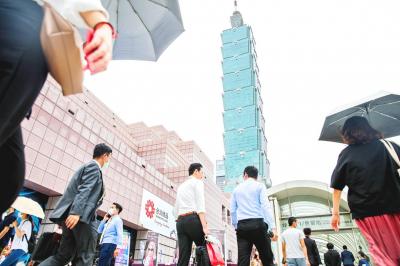
Japanese footwear brand Onitsuka Tiger today issued a public apology and said it has suspended an employee amid allegations that the staff member discriminated against a Vietnamese customer at its Taipei 101 store. Posting on the social media platform Threads yesterday, a user said that an employee at the store said that “those shoes are very expensive” when her friend, who is a migrant worker from Vietnam, asked for assistance. The employee then ignored her until she asked again, to which she replied: "We don't have a size 37." The post had amassed nearly 26,000 likes and 916 comments as of this
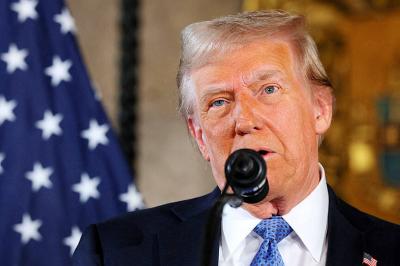
US President Donald Trump said "it’s up to" Chinese President Xi Jinping (習近平) what China does on Taiwan, but that he would be "very unhappy" with a change in the "status quo," the New York Times said in an interview published yesterday. Xi "considers it to be a part of China, and that’s up to him what he’s going to be doing," Trump told the newspaper on Wednesday. "But I’ve expressed to him that I would be very unhappy if he did that, and I don’t think he’ll do that," he added. "I hope he doesn’t do that." Trump made the comments in
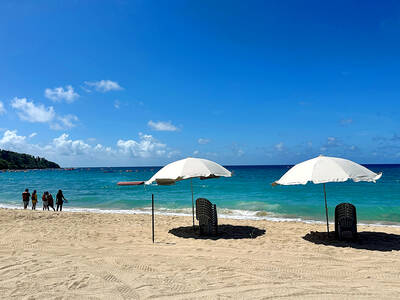
Tourism in Kenting fell to a historic low for the second consecutive year last year, impacting hotels and other local businesses that rely on a steady stream of domestic tourists, the latest data showed. A total of 2.139 million tourists visited Kenting last year, down slightly from 2.14 million in 2024, the data showed. The number of tourists who visited the national park on the Hengchun Peninsula peaked in 2015 at 8.37 million people. That number has been below 2.2 million for two years, although there was a spike in October last year due to multiple long weekends. The occupancy rate for hotels


 RSS
RSS