


Joint research by Taichung-based Wizcare Hospital and Japan’s Osaka University found that linguistic training helps activate brain functions in elderly people.
The hospital on Nov. 30 announced its findings from research on the use of linguistic training in elderly people’s rehabilitation, which showed that ongoing primary reading could activate their brains.
The National Tsing Hua University (NTHU), Taichung Veterans General Hospital (TVGH) and the Chung Shan Medical University also participated in the research, and the results are to be published in the geriatrics journal Experimental Gerontology this month, Wizcare Hospital superintendent Hsu Ching-chi (許景琦) said.
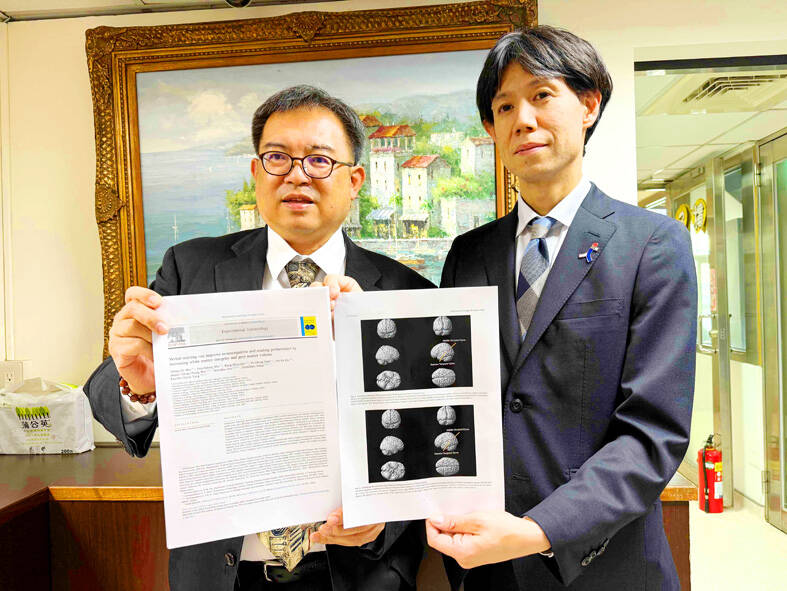
Photo: Tsai Shu-yuan, Taipei Times
The research was funded by the Japan Society for the Promotion of Science, thanks to Osaka University professor Toshiharu Nakai’s efforts in applying for a grant, he said.
The research was conducted from 2022 to last year, where 40 healthy Japanese aged 65 to 90 were divided into two groups. The experimental group was required to read Japanese for one hour every day for a month, Hsu said.
As linguistic training had proven to significantly slow down the deterioration of cognitive functions in people with Alzheimer’s disease, Hsu said he assumed linguistic training could benefit healthy old people as well.
Nuclear magnetic resonance examination showed that the gray and white matter in the brains of participants from the experimental group significantly increased, Hsu said.
NTHU Artificial Intelligence Center professor Yang Fan-pei (楊梵孛) said the gray matter — where cerebral neurons are located — and white matter, which is responsible for neurotransmission, would thin out and even disappear in people with cognitive impairment.
However, the research showed that the gray and white matter could grow thick in elderly people who read texts and undergo pronunciation training for as long as one month, she said.
Combining easily-pronounced words with harder ones could achieve that effect, Yang said, adding that activities such as singing or playing games also help delay brain degeneration in the elderly.
TVGH Family Medicine Department director Chu Wei-min (朱為民) said when he was studying in Japan, he had noticed that Japanese nursing homes provided cognitive training and physical activity courses for residents with early dementia.
Courses on simple mathematics and aerobic exercise or strength training were used to enhance brain and body functions, effectively delaying dementia progression and improving mild cognitive impairment, he said.

Eight Chinese naval vessels and 24 military aircraft were detected crossing the median line of the Taiwan Strait between 6am yesterday and 6am today, the Ministry of National Defense said this morning. The aircraft entered Taiwan’s northern, central, southwestern and eastern air defense identification zones, the ministry said. The armed forces responded with mission aircraft, naval vessels and shore-based missile systems to closely monitor the situation, it added. Eight naval vessels, one official ship and 36 aircraft sorties were spotted in total, the ministry said.
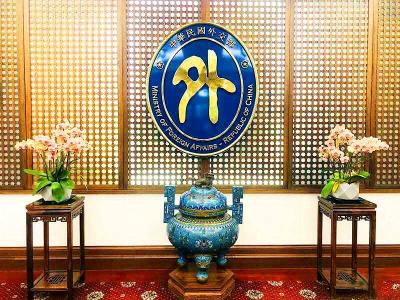
The Ministry of Foreign Affairs (MOFA) today said that if South Korea does not reply appropriately to its request to correct Taiwan’s name on its e-Arrival card system before March 31, it would take corresponding measures to alter how South Korea is labeled on the online Taiwan Arrival Card system. South Korea’s e-Arrival card system lists Taiwan as “China (Taiwan)” in the “point of departure” and “next destination” fields. The ministry said that it changed the nationality for South Koreans on Taiwan’s Alien Resident Certificates from “Korea” to “South Korea” on March 1, in a gesture of goodwill and based on the

Taiwanese officials were shown the first of 66 F-16V fighter jets purchased by Taiwan from the United States, the Ministry of National Defense said yesterday, adding the aircraft has completed an initial flight test and is expected to be delivered later this year. A delegation led by Deputy Minister of National Defense Hsu Szu-chien (徐斯儉) visited Lockheed Martin’s F-16 C/D Block 70 (also known as F-16V) assembly line in South Carolina on March 16 to view the aircraft. The jet will undergo a final acceptance flight in the US before being delivered to Taiwan, the
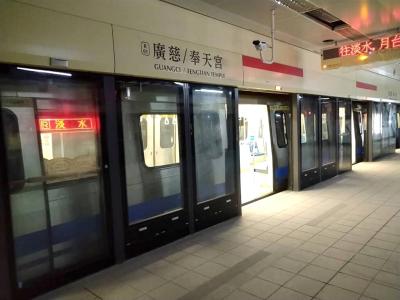
The New Taipei Metro's Sanyin Line and the eastern extension of the Taipei Metro's Tamsui-Xinyi Line (Red Line) are scheduled to begin operations in June, the National Development Council said today. The Red Line, which terminates at Xiangshan Station, would be connected by the 1.4km extension to a new eastern terminal, Guangci/Fengtian Temple Station, while the Sanyin Line would link New Taipei City's Tucheng and Yingge stations via Sanxia District (三峽). The council gave the updates at a council meeting reviewing progress on public construction projects for this year. Taiwan's annual public infrastructure budget would remain at NT$800 billion (US$25.08 billion), with NT$97.3


 RSS
RSS