


The Ministry of Health and Welfare’s family caregiver care hotline receives more than 6,000 calls each year, and for the first time “seeking emotional support” ranked top among the reasons for calling last year, the ministry said yesterday.
As Taiwan is predicted to become a “super-aged society” with more than 20 percent of the population aged 65 or older next year, more people increasingly need long-term care services.
Deputy Minister of Health and Welfare Lue Jen-der (呂建德) said there are two hotlines related to long-term care issues.
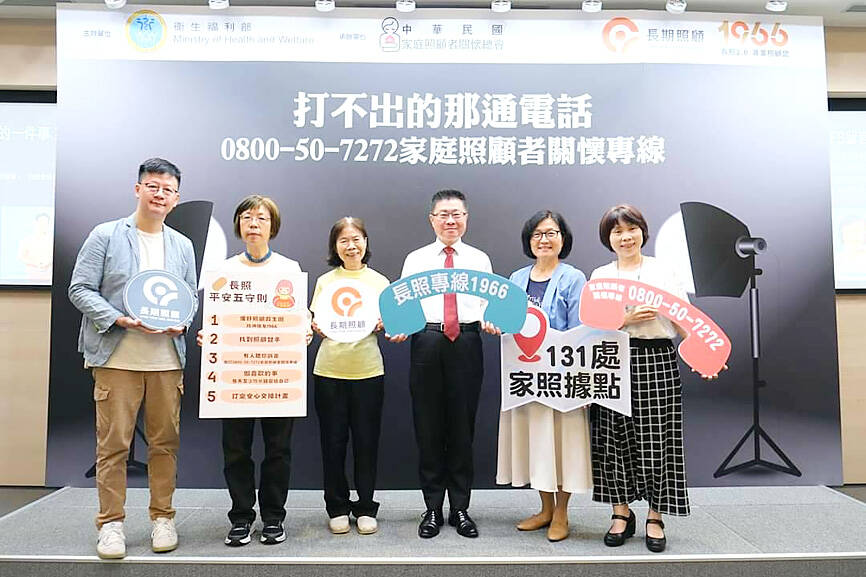
Photo courtesy of Ministry of Health and Welfare
The 1966 long-term care service hotline provides information about long-term care services, and as of last year, more than 505,000 people had applied for services and benefits, accounting for coverage of about 80 percent, he said.
As many people in Taiwan feel bound by cultural norms such as filial duty and family responsibility, they believe they should take care of family members “on their own” and that “others would not understand” so they do not share their problems of being family caregivers with others, Lu said.
Therefore, the ministry established a family caregiver care hotline (0800-507-272) in 2015 to provide free consultation services to family caregivers, he said, adding that it has received more than 6,000 calls annually since it was launched.
Chen Wei-ping (陳維萍), chairperson of the Taiwan Association of Family Caregivers, which manages the family caregiver care hotline, said of the calls received last year, about 26 percent were for “seeking emotional support,” followed by 21.7 percent inquiring about service resources.
It is the first time “seeking emotional support” ranked top among the reasons for calling the hotline, she said.
Of those seeking emotional support, Chen said about 42.2 percent expressed “emotional stress” from caregiving, including anxiety, depression, helplessness, tiredness and rage; 21.8 percent expressed “difficulty communicating with the person being cared for;” and 19.2 percent expressed “difficulty communicating with other family members.”
The ministry yesterday released a new video to promote the hotline, showcasing family caregivers sharing their experiences and concerns.
A woman in her 50s surnamed Wang (王), who was in the promotion video, yesterday said she is unmarried and the youngest child in her family, so she has been responsible for taking care of her parents for the past 30 years.
“I almost picked up a coat hanger to hit her [her mother], and had the urge to kick an electric fan,” she said, sharing a memory of how having flu and long-term stress from caregiving had taken a toll on her mental and physical health.

Yangmingshan National Park authorities yesterday urged visitors to respect public spaces and obey the law after a couple was caught on a camera livestream having sex at the park’s Qingtiangang (擎天崗) earlier in the day. The Shilin Police Precinct in Taipei said it has identified a suspect and his vehicle registration number, and would summon him for questioning. The case would be handled in accordance with public indecency charges, it added. The couple entered the park at about 11pm on Thursday and began fooling around by 1am yesterday, the police said, adding that the two were unaware of the park’s all-day live

A former soldier and an active-duty army officer were yesterday indicted for allegedly selling classified military training materials to a Chinese intelligence operative for a total of NT$79,440. The Taipei District Prosecutors’ Office indicted Chen Tai-yin (陳泰尹) and Lee Chun-ta (李俊達) for contravening the National Security Act (國家安全法) and the Anti-Corruption Act (貪污治罪條例). Chen left the military in September 2013 after serving alongside then-staff sergeant Lee, now an army lieutenant, at the 21st Artillery Command of the army’s Sixth Corps from 2011 to 2013, according to the indictment. Chen met a Chinese intelligence operative identified as “Wang” (王) through a friend in November

Minister of Digital Affairs Lin Yi-ching (林宜敬) yesterday cited regulatory issues and national security concerns as an expert said that Taiwan is among the few Asian regions without Starlink. Lin made the remarks on Facebook after funP Innovation Group chief executive officer Nathan Chiu (邱繼弘) on Friday said Taiwan and four other countries in Asia — China, North Korea, Afghanistan and Syria — have no access to Starlink. Starlink has become available in 166 countries worldwide, including Ukraine, Malaysia, the Philippines and Vietnam, in the six years since it became commercial, he said. While China and North Korea block Starlink, Syria is not
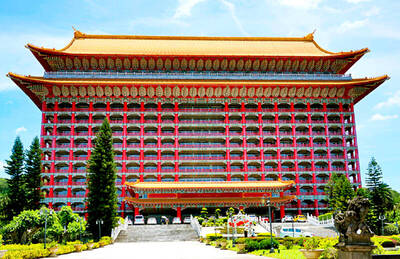
The Grand Hotel Taipei has rejected media reports claiming that the hotel had prevented CBS from broadcasting coverage of the Beijing summit between U.S. President Donald Trump and Chinese President Xi Jinping (習近平) on its premises. Media reports alleging that the hotel owner, dissatisfied with CBS’s coverage, prohibited the network from broadcasting political content on the hotel premises, are not true, the hotel said in a statement issued last night. The reports were “inconsistent with how the hotel actually handled the matter,” it said. The hotel said it received a refund request from a


 RSS
RSS