


The prestigious Asia Responsible Enterprise Awards (AREA) ceremony, a well-known event in Asia’s sustainability sector, took place on June 28 in Ho Chi Minh City, Vietnam. Hosted by the NGO Enterprise Asia, the award honored Chugai Pharma Taiwan in the categories of Green Leadership and Social Empowerment. This year, 320 companies and a total of 394 projects participated in the award, and 123 projects won the award. The winning rate is about 31 percent, highlighting Chugai Pharma’s outstanding performance in sustainable development in recent years, which has gained significant international recognition.
For the third consecutive year, Chugai Pharma Taiwan, a top-tier innovative pharmaceutical company, has been honored with the AREA, and this year, in the categories of Green Leadership and Social Empowerment. These repeated recognitions highlight the company’s exceptional performance in social responsibility. The company is committed to environmental sustainability, social welfare, and sustainable development. Every year, they organize the innovative public welfare event “Enterprise Family Day,” encouraging employees and their families to participate and experience the joy of giving back to society. The company also proactively launches various green initiatives spanning short, medium, and long-term goals.
In 2024, Chugai Pharma Taiwan expanded its outreach to the Rukai tribe in Pingtung, starting a partnership in March to join the Russet Sparrow Millet Restoration Project. Millet, a significant crop in Rukai culture, faces decline as farmlands shift to high-value crops due to market pressures and an aging farming population. This shift threatens six to eight millet varieties, russet sparrows, and other species. The russet sparrow, an endangered species listed in the IUCN Red List, has been particularly affected by deteriorating farmland quality, with fewer than a thousand of them estimated to remain in Taiwan. Also, the relocation of villages after August 8 Flood further exacerbated the cultural imbalance, worsening the ecosystem. As such, Chugai Pharma Taiwan is helping farmers adopt organic farming practices to produce millet without food safety concerns and turn it into Shio Koji sauce gift sets for employees and corporate partners, aiming to inspire wider participation. This effort aids aboriginal people’s livelihoods while safeguarding food safety, soil health, and the russet sparrow’s habitat.
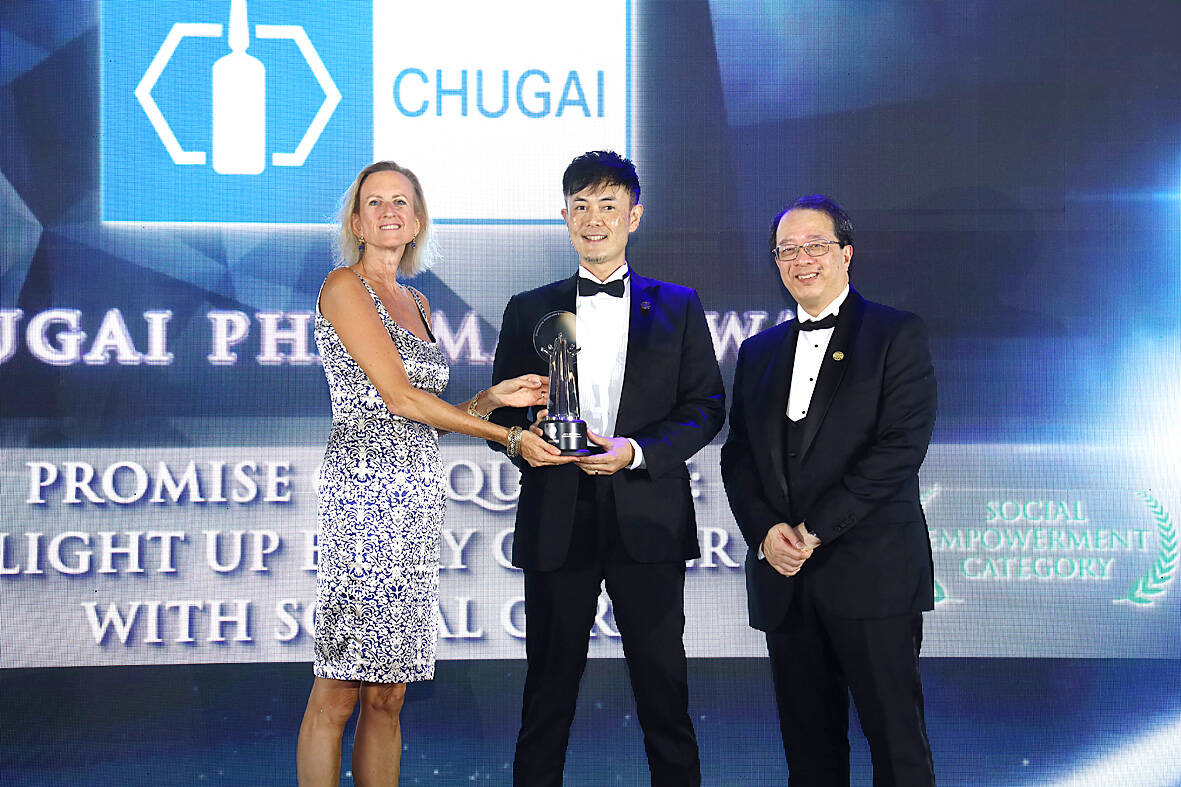
Photo by Chugai Pharma Taiwan
Moreover, Chugai Pharma Taiwan brings love to every corner. This year, in conjunction of Rare Disease Day, they hosted an entertaining fair at the Taipei Children’s Amusement Park. The event welcomed employees, their families, and children from Harmony Home. Children with rare diseases and Down syndrome were also invited to perform dramas and music, kicking off the event, with the goals of boosting their confidence and raising public awareness about rare diseases. Through various fun challenges, both adults and children learned about the SDGs, increasing ESG awareness. The company also invited the energetic hosts to lead dancing sessions, encouraging everyone to adopt regular exercise habits for a healthier, disease-free lifestyle.
For three consecutive years, Chugai Pharma Taiwan has been awarded the Asia Responsible Enterprise Awards, highlighting its outstanding corporate social responsibility, and motivating other businesses to participate in sustainability efforts. The company adheres to the patient-centric principle, focusing on unmet medical needs by offering innovative products, solutions, and services to improve health and well-being of mankind. The company is dedicated to corporate social responsibility, actively engaging in public welfare and environmental sustainability initiatives, and making positive contributions to society.
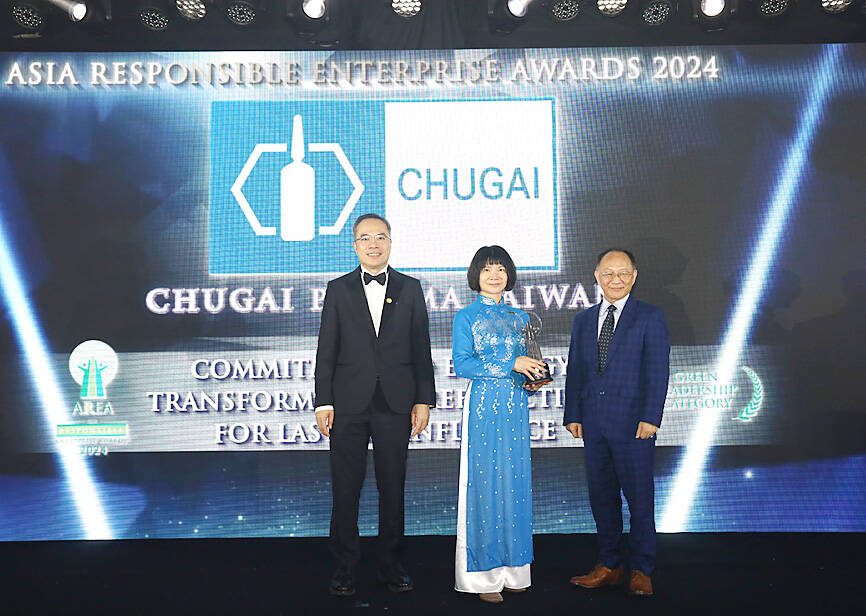
Photo by Chugai Pharma Taiwan

Photo by Chugai Pharma Taiwan

UPGRADE: The Kang Ding-class frigate is replacing its Chaparall missiles with Tien Chien II and Hua Yang VLS, which would provide it with long-range, 360° air defense Taiwan plans to produce 1,200 to 1,376 Hai Chien II missiles (海劍二, Sea Sword II) — also known as TC-2N — to serve as the standard air defense system of the navy’s surface combatant fleet, a source said yesterday. Last week, the Hai Chien II, the naval version of the Tien Kung II missile (天劍二, Sky Sword II), completed a live-fire test in waters off the National Chungshan Institute of Science and Technology’s Jiupeng facility (九鵬) in Pingtung County’s Manjhou Township (滿州). The MIM72 Chaparral and other dated air defense missiles that currently arm Taiwanese ships have inadequate range to combat Chinese

REASONS FOR TRAVEL: An assistant professor said that proposed amendments to penalize drivers if they used drugs overseas would not deter people from traveling People who operate a motor vehicle under the influence of marijuana would have their driver’s license revoked, even if they used the substance while overseas, the Ministry of Transportation and Communications said yesterday, citing proposed amendments to the Road Traffic Management and Penalty Act (道路交通管理處罰條例). The amendments would also authorize the government to revoke the licenses of people determined to have used Category 1 or Category 2 narcotics, even if they were not operating a vehicle while under the influence of drugs, as well as ban them from taking the license test for three years, the ministry said. People aged 18 or

HEAVY WEATHER: Typhoon Jangmi is due to crash straight into the Ryukyus as airlines look to shift flights to larger aircraft or cancel flights to Okinawa entirely Taiwan’s international air carriers announced flight adjustments over the weekend as Typhoon Jangmi is forecast to hit the Ryukyu Islands today and tomorrow. The Central Weather Administration (CWA) upgraded Jangmi from a tropical storm to a typhoon at 8am yesterday, with the eye located 580km south of Naha city. It was moving north at 19kph. Today, China Airlines’ CI-120, CI-121, CI-122 and CI-123 flights between Taoyuan and Naha, Okinawa, have been canceled as well as CI-132 and CI-133 between Kaohsiung and Naha. EVA Air’s BR-112, BR-113, BR-186 and BR-185 flights between Taoyuan and Naha are also canceled. Low-cost carrier Tigerair Taiwan canceled IT-230,
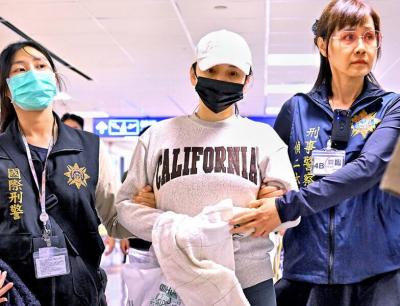
Johanne Liou (劉喬安), a Taiwanese woman who shot to unwanted fame during the Sunflower movement protests in 2014, returned to Taiwan last night after being deported from the US. She is to stand trial in Taiwan for charges involving embezzlement, fraud and drug crimes. The Criminal Investigation Bureau (CIB) said it took her into custody at Taiwan Taoyuan International Airport and would first question her before transferring her to the New Taipei District Prosecutors’ Office. She was arrested upon disembarking a flight from San Francisco that landed shortly before 7pm. Liou absconded to the US in 2019 after jumping bail


 RSS
RSS