


Chinese Nationalist Party (KMT) caucus whip Fu Kun-chi yesterday touted breakthroughs in his leading of a KMT delegation to Beijing, describing the visit as an “ice-breaker trip” that facilitated Chinese tourists being allowed to visit Taiwan again.
At a news conference at the Legislative Yuan, Fu, who led a delegation of 17 KMT lawmakers to Beijing from Friday to Sunday, and met with senior Chinese officials, said China has agreed to resume direct air routes between Taiwan and 30 major Chinese cities.
Currently, there are only 15 airports in Taiwan and China which operate cross-strait flights, fewer than one-quarter of the 61 before the COVID-19 pandemic.

Photo: CNA
In addition, residents of 20 densely populated cities in China, including the four directly administered municipalities — Beijing, Tianjin, Shanghai and Chongqing — would be allowed to apply for a permit to visit Taiwan from the Chinese authorities online, Fu said.
Fu also mentioned other measures, such as China permitting people from Chinese-controlled Fujian Province to visit Lienchiang County (Matsu) and expanding access to Taiwanese agricultural and fishery products in the Chinese market.
Fu urged the government to respond to China’s request for the resumption of flights, adding that it would enable nearly 50 million residents of China’s Fujian Province to travel to Taiwan.

Photo: CNA
The Mainland Affairs Council (MAC) on Sunday said that such arrangements neither adhere to the principle of reciprocal opening, nor conform to the norms of tourism, adding that subsequent decisions would be made by the MAC and other relevant departments.
Travel links between Taiwan and China have been largely frozen for the past three years, partly due to the COVID-19 pandemic.
China halted independent travel to Taiwan on Aug. 1, 2019, citing the poor state of cross-strait relations. It suspended group travel to Taiwan in 2020.
Meanwhile, when asked about 12 Chinese military aircraft crossing the median line of the Taiwan Strait on April 27, Fu yesterday did not respond specifically.
“I want to emphasize once again that this visit by the KMT is aimed at listening to all sectors in Taiwan and consistently advocating for the well-being and contentment of Taiwanese people, while also working toward improving cross-strait relations,” he said.
The Democratic Progressive Party caucus yesterday demanded transparency, asking the KMT lawmakers “to make clear to the public what conditions and concessions were offered in their talks with officials in Beijing.”
The KMT caucus is treating China’s “small favor as a great kindness and great virtue,” DPP caucus secretary-general Rosalia Wu (吳思瑤) said.
Additional reporting by Jason Pan and Hsieh Chun-lin
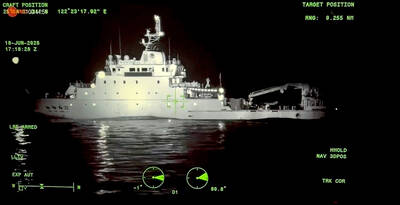
EXCUSES: Beijing is using government and research vessels as a pretext to harass the nation and enter its EEZ, and engage in ‘hegemonic expansion,’ the coast guard said The Coast Guard Administration yesterday said it drove away Chinese oceanographic research vessel Xiang Yang Hong 22 (向陽紅33) from restricted waters after warning it that it was in Taiwan’s exclusive economic zone (EEZ). The Chinese vessel entered restricted waters off the coast of Yilan County’s Suao (蘇澳) at 11:35pm on Thursday, the coast guard said, adding that it dispatched the Lanyu patrol vessel and the boat PP-10077 to shadow the Chinese ship and issue radio warnings ordering it to leave. China has no sovereignty over waters off Taiwan’s east coast, Lanyu’s crew told Xiang Yang Hong 22 over the radio, and demanded
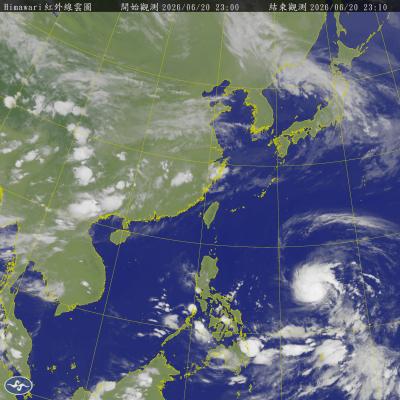
Tropical Storm Mekkhala is forecast to strengthen into a typhoon tomorrow and could come close enough to Taiwan later in the week to prompt a sea warning, the Central Weather Administration (CWA) said yesterday. As of 2 pm, the storm was located 1,870 kilometers southeast of Taiwan's southern tip and moving west- northwest at 23 km per hour. CWA forecaster Cheng Chieh-jen (鄭傑仁) said Mekkhala is expected to continue moving west-northwest through Tuesday under the influence of the Pacific high- pressure system before gradually turning north toward waters east of Taiwan or south of the Ryukyu Islands. The timing and angle of the
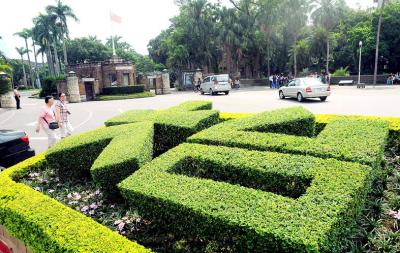
Four Taiwanese universities have been ranked among the world's top 200 institutions in the Quacquarelli Symonds (QS) World University Rankings for next year, the highest Taiwan has ever placed in the category, with National Taiwan University (NTU) achieving its best performance at 54th globally and 17th in Asia. The four Taiwanese institutions in the global top 200 are NTU (54th), National Tsing Hua University (142nd), National Yang Ming Chiao Tung University (177th) and National Cheng Kung University (191st), the rankings showed. All four universities achieved their highest-ever global rankings this year, QS data showed. National Cheng Kung University entered the top 200 for

RISING POPULARITY: Enhanced flight connectivity and a visa waiver trial program are among the motivations that have boosted travel to Taiwan by Filipinos, the agency said The Tourism Administration said yesterday that it is stepping up efforts to attract tourists from the Philippines following strong growth during the first quarter. The agency’s data showed the nation welcomed 210,000 Filipino visitors from January to March, marking a 43 percent increase compared with the same period last year. The Philippines is Taiwan’s top source of inbound tourists among the Southeast Asian nations, data showed. With a population of 116 million and national median age of 26, the Philippines boasts a young demographic with strong travel potential, the Tourism Administration said. Outbound travel demand in the Philippines continues to rise amid robust


 RSS
RSS