


The Food and Drug Administration (FDA) on Monday said it has issued an emergency recall of red yeast rice supplements from Japan’s Kobayashi Pharmaceuticals after reports of a suspected link to kidney disease.
The Osaka-based company last week issued a recall of products containing “beni-koji,” or red yeast rice, after some users reported kidney or other health issues, NHK reported on Friday last week.
Thirteen people reported adverse reactions, six of whom have been hospitalized while one underwent dialysis, the media outlet said.
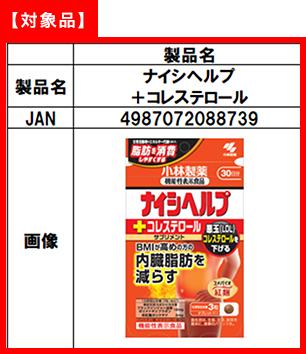
Photo from the Kobayashi Pharmaceuticals Web site
Company officials said that an analysis identified contents that should not be in the product, although the cause of the health issues remains unknown, the report said.
The supplement is marketed as able to help lower cholesterol and blood pressure.
About 80 percent of the product is reportedly exported, including to Taiwan.
Speaking to reporters on Monday, FDA Deputy Director-General Lin Chin-fu (林金富) said that 56 batches have been imported by two local companies since Jan. 1, 2022.
The importers have already been instructed to recall the product, while further imports would be stopped at the border, Lin said.
The FDA is working with local governments to discover where the products are being sold, he said, adding that the companies’ names would not be publicized, as they have not convened any regulations and are cooperating with the recall.
However, both companies have posted notices on their own Web sites informing about the recall and advising buyers to avoid consuming the product.

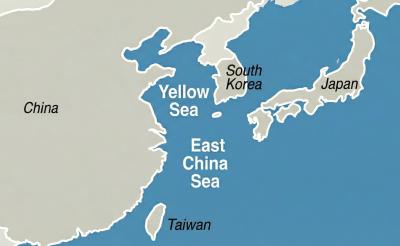
China has reserved offshore airspace in the Yellow Sea and East China Sea from March 27 to May 6, issuing alerts usually used to warn of military exercises, although no such exercises have been announced, the Wall Street Journal (WSJ) reported yesterday. Reserving such a large area for 40 days without explanation is an “unusual step,” as military exercises normally only last a few days, the paper said. These alerts, known as Notice to Air Missions (Notams), “are intended to inform pilots and aviation authorities of temporary airspace hazards or restrictions,” the article said. The airspace reserved in the alert is
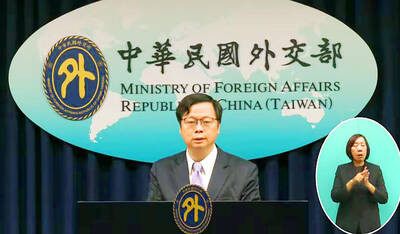
NAMING SPAT: The foreign ministry called on Denmark to propose an acceptable solution to the erroneous nationality used for Taiwanese on residence permits Taiwan has revoked some privileges for Danish diplomatic staff over a Danish permit that lists “Taiwan” as “China,” Eric Huang (黃鈞耀), head of the Ministry of Foreign Affairs’ Department of European Affairs, told a news conference in Taipei yesterday. Reporters asked Huang whether the Danish government had responded to the ministry’s request that it correct the nationality on Danish residence permits of Taiwanese, which has been listed as “China” since 2024. Taiwan’s representative office in Denmark continues to communicate with the Danish government, and the ministry has revoked some privileges previously granted to Danish representatives in Taiwan and would continue to review
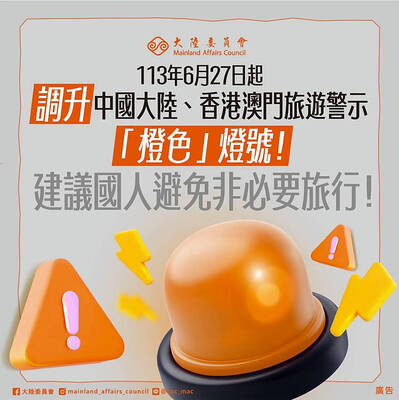
More than 6,000 Taiwanese students have participated in exchange programs in China over the past two years, despite the Mainland Affairs Council’s (MAC) “orange light” travel advisory, government records showed. The MAC’s publicly available registry showed that Taiwanese college and university students who went on exchange programs across the Strait numbered 3,592 and 2,966 people respectively. The National Immigration Agency data revealed that 2,296 and 2,551 Chinese students visited Taiwan for study in the same two years. A review of the Web sites of publicly-run universities and colleges showed that Taiwanese higher education institutions continued to recruit students for Chinese educational programs without
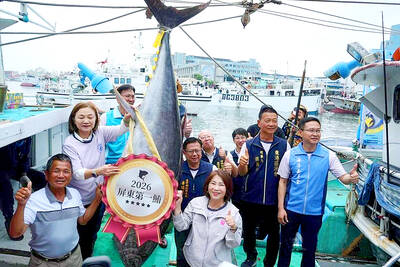
The first bluefin tuna of the season, brought to shore in Pingtung County and weighing 190kg, was yesterday auctioned for NT$10,600 (US$333.5) per kilogram, setting a record high for the local market. The auction was held at the fish market in Donggang Fishing Harbor, where the Siaoliouciou Island-registered fishing vessel Fu Yu Ching No. 2 delivered the “Pingtung First Tuna” it had caught for bidding. Bidding was intense, and the tuna was ultimately jointly purchased by a local restaurant and a local company for NT$10,600 per kilogram — NT$300 ,more than last year — for a total of NT$2.014 million. The 67-year-old skipper


 RSS
RSS