

Taiwan People’s Party (TPP) Chairman Ko Wen-je (柯文哲) yesterday rejected claims of large-scale voter fraud in Saturday’s presidential election, saying it was unlikely in Taiwan’s mature democracy.
Following Ko’s third-place finish in the presidential election, some of his supporters have suggested that voter fraud was to blame for the discrepancy between the party’s polling and the official results.
The party’s internal polling was inaccurate not because the numbers were faked, as some have suggested, but because it was heavily weighted toward younger Taiwanese, Ko told reporters, adding that the result would have been closer if voter turnout was higher than 71 percent.
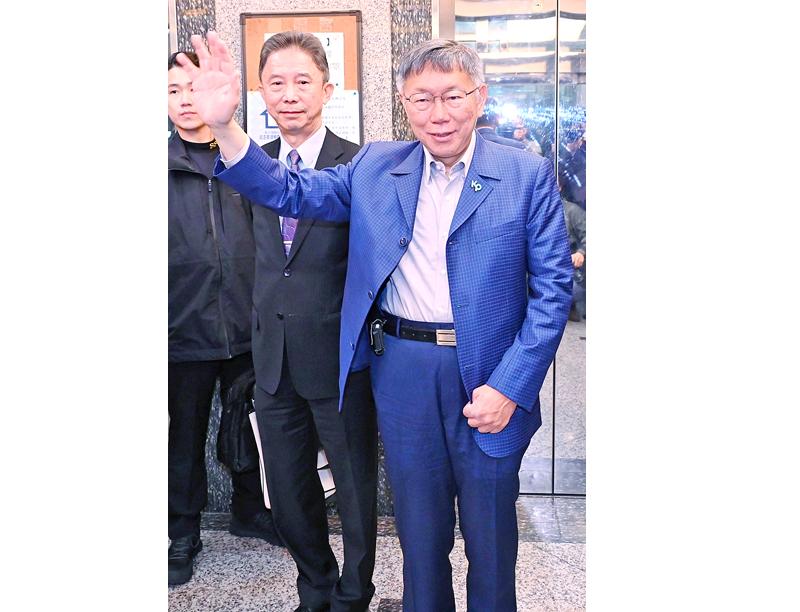
Photo: Liu Hsin-de, Taipei Times
The campaign was unsuccessful at reaching older voters and encouraging people to vote, he said.
Although some minor voting anomalies in the election were possible, large-scale fraud is unlikely in a mature democracy like Taiwan’s, he said.
Ko on Tuesday evening wrote on Facebook that many of his supporters had contacted TPP headquarters or made accusations of voter fraud on social media, with some claiming to have seen hundreds of stolen votes, discrepancies in the count and other anomalies.
Although the Central Election Commission (CEC) said no fraud occurred in the elections, “so many mistakes of varying sizes have invariably raised questions among the public,” he wrote, calling for a better approach.
He also detailed the party’s internal polling methodology to dispel accusations that they had been faked to insinuate the race was closer than it was.
In related news, the CEC yesterday said it notified the Taiwan High Prosecutors’ Office, the National Police Agency and the Ministry of Justice Bureau of Investigation of the spread of online disinformation targeting it.
Despite the conclusion of the presidential election, people continue to spread false allegations on online against the commission and its staff, it said in a news release.
Members of political parties, or monitors recommended by the parties, were at voting booths, while the ballot count was televised, it said.
Even if some individuals failed to observe regulations, they were isolated cases, and, despite claims, ballot-rigging is impossible, the commission said.
False accusations stating that the CEC falsified vote counts or other similar messages and videos have been collected as evidence and forwarded to the judiciary for investigation, it said.
Additional reporting by CNA
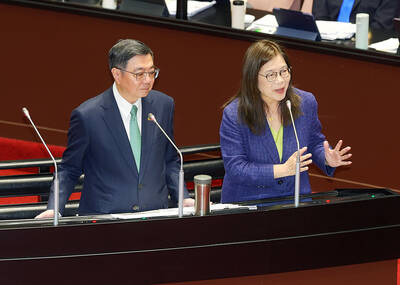
The donation of offshore patrol vessel Kinmen to the Philippines includes provisions that protect Taiwanese fishers and facilitate security cooperation across the First Island Chain, officials said yesterday. The comment was made during the Cabinet’s comprehensive administrative report at the legislature after Chinese Nationalist Party (KMT) Legislator Hsu Yu-chen (許宇甄) expressed concerns about the decision to give a ship to a country whose coast guard had in 2013 fired on a Taiwanese trawler and killed its captain without provocation. The Cabinet should lay out the safeguards that have been established to prevent the Philippine government from using the Kinmen to harass, expel
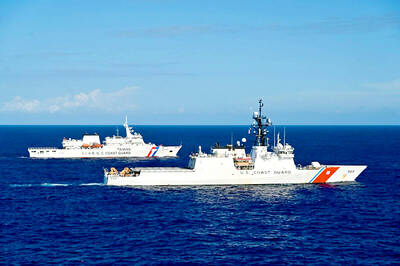
GROWING TIES: The CGA is planning a goodwill mission to the Philippines, in what would be the first time since 1975 a Taiwanese paramilitary vessel has visited the country The Coast Guard Administration (CGA) plans to significantly expand its participation in international security cooperative frameworks and its operational capabilities, a budget proposal for next year showed. The budget indicates a transformation of the CGA from a maritime law enforcement arm into a national defense and intelligence gathering entity capable of tackling larger regional security matters. The proposal showed that personnel from the coast guard’s Intelligence Division and Special Action Support Center are to participate in high-level national security talks with the US. As the CGA has dealt with China’s rising “gray zone” threats around Taiwan, it has become a valuable asset to
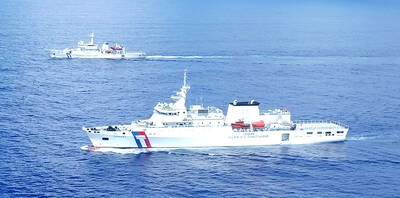
‘FRIENDSHIP FLEET’: A CGA official is scheduled to meet with the president of the Pacific nation, while one of the ships is to host a banquet and National Day event Two Coast Guard Administration (CGA) patrol vessels have docked at Malakal Harbor in Palau as part of an expedition exercise and diplomatic visit, during which a senior official is expected to meet with Palauan President Surangel Whipps Jr, the agency said yesterday. The two vessels, the 4,000-tonne-class Chiayi and the 1,000-tonne-class Penghu, set sail for Palau from Taiwan last week and arrived on Tuesday at Malakal Harbor, the CGA’s Fleet Branch said in a statement. The journey marks the second time the CGA has dispatched a “friendship fleet” to another country, after it sent its first-ever goodwill fleet, comprising the Hualien and
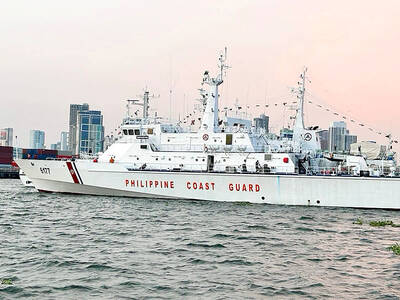
A patrol vessel donated by the Coast Guard Administration (CGA) to the Philippines was commissioned into the Philippine Coast Guard (PCG) on Friday, a Philippine non-governmental organization said. The CGA on Sept. 16 confirmed media reports that Taiwan had donated a retired 500-tonne patrol vessel to the Philippines. The Manila-based We Protect Our Seas (WPS) foundation, which served as an intermediary in the transfer, said that the vessel was formerly the CGA’s 500-tonne petrol vessel Kinmen (CG123). The WPS, in a statement issued on Friday, said the vessel, renamed as the BRP Sarangani, had been commissioned into the PCG the


 RSS
RSS