


The Taiwan People’s Party (TPP) on Wednesday announced proposals to curb the government’s use of special budgets and expand the allocation of tax revenues to local governments.
TPP legislator at-large candidates Huang Kuo-chang (黃國昌) and Chang Chi-kai (張啟楷) made the proposals during a news conference at the campaign headquarters of TPP Chairman and presidential candidate Ko Wen-je (柯文哲) in New Taipei City.
Speaking first, Huang said that Taiwan’s current system gives the central government control of 82 percent of tax revenue, leaving local governments underfunded and unable to raise sufficient revenues on their own.
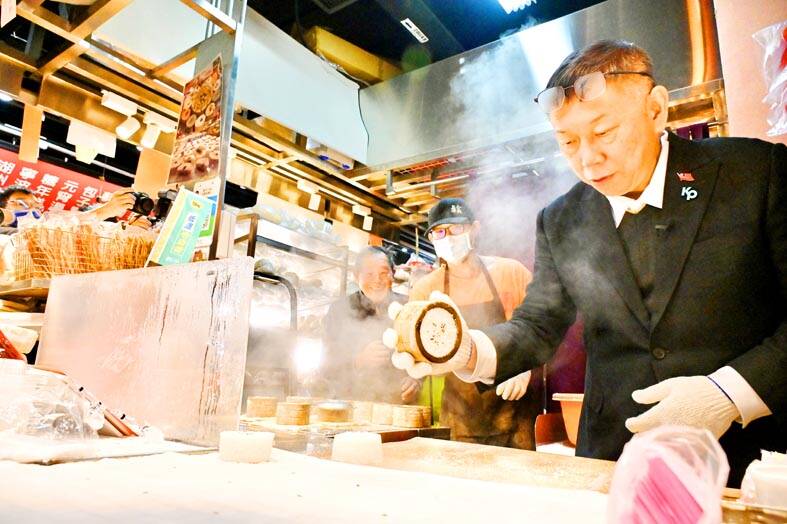
Photo: George Tsorng, Taipei Times
He claimed that the ruling Democratic Progressive Party (DPP) supported reforming the law governing such matters — the Act Governing the Allocation of Government Revenues and Expenditures (財政收支劃分法) — when it was in opposition, but has made no effort to do so since it came to power in 2016.
To resolve these issues, the TPP is to push for legal amendments to expand the distribution of funds to local governments and ensure that they are allocated at a uniform rate to all cities and counties, Huang said.
Huang’s proposal echoed previous TPP pronouncements on the issue, which have criticized the fact that almost two-thirds of the tax revenue allocated to local governments go to the six special municipalities, with the remaining one-third split between 16 other cities and counties.
Meanwhile, Chang said the TPP would also push to amend the Budget Act (預算法) to ensure the government does not use special budgets outside of the general budget as a “blank authorization” for unrestrained spending.
In response to the criticism, DPP spokesman Chang Chih-hao (張志豪) said that Ko had failed to show fiscal discipline as Taipei mayor.
In addition, Chang accused him of raiding city government funds to repay municipal debt. Under Article 83 of the Budget Act, special budgets can be proposed for wars or emergency national defense installations, major national economic events, major calamities or “major political events that take place irregularly or once every few years.”
Under President Tsai Ing-wen (蔡英文), the government has passed NT$2.4 trillion (US$76.7 million) in special budgets, including funding for the Forward-Looking Infrastructure Development Program that has gone to overbudgeted projects like the Hsinchu Municipal Baseball Stadium, Chang said.
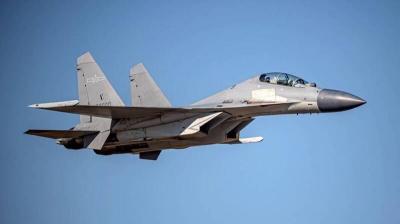
Eight Chinese naval vessels and 24 military aircraft were detected crossing the median line of the Taiwan Strait between 6am yesterday and 6am today, the Ministry of National Defense said this morning. The aircraft entered Taiwan’s northern, central, southwestern and eastern air defense identification zones, the ministry said. The armed forces responded with mission aircraft, naval vessels and shore-based missile systems to closely monitor the situation, it added. Eight naval vessels, one official ship and 36 aircraft sorties were spotted in total, the ministry said.
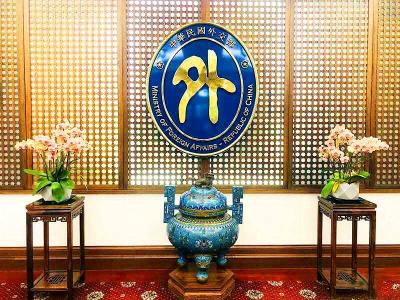
The Ministry of Foreign Affairs (MOFA) today said that if South Korea does not reply appropriately to its request to correct Taiwan’s name on its e-Arrival card system before March 31, it would take corresponding measures to alter how South Korea is labeled on the online Taiwan Arrival Card system. South Korea’s e-Arrival card system lists Taiwan as “China (Taiwan)” in the “point of departure” and “next destination” fields. The ministry said that it changed the nationality for South Koreans on Taiwan’s Alien Resident Certificates from “Korea” to “South Korea” on March 1, in a gesture of goodwill and based on the
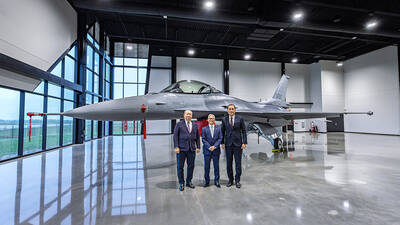
Taiwanese officials were shown the first of 66 F-16V fighter jets purchased by Taiwan from the United States, the Ministry of National Defense said yesterday, adding the aircraft has completed an initial flight test and is expected to be delivered later this year. A delegation led by Deputy Minister of National Defense Hsu Szu-chien (徐斯儉) visited Lockheed Martin’s F-16 C/D Block 70 (also known as F-16V) assembly line in South Carolina on March 16 to view the aircraft. The jet will undergo a final acceptance flight in the US before being delivered to Taiwan, the
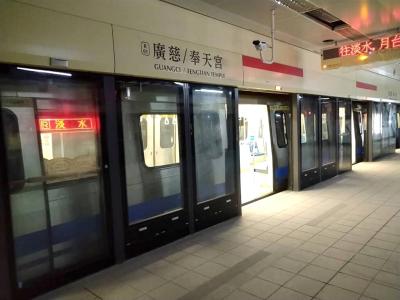
The New Taipei Metro's Sanyin Line and the eastern extension of the Taipei Metro's Tamsui-Xinyi Line (Red Line) are scheduled to begin operations in June, the National Development Council said today. The Red Line, which terminates at Xiangshan Station, would be connected by the 1.4km extension to a new eastern terminal, Guangci/Fengtian Temple Station, while the Sanyin Line would link New Taipei City's Tucheng and Yingge stations via Sanxia District (三峽). The council gave the updates at a council meeting reviewing progress on public construction projects for this year. Taiwan's annual public infrastructure budget would remain at NT$800 billion (US$25.08 billion), with NT$97.3


 RSS
RSS