


About 70 percent people are worried about getting anesthetized during an outpatient visit or health exam, while 40 percent have refused a checkup or treatment because they were concerned about adverse side effects from anesthesia, a survey released yesterday by the Taiwan Society of Anesthesiologists showed.
The society last month conducted a survey to understand people’s concerns and knowledge about anesthesia, collecting more than 500 valid questionnaires from respondents aged 20 or older, said society president Yu Huang-ping (余黃平), director of Linkou Chang Gung Memorial Hospital’s Department of Anesthesiology.
Of the respondents, about 70 percent were concerned about getting anesthesia during an outpatient visit or health exam, he said, adding that 54.8 percent were worried that anesthetics could harm their organs and 54.4 percent believed that anesthesia results in a higher risk of death, he said.

Photo: CNA
The respondents’ three most common concerns were that they would not wake up after being anesthetized (37.2 percent), would have a bad adverse reaction (36.8 percent) and would wake up during surgery (33 percent), Yu said.
About 40 percent of the respondents had refused a checkup or treatment for fear of potential side effects from anesthesia, he said.
Of those who had received anesthesia, 67 percent did not know the name of the anesthesiologist involved, Yu said, adding that the public’s knowledge about anesthesia is limited.
Society managing supervisor Liaw Wen-jinn (廖文進), an anesthesiologist at Chung Shan Medical University Hospital, said that elderly people, people with multiple chronic health conditions, severely obese people, people with snoring and sleep apnea syndrome, and people with poor kidney function might be more at risk of experiencing side effects from anesthesia.
To reduce the risk to their health from anesthesia and ensure they are more comfortable about the procedure, people should ensure they know the name of their anesthesiologist, learn what type of anesthetic is to be used, and check whether the hospital plans to use anesthesia monitoring equipment during the procedure, he said.
People are also encouraged to consult with their anesthesiologist and voice their concerns, so that the anesthesiologist can customize the types of anesthetics used and dosages, and explain the possible side effects, Liaw said.
However, with new advances in anesthetics, most people can safely be anesthetized with proper monitoring, he added.
The society said that people should fully communicate their health issues to their anesthesiologist, check whether the anesthesiologist’s name is on the anesthesia consent form before the procedure, try to relax and cooperate with the medical team during the procedure, and be alert to any possible side effects after the procedure.
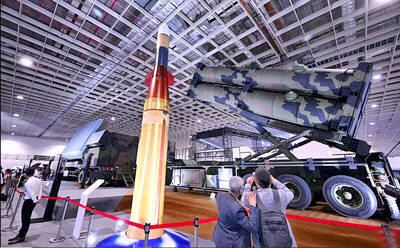
Taiwan is to commence mass production of the Tien Kung (天弓, “Sky Bow”) III, IV and V missiles by the second quarter of this year if the legislature approves the government’s NT$1.25 trillion (US$39.78 billion) special defense budget, an official said yesterday. Commenting on condition of anonymity, a defense official with knowledge of the matter said that the advanced systems are expected to provide crucial capabilities against ballistic and cruise missiles for the proposed “T-Dome,” an advanced, multi-layered air defense network. The Tien Kung III is an air defense missile with a maximum interception altitude of 35km. The Tien Kung IV and V
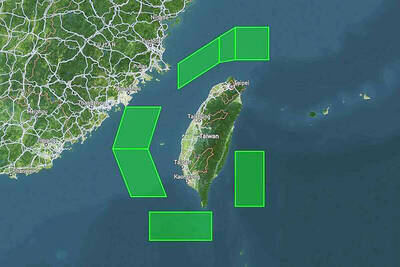
The disruption of 941 flights in and out of Taiwan due to China’s large-scale military exercises was no accident, but rather the result of a “quasi-blockade” used to simulate creating the air and sea routes needed for an amphibious landing, a military expert said. The disruptions occurred on Tuesday and lasted about 10 hours as China conducted live-fire drills in the Taiwan Strait. The Civil Aviation Administration (CAA) said the exercises affected 857 international flights and 84 domestic flights, affecting more than 100,000 travelers. Su Tzu-yun (蘇紫雲), a research fellow at the government-sponsored Institute for National Defense and Security Research, said the air
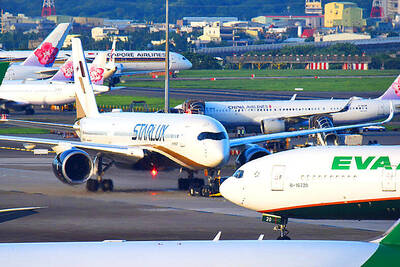
Trips for more than 100,000 international and domestic air travelers could be disrupted as China launches a military exercise around Taiwan today, Taiwan’s Civil Aviation Administration (CAA) said yesterday. The exercise could affect nearly 900 flights scheduled to enter the Taipei Flight Information Region (FIR) during the exercise window, it added. A notice issued by the Chinese Civil Aviation Administration showed there would be seven temporary zones around the Taiwan Strait which would be used for live-fire exercises, lasting from 8am to 6pm today. All aircraft are prohibited from entering during exercise, it says. Taipei FIR has 14 international air routes and
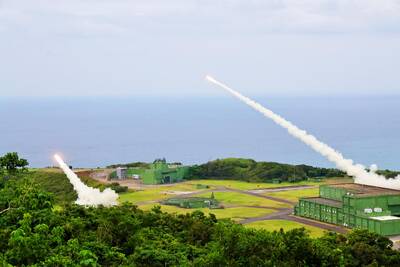
Taiwan lacks effective and cost-efficient armaments to intercept rockets, making the planned “T-Dome” interception system necessary, two experts said on Tuesday. The concerns were raised after China’s military fired two waves of rockets during live-fire drills around Taiwan on Tuesday, part of two-day exercises code-named “Justice Mission 2025.” The first wave involved 17 rockets launched at 9am from Pingtan in China’s Fujian Province, according to Lieutenant General Hsieh Jih-sheng (謝日升) of the Office of the Deputy Chief of the General Staff for Intelligence at the Ministry of National Defense. Those rockets landed 70 nautical miles (129.6km) northeast of Keelung without flying over Taiwan,


 RSS
RSS