


Noting that researchers have found that 85 China-based blogs and accounts were spreading a conspiracy theory that a US “meteorological weapon” had caused recent fires in Hawaii, political observers in Taiwan said the nation also needs to be vigilant of Beijing employing similar disinformation campaigns against Taiwan.
The untrue content concerning Hawaii was written in 15 languages and disseminated across a myriad of platforms including Facebook, YouTube and X, a report published in Gizmodo said, citing NewsGuard, an online news content ranker.
The effort represented the most expansive Chinese informational operation to be uncovered by NewsGuard to date, Gizmodo said.
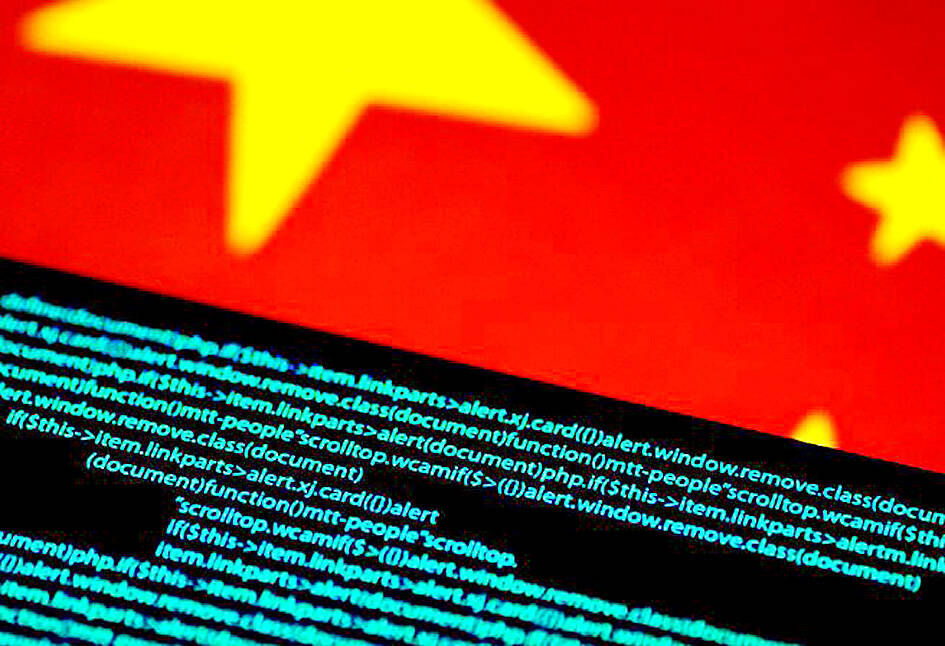
Photo: Reuters
The conspiracy theory involved the British MI6, a supposed US defector and a capability to manipulate wildfires, storms and volcanic eruptions, it said.
FAKE
Citing NewsGuard, Gizmodo said the fake story first appeared on a Chinese platform called 163.com in early August before being distributed on global platforms via sock puppet accounts, and added that the posts apparently utilized bots to generate comments, replies and shares.
Though researchers cannot prove that the accounts were directed by Beijing, the weather weapon rumors had originated from Chinese-language accounts and platforms prior to being reproduced in other languages, Gizmodo said.
The accounts linked to the fake story were newly created and many showed little or no activity beyond sharing stories that aligned with Beijing’s interests, Gizmodo said, paraphrasing NewsGuard.
DISINFORMATION
In response, Meta Platforms Inc told Gizmodo that its researchers have identified the accounts as part of Spamouflage, a disinformation campaign of Chinese origin.
That operation dated to 2019 and had been linked to spreading another tranche of fake stories detailed in Meta’s Q2 Adversarial Threat Report, the outlet cited Meta as saying.
In Taiwan, a report to the Legislative Yuan in April by the National Security Bureau stated that Beijing is expected to ratchet up its disinformation campaign targeting Taiwan to influence voters ahead of the nation’s general elections next year.
Commenting on condition of anonymity, a source with insight into the matter said that China’s use of algorithms in propaganda would likely increase, making it more difficult for users to distinguish fake stories from real ones in the future.
Being skeptical toward provocative headlines and verifying stories before sharing them remains key in preventing foreign meddling in Taiwan’s politics and public opinion, they said.

The military has spotted two Chinese warships operating in waters near Penghu County in the Taiwan Strait and sent its own naval and air forces to monitor the vessels, the Ministry of National Defense (MND) said. Beijing sends warships and warplanes into the waters and skies around Taiwan on an almost daily basis, drawing condemnation from Taipei. While the ministry offers daily updates on the locations of Chinese military aircraft, it only rarely gives details of where Chinese warships are operating, generally only when it detects aircraft carriers, as happened last week. A Chinese destroyer and a frigate entered waters to the southwest
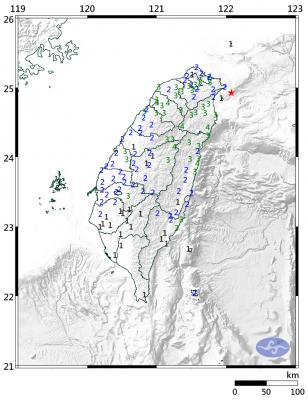
A magnitude 6.1 earthquake struck off the coast of Yilan County at 8:39pm tonight, the Central Weather Administration (CWA) said, with no immediate reports of damage or injuries. The epicenter was 38.7km east-northeast of Yilan County Hall at a focal depth of 98.3km, the CWA’s Seismological Center said. The quake’s maximum intensity, which gauges the actual physical effect of a seismic event, was a level 4 on Taiwan’s 7-tier intensity scale, the center said. That intensity level was recorded in Yilan County’s Nanao Township (南澳), Hsinchu County’s Guansi Township (關西), Nantou County’s Hehuanshan (合歡山) and Hualien County’s Yanliao (鹽寮). An intensity of 3 was

Japanese Prime Minister Sanae Takaichi’s comment last year on Tokyo’s potential reaction to a Taiwan-China conflict has forced Beijing to rewrite its invasion plans, a retired Japanese general said. Takaichi told the Diet on Nov. 7 last year that a Chinese naval blockade or military attack on Taiwan could constitute a “survival-threatening situation” for Japan, potentially allowing Tokyo to exercise its right to collective self-defense. Former Japan Ground Self-Defense Force general Kiyofumi Ogawa said in a recent speech that the remark has been interpreted as meaning Japan could intervene in the early stages of a Taiwan Strait conflict, undermining China’s previous assumptions
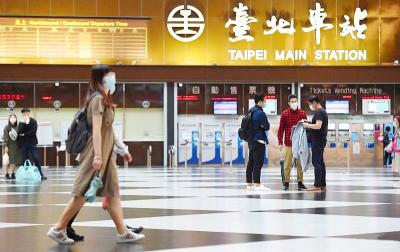
Taiwan Railways Corp (TRC) today announced that Shin Kong Mitsukoshi has been selected as the preferred bidder to operate the Taipei Railway Station shopping mall, replacing the current operator, Breeze Development Co Ltd. Among eight qualified firms that delivered presentations and were evaluated by a review committee, Shin Kong Mitsukoshi was ranked first, while Breeze was named the runner-up, the rail company said in a statement. Contract negotiations are to proceed in accordance with regulations, it said, adding that if negotiations with the top bidder fail, it could invite the second-ranked applicant to enter talks. Breeze in a statement today expressed doubts over


 RSS
RSS