


National Taiwan University Hospital (NTUH) has developed an ultrasound device that uses artificial intelligence (AI) to assess in about 15 minutes a person’s risk of sleep apnea, as many people are not diagnosed due to the difficulty of undergoing a polysomnography, it said yesterday.
NTUH Health Management Center director Chiu Han-mo (邱瀚模) said that a US study found that about one in five people in the US have sleep apnea, one in 15 have severe sleep apnea and one in four middle-aged men have sleep apnea, but about 75 percent of those with severe sleep apnea are undiagnosed and untreated.
Untreated sleep apnea can increase the risk of heart disease, diabetes, stroke, memory loss, depression and other chronic diseases, he said, adding that people with severe sleep apnea are at more than double the risk of death and being involved in traffic incidents, and 1.5 times more likely to develop hypertension.
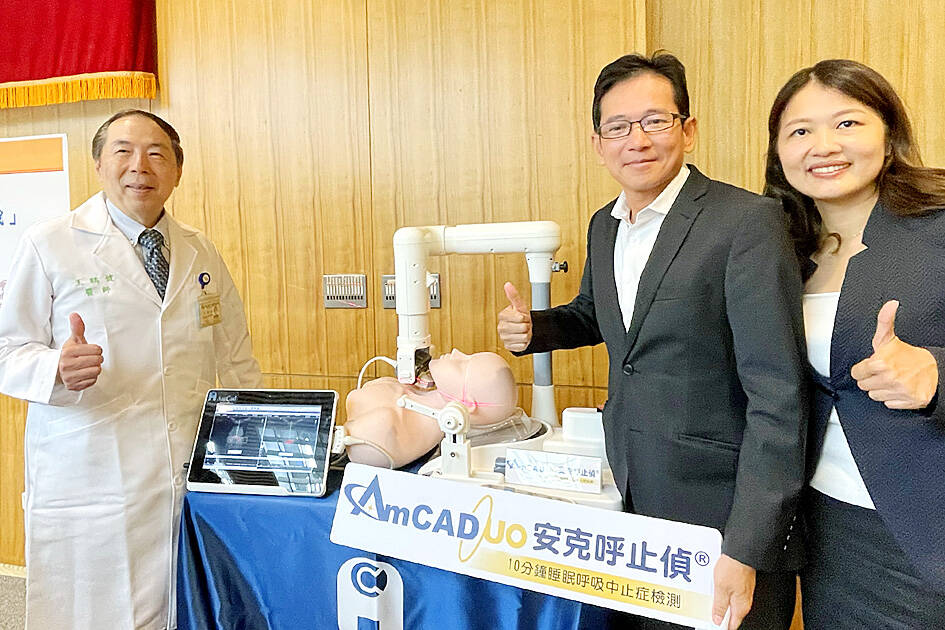
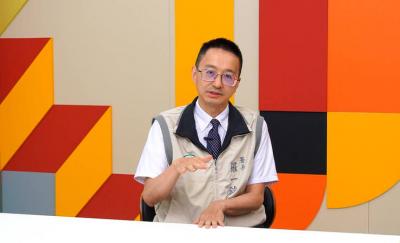
Photo: Chiu Chih-jou, Taipei Times
NTUH Health Management Center attending physician Tseng Ping-hui (曾屏輝) said that sleep apnea is underdiagnosed, as many people are not aware that their sleep is being interrupted.
If they suspect it, they should arrange for a 24-hour polysomnography to be diagnosed, which many find inconvenient, as they are often required to wait for a long time to be scheduled for the sleep study, Tseng said.
With at-home sleep apnea tests and other new methods being developed in the past few years, NTUH and a local biomedical company developed an AI-assisted ultrasound scan device to assess the risk of sleep apnea in about 10 to 15 minutes, he said.
NTUH said the device was developed by National Taiwan University professors Wang Hao-chien (王鶴健) and Argon Chen (陳正剛).
A clinical trial was conducted at the Stanford Sleep Medicine Center in California and the NTUH Health Management Center for the device, which has been approved by the Food and Drug Administration (FDA) and the US FDA, and received the EU’s CE marking certification, it added.
Tseng said that people who receive the AI-assisted ultrasound scan do not have to be asleep.
They only need to breathe several times as instructed and the device can assess their risk of obstructive sleep apnea in about 10 to 15 minutes, he said.
Of the more than 1,100 people who received the test at NTUH, 28 percent (108 people) were determined to be at high risk of sleep apnea and referred to the Center of Sleep Disorder for a through polysomnography, he said.
Of those referred for the sleep study, 103 were diagnosed with sleep apnea, an accuracy rate of about 95 percent, he said.
NTUH Center of Sleep Disorder director Hsu Wei-chung (許巍鐘) said that obstructive sleep apnea was previously thought to be more common in elderly people, those who are overweight or obese, and those who have a short neck, but clinical data collected from the ultrasound scan show that many people diagnosed with sleep apnea are not obese or elderly.
Most are in their 40s, Hsu said.
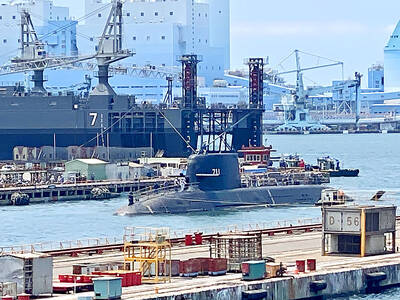
AGING: While Japan has 22 submarines, Taiwan only operates four, two of which were commissioned by the US in 1945 and 1946, and transferred to Taiwan in 1973 Taiwan would need at least 12 submarines to reach modern fleet capabilities, CSBC Corp, Taiwan chairman Chen Cheng-hung (陳政宏) said in an interview broadcast on Friday, citing a US assessment. CSBC is testing the nation’s first indigenous defense submarine, the Hai Kun (海鯤, Narwhal), which is scheduled to be delivered to the navy next month or in July. The Hai Kun has completed torpedo-firing tests and is scheduled to undergo overnight sea trials, Chen said on an SET TV military affairs program. Taiwan would require at least 12 submarines to establish a modern submarine force after assessing the nation’s operational environment and defense
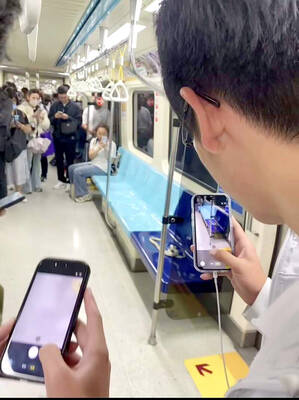
A white king snake that frightened passengers and caused a stir on a Taipei MRT train on Friday evening has been claimed by its owner, who would be fined, Taipei Rapid Transit Corp (TRTC) said yesterday. A person on Threads posted that he thought he was lucky to find an empty row of seats on Friday after boarding a train on the Bannan (Blue) Line, only to spot a white snake with black stripes after sitting down. Startled, he jumped up, he wrote, describing the encounter as “terrifying.” “Taipei’s rat control plan: Release snakes on the metro,” one person wrote in reply, referring
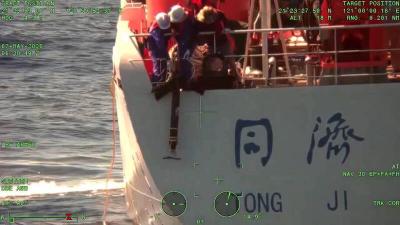
The coast guard today said that it had disrupted "illegal" operations by a Chinese research ship in waters close to the nation and driven it away, part of what Taipei sees a provocative pattern of China's stepped up maritime activities. The coast guard said that it on Thursday last week detected the Chinese ship Tongji (同濟號), which was commissioned only last year, 29 nautical miles (54km) southeast of the southern tip of Taiwan, although just outside restricted waters. The ship was observed lowering ropes into the water, suspected to be the deployment of scientific instruments for "illegal" survey operations, and the coast
Taiwan’s two cases of hantavirus so far this year are on par with previous years’ case numbers, and the government is coordinating rat extermination work, so there should not be any outbreaks, Centers for Disease Control (CDC) Director-General Philip Lo (羅一鈞) said today in an interview with the Liberty Times (the Taipei Times’ sister newspaper). An increase in rat sightings in Taipei and New Taipei City has raised concerns about the spread of hantavirus, as rats can carry the disease. In January, a man in his 70s who lived in Taipei’s Daan District (大安) tested positive posthumously for hantavirus, Taiwan’s


 RSS
RSS