


Prosecutors have searched the homes of eight employees of a private preschool in New Taipei City, which has been accused of giving its students sedatives, while the number of parents who have filed police reports in the case has risen to 17, local authorities said yesterday.
Authorities early yesterday searched the homes of the school principal and seven teachers, who were then taken in for questioning, said the New Taipei City Prosecutors’ Office, which is investigating the matter in collaboration with police.
The allegations against the school in Banciao District (板橋) were first made on May 14, when the parents of three students told police that a teacher had given their children some unknown drugs and had used improper physical methods to discipline them.
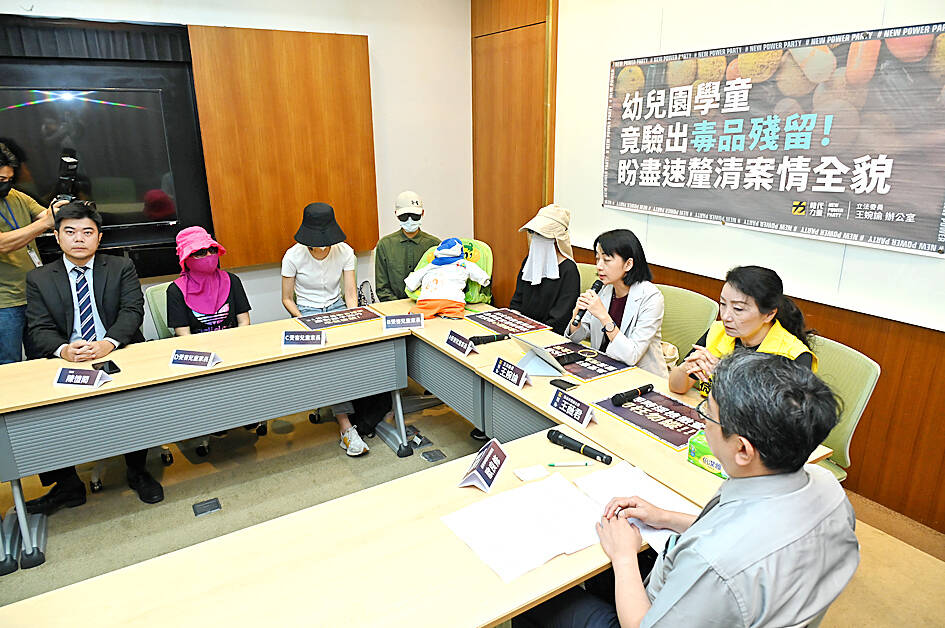
Photo: Tu Chien-jung, Taipei Times
In the reports, the parents said that from February to April, they noticed behavioral changes in their children, including extreme irritability and incidents of self-harm.
On May 18, prosecutors searched the school and detained a teacher, surnamed Chao (趙), for questioning, before releasing her on bail of NT$20,000.
Since then, 14 other parents have filed reports with the police, bringing the number to 17 as of yesterday, the New Taipei City Government said.
Twenty-eight of the school’s 67 students have been given drug tests, it said, adding that the results are still pending.
At a news conference last week, a student’s father, surnamed Chiang (江), said he had taken his child to three hospitals for blood and urine tests late last month after the story broke in the media.
On Thursday last week, the blood test results at Linkou Chang Gung Memorial Hospital showed the presence of barbiturates, a class of central nervous system depressant drugs used to help people sleep, relieve anxiety and muscle spasms, and to prevent seizures, Chiang said.
Yen Tzung-hai (顏宗海), a nephrologist at the hospital, told reporters that barbiturates are prescription drugs used in hospitals and are classified as Level 3 controlled substances by the Ministry of Justice, meaning they should not be easily accessible to the public.
An overdose of barbiturates can cause respiratory problems and pose a life-threatening risk, Yen said.
The teacher, Chao, who was first accused of sedating the children, has been put on leave as the investigation continues, but the school, which has not been publicly named, remains open.
In a statement yesterday, the New Taipei City Department of Education said the school was already scheduled to close on July 31, as the building’s landlord had opted not to renew the lease.
The department said it was working with parents to get the students enrolled in other schools, and had assembled a team to help the families on an individual basis, including with matters relating to medical treatment and legal advice.

Actor Darren Wang (王大陸) was sentenced to six months in prison, commutable to a fine, by the New Taipei District Court today for contravening the Personal Data Protection Act (個人資料保護法) in a case linked to an alleged draft-dodging scheme. Wang allegedly paid NT$3.6 million (US$114,380) to an illegal group to help him evade mandatory military service through falsified medical documents, prosecutors said. He transferred the funds to Chen Chih-ming (陳志明), the alleged mastermind of a draft-evasion ring, although he lost contact with him as he was already in detention on fraud charges, they said. Chen is accused of helping a

SECURITY: Starlink owner Elon Musk has taken pro-Beijing positions, and allowing pro-China companies to control Taiwan’s critical infrastructure is risky, a legislator said Starlink was reluctant to offer services in Taiwan because of the nation’s extremely high penetration rates in 4G and 5G services, the Ministry of Digital Affairs said yesterday. The ministry made the comments at a meeting of the legislature’s Transportation Committee, which reviewed amendments to Article 36 of the Telecommunications Management Act (電信管理法). Article 36 bans foreigners from holding more than 49 percent of shares in public telecommunications networks, while shares foreigners directly and indirectly hold are also capped at 60 percent of the total, unless specified otherwise by law. The amendments, sponsored by Chinese Nationalist Party (KMT) Legislator Ko
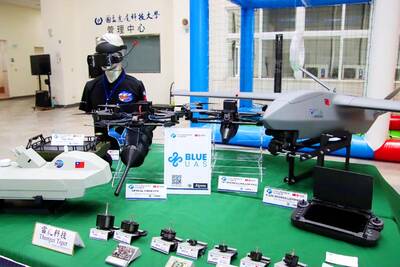
NON-RED SUPPLY: Boosting the nation’s drone industry is becoming increasingly urgent as China’s UAV dominance could become an issue in a crisis, an analyst said Taiwan’s drone exports to Europe grew 41.7-fold from 2024 to last year, with demand from Ukraine’s fight against Russian aggression the most likely driver of growth, a study showed. The Institute for Democracy, Society and Emerging Technology (DSET) in a statement on Wednesday said it found that many of Taiwan’s uncrewed aerial vehicle (UAV) sales were from Poland and the Czech Republic. These countries likely transferred the drones to Ukraine to aid it in its fight against the Russian invasion that started in 2022, it said. Despite the gains, Taiwan is not the dominant drone exporter to these markets, ranking second and fourth
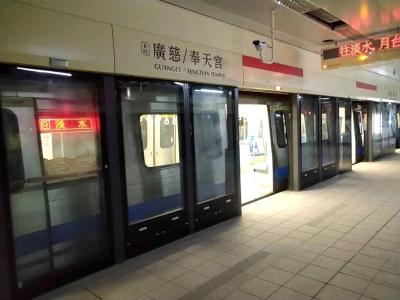
The eastern extension of the Taipei MRT Red Line could begin operations as early as late June, the Taipei Department of Rapid Transit Systems said yesterday. Taipei Rapid Transit Corp said it is considering offering one month of free rides on the new section to mark its opening. Construction progress on the 1.4km extension, which is to run from the current terminal Xiangshan Station to a new eastern terminal, Guangci/Fengtian Temple Station, was 90.6 percent complete by the end of last month, the department said in a report to the Taipei City Council's Transportation Committee. While construction began in October 2016 with an


 RSS
RSS