


The winning number for the NT$10 million (US$324,781) special prize in the March-April uniform invoice lottery is 20783987, the Ministry of Finance announced yesterday.
The winning number for the NT$2 million grand prize is 04135859, while the three numbers for the first prize of NT$200,000 are 94899145, 71143793 and 41055355, the ministry said.
The holders of receipts whose serial numbers match the last seven digits of the first-prize numbers win NT$40,000, while those with invoices whose serial numbers match the last six digits win NT$10,000.

Photo courtesy of Hi-Life
Other prizes are NT$4,000 for receipts with the last five digits of the first-prize numbers, NT$1,000 for receipts with the last four digits and NT$200 for invoices with the last three digits.
Two winners of the NT$10 million special prize purchased items from 7-Elevens, one of whom spent NT$62 on bread and a drink in Nantou County and the other spent NT$114 on a meal and a drink in Yunlin County, the ministry said.
A special prize winner spent NT$46 on soy milk and two tea eggs from a Hi-Life in Pingtung County, it said.
Those holding prize-winning receipts can claim their winnings between June 6 and Sept. 5, the ministry said, adding that prizes up to NT$1,000 can be collected from 7-Eleven, FamilyMart, OK Mart, Hi-Life, PX Mart and Simple Mart stores.
Prizes up to NT$40,000 can be collected from credit cooperatives across the nation, while First Commercial Bank, Chang Hwa Bank and Agricultural Bank of Taiwan offer cash redemptions for all prizes, including those larger than NT$200,000, the ministry said.
The uniform invoice lottery system, which draws winning numbers every two months, was created to encourage people to ask for receipts when making purchases as part of the ministry’s efforts to rein in tax evasion.
The ministry has also released the winning numbers for its cloud-based uniform invoice lottery, which includes 30 NT$1 million prizes, 16,000 NT$2,000 prizes, 100,000 NT$800 prizes and 2.15 million NT$500 prizes.
Unlike the regular draw for paper receipts, which randomly draw winning serial numbers, winners in the cloud-based lottery are drawn directly from digitally stored receipts.
Winners can redeem their awards using the “uniform lottery redemption” app, which can store and check receipts and enables winners to claim their prizes electronically, with the money remitted directly to their bank account.
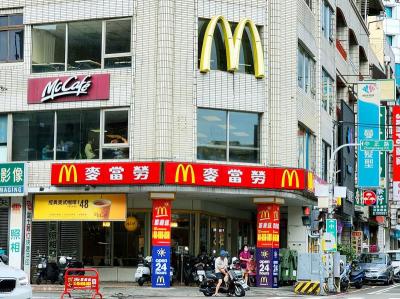
Fast food chain McDonald's is to raise prices by up to NT$5 on some products at its restaurants across Taiwan, starting on Wednesday next week, the company announced today. The prices of all extra value meals and sharing boxes are to increase by NT$5, while breakfast combos and creamy corn soup would go up by NT$3, the company said in a statement. The price of the main items of those meals, if ordered individually, would remain the same. Meanwhile, the price of a medium-sized lemon iced tea and hot cappuccino would rise by NT$3, extra dipping sauces for chicken nuggets would go up

Yangmingshan National Park’s Qingtiangang (擎天崗) nature area has gone viral after a park livestream camera observed a couple in the throes of intimate congress, which was broadcast live on YouTube, drawing large late-night crowds and sparking a backlash over noise, bright lights and disruption to wildlife habitat. The area’s livestream footage appeared to show a couple engaging in sexual activity on a picnic table in the park on Friday last week, with the uncensored footage streamed publicly online. The footage quickly spread across social media, prompting a tide of visitors to travel to the site to “check in” and recreate the

Minister of Digital Affairs Lin Yi-ching (林宜敬) yesterday cited regulatory issues and national security concerns as an expert said that Taiwan is among the few Asian regions without Starlink. Lin made the remarks on Facebook after funP Innovation Group chief executive officer Nathan Chiu (邱繼弘) on Friday said Taiwan and four other countries in Asia — China, North Korea, Afghanistan and Syria — have no access to Starlink. Starlink has become available in 166 countries worldwide, including Ukraine, Malaysia, the Philippines and Vietnam, in the six years since it became commercial, he said. While China and North Korea block Starlink, Syria is not
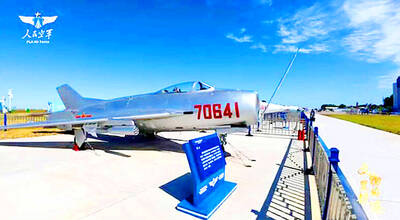
GROUNDED: A KMT lawmaker proposed eliminating drone development programs and freezing funding for counterdrone systems, despite China’s adoption of the technology China has deployed attack drones at air bases near the Taiwan Strait in a strategy aimed at overwhelming Taiwan’s air defense systems through saturation attacks, the Mainland Affairs Council (MAC) said. The council’s latest quarterly report on China said that satellite imagery and open-source intelligence indicate that the Chinese People’s Liberation Army (PLA) had converted retired J-6 fighter jets into J-6W drones, which the PLA has stationed at six air bases near Taiwan, five in China’s Fujian Province and one in Guangdong Province. The report cited J. Michael Dahm, a senior fellow at the US-based Mitchell Institute, as saying that China has


 RSS
RSS