


A retired army lieutenant who operates a travel agency in Kinmen County has been sentenced to 15 years in prison for trying to build a spy network for China by targeting Taiwanese military officers.
The Kinmen District Court on Thursday found Shao Wei-chiang (邵維強), owner of Safety Travel Service Co, guilty of contravening the National Security Act (國家安全法) and the Banking Act (銀行法).
Shao, 59, had also worked as a TV reporter for 27 years — as the Kinmen correspondent for Taiwan’s China Television Co (CTV) from 1993 to 2019.
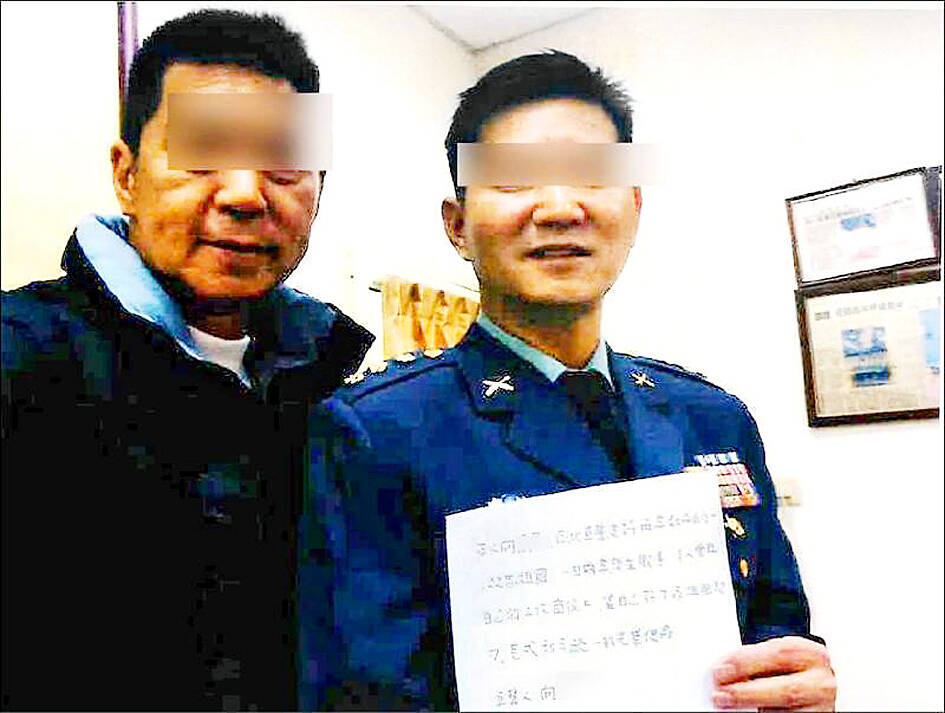
Photo: Taipei Times files
He has been operating a travel agency since 1993.
Lured by financial incentives, Shao began working for the Chinese government in 2002 while he was still employed at CTV, Kinmen District Court Chief Judge Huang Chien-tu (黃建都) said.
He tried to recruit military officers to obtain confidential information that he could pass on to China, Huang added.
“Investigators found that Shao had worked for China for 20 years until his arrest last year, and he passed on the Chinese payments to those he had recruited as spies. His case has endangered national security and harmed military morale. The defendant should be heavily punished to deter such behavior,” Huang said.
Shao was found guilty of breaching the Banking Act for conducting illegal money exchanges of Taiwanese and Chinese currencies totaling NT$90 million (US$2.9 million) during his many trips as a reporter and travel operator using the “small three links” between Kinmen and China’s Xiamen.
The ruling also deprived Shao of his civil rights for four years and his NT$2.54 million reward for spying was confiscated.
The ruling can be appealed.
Before he was arrested last year, Shao recruited at least two people as spies, including Kung Fan-chia (孔繁嘉), a reporter for the Ministry of National Defense-run Military News Agency who had access to most military schools, training facilities and military exercises.
The other recruit was former army colonel Hsiang Te-en (向德恩), 50, who was the commander of the Kinmen Garrison Battalion of the Kinmen Defense Command. Hsiang had also served as the deputy commander of the field operations unit in the Pingtung County-based Eighth Field Army Command.
Hsiang was in February sentenced to seven-and-a-half years in prison and ordered to repay the NT$560,000 that he received from his Chinese handlers.
An investigation found that Hsiang had signed a document promising to surrender to the Chinese Communist Party. In a photograph with Shao, Hsiang, in military attire, is seen holding a document pledging his assistance to the Chinese side in the event of an invasion.
For his pledge to surrender to the Chinese side and trying to persuade other military officers to do the same, Hsiang received NT$40,000 a month from Shao, the intermediary, which totaled NT$560,000 over 14 months, a court filing said.
A ruling on Kung’s case is still pending.
The investigation also showed that Shao had tried to recruit at least three other military colonels, but he did not succeed.

SPACE VETERAN: Kjell N. Lindgren, who helps lead NASA’s human spaceflight missions, has been on two expeditions on the ISS and has spent 311 days in space Taiwan-born US astronaut Kjell N. Lindgren is to visit Taiwan to promote technological partnerships through one of the programs organized by the US for its 250th national anniversary. Lindgren would be in Taiwan from Tuesday to Saturday next week as part of the US Bureau of Educational and Cultural Affairs’ US Speaker Program, organized to celebrate the 250th anniversary of the signing of the Declaration of Independence, the American Institute in Taiwan (AIT) said in a statement yesterday. Lindgren plans to engage with key leaders across the nation “to advance cutting-edge technological partnerships and inspire the next generation of scientists and engineers,”

UNREASONABLE SURVEILLANCE: A camera targeted on an road by a neighbor captured a man’s habitual unsignaled turn into home, netting him dozens of tickets The Taichung High Administrative Court has canceled all 45 tickets given to a man for failing to use a turn signal while driving, as it considered long-term surveillance of his privacy more problematic than the traffic violations. The man, surnamed Tseng (曾), lives in Changhua County and was reported 45 times within a month for failing to signal while driving when he turned into the alley where his residence is. The reports were filed by his neighbor, who set up security cameras that constantly monitored not only the alley but also the door and yard of Tseng’s house. The surveillance occurred from July

A Japan Self-Defense Forces vessel entered the Taiwan Strait yesterday, Japanese media reported. After passing through the Taiwan Strait, the Ikazuchi was to proceed to the South China Sea to take part in a joint military exercise with the US and the Philippines, the reports said. Japan Self-Defense Force vessels were first reported to have passed through the strait in September, 2024, with two further transits taking place in February and June last year, the Asahi Shimbun reported. Yesterday’s transit also marked the first time since Japanese Prime Minister Sanae Takaichi took office that a Japanese warship has been sent through the Taiwan
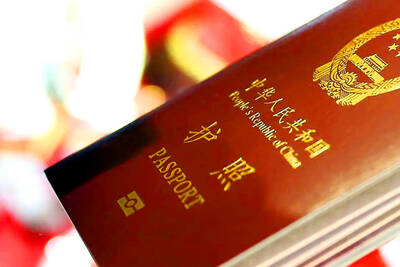
ANOTHER OPTION: The 13-year-old, whose residency status was revoked for holding a Chinese passport, could still apply for residency on humanitarian grounds, the government said The Executive Yuan has rejected an appeal from a 13-year-old Chinese student surnamed Lu (陸), whose permanent residency was revoked after immigration officers discovered he held a Chinese passport. Lu in December 2023 applied to settle in Taiwan to be with his mother, surnamed Lin (林), who is a Taiwan resident, an appeal decision released this month by the Executive Yuan showed. Lin settled in Taiwan after marrying a Taiwanese man in 2003, but the two divorced in 2011, and after marrying a Chinese man, she had Lu, the Executive Yuan’s appeals committee said. Lu’s application was approved in December 2024, and in


 RSS
RSS