


A proposal for an additional budget of NT$3.3 billion (US$108.89 million) is to be put forward by the Taipei City Government for policies covering childcare, welfare benefits and baby bonuses.
As the city had surplus tax revenue of NT$6.914 billion and debt repayments of about NT$2.6 billion, it plans to propose an additional budget of NT$3.309 billion, New Taipei City Finance Department Director Lee Tai-hsin (李泰興) said on Saturday.
Of the proposed NT$3.3 billion, about NT$1.846 billion would be used for a few major policies put forward by Taipei Mayor Chiang Wan-an (蔣萬安), Lee said.

Photo: Tien Yu-hua, Taipei Times
They include NT$601 million for childcare, including incentives for childbearing and childcare subsidies; NT$916 million for education, including subsidies for young children at private pre-schools; NT$288 million for long-term care, including “Double Ninth Festival” cash payments; and NT$41 million to promote health and exercise, Lee said.
The city plans to introduce the budget measure before the new council session begins, and officials are to visit the council’s party caucuses to explain the proposal in detail, he said.
The city’s surplus tax revenue was a result of the national surplus tax revenue last year, Democratic Progressive Party (DPP) Taipei City Councilor and DPP city council caucus convener Chien Shu-pei (簡舒培) said.
Taipei received an additional NT$12.8 million in centrally allocated tax revenue, she said.
The additional budget requested by the city government should not be a “fireworks display,” as long-term policies must have steady financial sources, Chien said.
If there is no additional centrally allocated tax revenue next year, Chiang would struggle to continue funding the new policies he begins, she added.
The Chinese Nationalist Party (KMT) caucus is supportive of Chiang’s proposal, Taipei City Councilor and KMT city council caucus convener Chin Huei-chu (秦慧珠) said, adding that the party would review the details thoroughly.
The city government usually does not propose a significant additional budget, but Chiang’s administration is proposing NT$3.309 billion in the first session, Chin said, adding that more requests are expected in the next session.
The city government should manage its financial resources and keep it in balance, she said.
“There is no such thing as a free lunch,” Taipei City Councilor and Taiwan People’s Party city council caucus convener Huang Ching-ying said.
Chiang’s administration should value fiscal discipline and secure financial resources to sustain the city’s development, she added.

SECURITY: Starlink owner Elon Musk has taken pro-Beijing positions, and allowing pro-China companies to control Taiwan’s critical infrastructure is risky, a legislator said Starlink was reluctant to offer services in Taiwan because of the nation’s extremely high penetration rates in 4G and 5G services, the Ministry of Digital Affairs said yesterday. The ministry made the comments at a meeting of the legislature’s Transportation Committee, which reviewed amendments to Article 36 of the Telecommunications Management Act (電信管理法). Article 36 bans foreigners from holding more than 49 percent of shares in public telecommunications networks, while shares foreigners directly and indirectly hold are also capped at 60 percent of the total, unless specified otherwise by law. The amendments, sponsored by Chinese Nationalist Party (KMT) Legislator Ko
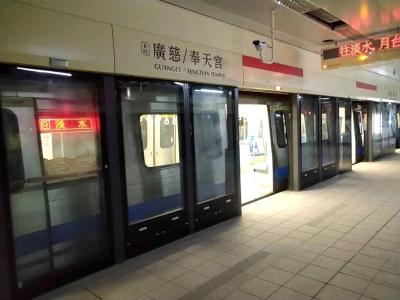
The eastern extension of the Taipei MRT Red Line could begin operations as early as late June, the Taipei Department of Rapid Transit Systems said yesterday. Taipei Rapid Transit Corp said it is considering offering one month of free rides on the new section to mark its opening. Construction progress on the 1.4km extension, which is to run from the current terminal Xiangshan Station to a new eastern terminal, Guangci/Fengtian Temple Station, was 90.6 percent complete by the end of last month, the department said in a report to the Taipei City Council's Transportation Committee. While construction began in October 2016 with an
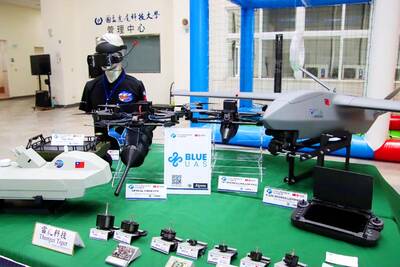
NON-RED SUPPLY: Boosting the nation’s drone industry is becoming increasingly urgent as China’s UAV dominance could become an issue in a crisis, an analyst said Taiwan’s drone exports to Europe grew 41.7-fold from 2024 to last year, with demand from Ukraine’s fight against Russian aggression the most likely driver of growth, a study showed. The Institute for Democracy, Society and Emerging Technology (DSET) in a statement on Wednesday said it found that many of Taiwan’s uncrewed aerial vehicle (UAV) sales were from Poland and the Czech Republic. These countries likely transferred the drones to Ukraine to aid it in its fight against the Russian invasion that started in 2022, it said. Despite the gains, Taiwan is not the dominant drone exporter to these markets, ranking second and fourth
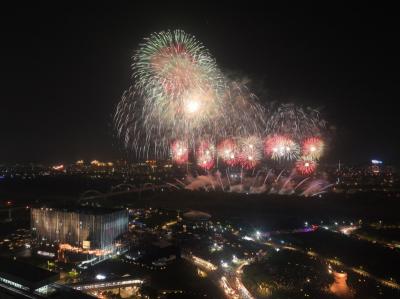
The New Taipei City Art Museum this weekend plans to celebrate its first anniversary with a two-day extravaganza featuring live concerts and a large-scale synchronized fireworks and drone display, the New Taipei City Cultural Affairs Department said. The two-day celebrations are to take place in the museum’s outdoor park, with markets and live performances by singers including Ann Bai (白安), Bii (畢書盡) and the Cosmos People (宇宙人), the department said. The highlight on both evenings would be the "Echoes of Light" show, an aerial spectacle combining fireworks and drone performances designed around the concept of "dual stages in the sky," it


 RSS
RSS