


A small part of the Atomic Energy Council’s (AEC) budget yesterday was frozen by the legislature’s Education and Culture Committee after an investigation was launched over alleged harassment and bullying of council workers by AEC Minister Hsieh Shou-shing (謝曉星).
The committee froze NT$10 million (US$326,990) in administrative funding, as well as Hsieh’s special allowance of NT$477,000.
The committee reached the decision during a review of the council’s budget for the next fiscal year.
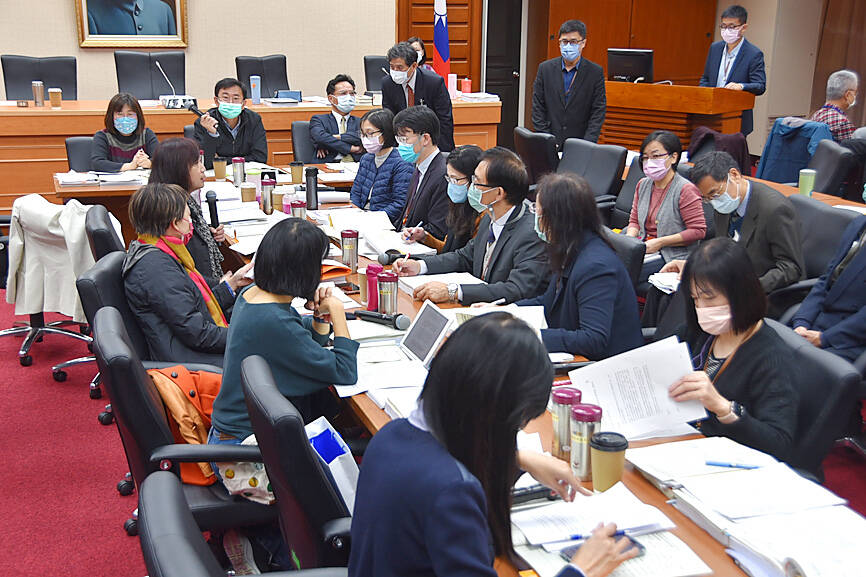
Photo: Wu Po-hsuan, Taipei Times
The council is not allowed to access the funds until it submits a written report to the Legislative Yuan and briefs the committee on how it has handled complaints of sexual harassment filed by council employees, a process that must wait until the next legislative session in February.
AEC Deputy Minister Chang Ching-wen (張靜文) attended the committee meeting.
Hsieh is on leave until the investigation is completed.
Chinese Nationalist Party (KMT) Legislator Wan Mei-ling (萬美玲) said the council every year budgets funding for its gender equality committee, which is in charge of employee training.
However, the Hsieh situation shows that the council has failed to thoroughly enforce the government’s gender policies, Wan said.
“The budget for the council minister’s special allowance should be completely eliminated,” she said.
New Power Party Legislator Claire Wang (王婉諭) said that Hsieh did not voluntarily recuse himself from the internal investigation.
In addition to Hsieh’s allowance, some administrative funding should be frozen to push the council to change its gender equality policy, Wang said.
“All AEC employees should work hard to achieve gender equality in the workplace,” she said. “The frozen funds are only about one-35th of the council’s total administrative funding and would not disrupt its operations.”
Democratic Progressive Party (DPP) Legislator Ho Hsin-chun (林欣純) said that the government would have no grounds to ask the private sector to adhere to gender equality policies if it has trouble setting an example itself.
DPP Legislator Lai Pin-yu (賴品妤) said that the council has failed the Executive Yuan’s gender equality evaluation annually since 2015, adding that more administrative funding should be frozen to prompt a comprehensive change to its handling of gender equality issues.
AEC Personnel Office Director Lin Ching-wen (林靜玟) told lawmakers that the council’s system of accepting sexual harassment complaints has loopholes.
“We are revising our guidelines for handling sexual harassment complaints and will retain external experts to examine them,” Lin said. “All high-ranking officials within the council will be obligated to undergo training next year.”
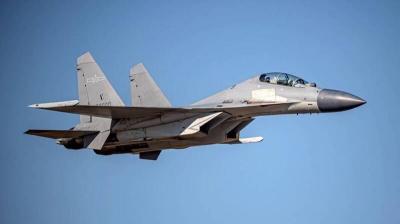
Eight Chinese naval vessels and 24 military aircraft were detected crossing the median line of the Taiwan Strait between 6am yesterday and 6am today, the Ministry of National Defense said this morning. The aircraft entered Taiwan’s northern, central, southwestern and eastern air defense identification zones, the ministry said. The armed forces responded with mission aircraft, naval vessels and shore-based missile systems to closely monitor the situation, it added. Eight naval vessels, one official ship and 36 aircraft sorties were spotted in total, the ministry said.
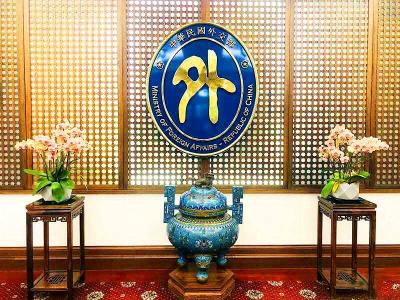
The Ministry of Foreign Affairs (MOFA) today said that if South Korea does not reply appropriately to its request to correct Taiwan’s name on its e-Arrival card system before March 31, it would take corresponding measures to alter how South Korea is labeled on the online Taiwan Arrival Card system. South Korea’s e-Arrival card system lists Taiwan as “China (Taiwan)” in the “point of departure” and “next destination” fields. The ministry said that it changed the nationality for South Koreans on Taiwan’s Alien Resident Certificates from “Korea” to “South Korea” on March 1, in a gesture of goodwill and based on the
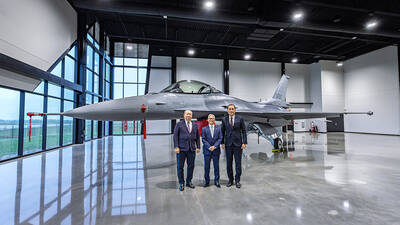
Taiwanese officials were shown the first of 66 F-16V fighter jets purchased by Taiwan from the United States, the Ministry of National Defense said yesterday, adding the aircraft has completed an initial flight test and is expected to be delivered later this year. A delegation led by Deputy Minister of National Defense Hsu Szu-chien (徐斯儉) visited Lockheed Martin’s F-16 C/D Block 70 (also known as F-16V) assembly line in South Carolina on March 16 to view the aircraft. The jet will undergo a final acceptance flight in the US before being delivered to Taiwan, the
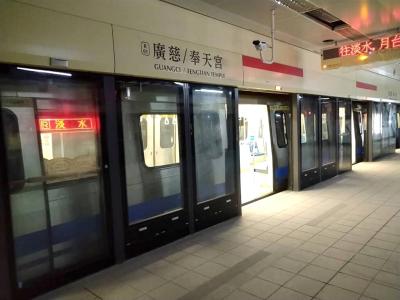
The New Taipei Metro's Sanyin Line and the eastern extension of the Taipei Metro's Tamsui-Xinyi Line (Red Line) are scheduled to begin operations in June, the National Development Council said today. The Red Line, which terminates at Xiangshan Station, would be connected by the 1.4km extension to a new eastern terminal, Guangci/Fengtian Temple Station, while the Sanyin Line would link New Taipei City's Tucheng and Yingge stations via Sanxia District (三峽). The council gave the updates at a council meeting reviewing progress on public construction projects for this year. Taiwan's annual public infrastructure budget would remain at NT$800 billion (US$25.08 billion), with NT$97.3


 RSS
RSS