


The Taiwan People’s Party (TPP) caucus yesterday urged the government to pass its budget soon and observe fiscal discipline in helping Taiwanese weather inflation woes.
Calling “inflation” the word of the year, the caucus told a news conference at the legislature in Taipei that economic issues are gradually eroding people’s livelihoods.
Consumer prices have steadily risen throughout the year, TPP Legislator Lai Hsiang-ling (賴香伶) said.

Photo: Lo Pei-te, Taipei Times
The consumer price index for last month increased 2.35 percent year-on-year, and has exceeded 2 percent over the past 16 consecutive months, she said.
Meanwhile, real regular wages fell 0.07 percent annually, she said, adding that inflation has cut into earnings and depleted people’s disposable income.
The last meeting of the Cabinet’s price stabilization committee to have publicized minutes was in August, and it only lasted an hour and was not attended by any top officials, Lai said.
The wage gap in Taiwan has grown more than sixfold since President Tsai Ing-wen (蔡英文) took office in 2016, TPP Legislator Jang Chyi-lu (張其祿) said.
The Gini coefficient — a measure of income inequality in which 0 represents perfect equality and 1 extreme inequality — has reached a nine-year high at 0.341, he added.
Buying property is out of reach for most young people, yet amendments to the Equalization of Land Rights Act (平均地權條例) still languish in the legislature a year after they were proposed, he said.
Meanwhile, the government has been passive in responding to a new registration requirement for all imports into China, Jang said.
Even though it was aware of the new rule in April last year, it waited until it received a notice from the Chinese General Administration of Customs six months later to respond, he said.
The seven information sessions hastily thrown together by the Food and Drug Administration were not enough to help many producers, whose licenses have been suspended after submitting insufficient information, he said.
The government’s passiveness has dealt multiple blows to the nation’s food producers, Jang said.
If it just throws money at the problem, “it will be all Taiwanese who suffer,” he added.
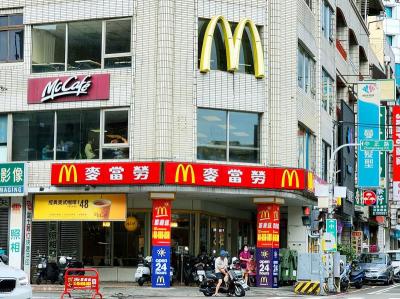
Fast food chain McDonald's is to raise prices by up to NT$5 on some products at its restaurants across Taiwan, starting on Wednesday next week, the company announced today. The prices of all extra value meals and sharing boxes are to increase by NT$5, while breakfast combos and creamy corn soup would go up by NT$3, the company said in a statement. The price of the main items of those meals, if ordered individually, would remain the same. Meanwhile, the price of a medium-sized lemon iced tea and hot cappuccino would rise by NT$3, extra dipping sauces for chicken nuggets would go up

Yangmingshan National Park’s Qingtiangang (擎天崗) nature area has gone viral after a park livestream camera observed a couple in the throes of intimate congress, which was broadcast live on YouTube, drawing large late-night crowds and sparking a backlash over noise, bright lights and disruption to wildlife habitat. The area’s livestream footage appeared to show a couple engaging in sexual activity on a picnic table in the park on Friday last week, with the uncensored footage streamed publicly online. The footage quickly spread across social media, prompting a tide of visitors to travel to the site to “check in” and recreate the
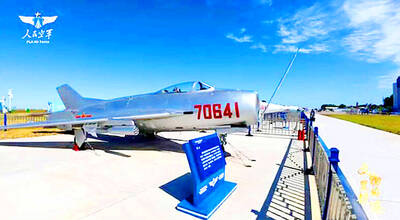
GROUNDED: A KMT lawmaker proposed eliminating drone development programs and freezing funding for counterdrone systems, despite China’s adoption of the technology China has deployed attack drones at air bases near the Taiwan Strait in a strategy aimed at overwhelming Taiwan’s air defense systems through saturation attacks, the Mainland Affairs Council (MAC) said. The council’s latest quarterly report on China said that satellite imagery and open-source intelligence indicate that the Chinese People’s Liberation Army (PLA) had converted retired J-6 fighter jets into J-6W drones, which the PLA has stationed at six air bases near Taiwan, five in China’s Fujian Province and one in Guangdong Province. The report cited J. Michael Dahm, a senior fellow at the US-based Mitchell Institute, as saying that China has

Carrefour Taiwan is to begin using a new name from the start of July, but it cannot divulge the name until then, the chairman of the supermarket chain's parent company said today. President Chain Store Co chairman Lo Chih-hsien (羅智先) was asked by reporters after a shareholders' meeting to confirm whether the company has settled on a new name for the supermarket brand. In March, the government-registered name of two Carrefour Taiwan branches was quietly changed to "Le Chia Kang" (樂家康) in Chinese, raising speculation that has been selected as the name. Lo said that because of local regulations and contractual obligations, the


 RSS
RSS