


The four candidates running for Kaohsiung mayor outlined their policies for the city in a live TV broadcast on Saturday.
Kaohsiung Mayor Chen Chi-mai (陳其邁) of the Democratic Progressive Party pledged to make Kaohsiung a “high-tech city,” while Chinese Nationalist Party (KMT) candidate Ko Chih-en (柯志恩) vowed to push policies to stem an “exodus of working-age people.”
Ko said that if elected, she would introduce policies that would help Kaohsiung transition into a “hybrid industrial, commercial and service-oriented port city” that would offer jobseekers more options and motivate people to remain there.

Photo: Lee Hui-chou, Taipei Times
She proposed a policy called “three highs, one low,” seeking to create “high-pay, high-tech and high-added-value” job opportunities and lower pollution levels.
Chen accused Ko of distorting the facts, saying the city’s shrinking population was caused by Taiwan’s falling birthrate, adding that the trend affected Taipei and New Taipei City more than Kaohsiung.
Chen said that if re-elected, his administration would complete a “semiconductor corridor” in the city and build a technology park for 5G and Internet of Things innovation in the Asia New Bay Area business district, which he said would encourage more technology companies to set up headquarters in Koahsiung.
Independent candidate Cheng Yu-hsiang (鄭宇翔) said that if elected, he would honor former president Chiang Kai-shek (蔣介石) and practice the teachings of Sun Yat-sen (孫逸仙) by “starting a revolution” and making Kaohsiung a “base for the fight to reclaim mainland China.”
Independent candidate Tseng Ying-lee (曾尹儷), vowed to end what he called a long-standing feud between political parties and push for systemic reform to encourage greater participation in politics by ordinary citizens like herself.

Yangmingshan National Park authorities yesterday urged visitors to respect public spaces and obey the law after a couple was caught on a camera livestream having sex at the park’s Qingtiangang (擎天崗) earlier in the day. The Shilin Police Precinct in Taipei said it has identified a suspect and his vehicle registration number, and would summon him for questioning. The case would be handled in accordance with public indecency charges, it added. The couple entered the park at about 11pm on Thursday and began fooling around by 1am yesterday, the police said, adding that the two were unaware of the park’s all-day live
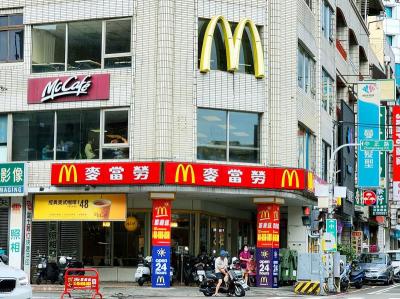
Fast food chain McDonald's is to raise prices by up to NT$5 on some products at its restaurants across Taiwan, starting on Wednesday next week, the company announced today. The prices of all extra value meals and sharing boxes are to increase by NT$5, while breakfast combos and creamy corn soup would go up by NT$3, the company said in a statement. The price of the main items of those meals, if ordered individually, would remain the same. Meanwhile, the price of a medium-sized lemon iced tea and hot cappuccino would rise by NT$3, extra dipping sauces for chicken nuggets would go up
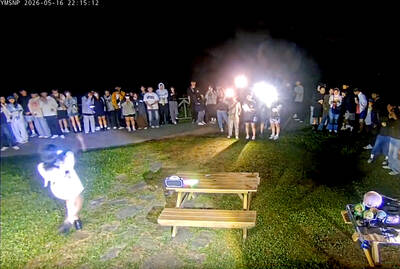
Yangmingshan National Park’s Qingtiangang (擎天崗) nature area has gone viral after a park livestream camera observed a couple in the throes of intimate congress, which was broadcast live on YouTube, drawing large late-night crowds and sparking a backlash over noise, bright lights and disruption to wildlife habitat. The area’s livestream footage appeared to show a couple engaging in sexual activity on a picnic table in the park on Friday last week, with the uncensored footage streamed publicly online. The footage quickly spread across social media, prompting a tide of visitors to travel to the site to “check in” and recreate the

Minister of Digital Affairs Lin Yi-ching (林宜敬) yesterday cited regulatory issues and national security concerns as an expert said that Taiwan is among the few Asian regions without Starlink. Lin made the remarks on Facebook after funP Innovation Group chief executive officer Nathan Chiu (邱繼弘) on Friday said Taiwan and four other countries in Asia — China, North Korea, Afghanistan and Syria — have no access to Starlink. Starlink has become available in 166 countries worldwide, including Ukraine, Malaysia, the Philippines and Vietnam, in the six years since it became commercial, he said. While China and North Korea block Starlink, Syria is not


 RSS
RSS