


Candidates from across Taiwan’s political spectrum have sought to woo new immigrant voters in the Nov. 26 local government elections, with campaign promises such as dedicated administrative offices and free career advice.
The three leading contenders in Taipei’s mayoral race have sought to offer remedies to the problems faced by naturalized foreign nationals.
At a campaign event on Oct. 15, Democratic Progressive Party (DPP) Taipei mayoral candidate Chen Shih-chung (陳時中) pledged to establish offices in each of the capital’s districts dedicated to affairs affecting new immigrants.

Photo: CNA
The former health minister also pledged to establish Dec. 18 as “New Immigrants Day,” as well as hold citywide events to mark significant cultural days.
Chinese Nationalist Party (KMT) candidate Chiang Wan-an (蔣萬安) has likewise promised to reorganize new immigrant-related responsibilities into a single standalone body. Currently, immigrant services are covered across a patchwork of Department of Civil Affairs subsections.
Meanwhile, former Taipei deputy mayor and independent candidate for city mayor Vivian Huang (黃珊珊) said it is essential to provide integrated resources for new immigrant families, including healthcare services for older immigrants.
Huang said she would focus on developing a “new immigrant economy” in Taipei, proposing to designate city blocks for use as multicultural markets.
Outside the capital, candidates across the political spectrum have similarly latched on to proposals to create separate government units devoted to new-immigrant issues.
In Taichung, Deputy Legislative Speaker and DPP mayoral candidate Tsai Chi-chang (蔡其昌) proposed cash subsidies to new immigrants to encourage them to obtain professional certifications, while in Hsinchu City, DPP candidate Shen Hui-hung (沈慧虹) has pledged free career training.
The DPP’s Hsu Ting-chen (徐定禎) in Miaoli County and Huang Shiou-fang (黃秀芳) in Changhua County have similarly targeted new immigrant voters with proposals for free legal and career consultations.
Employment help has also been part of DPP candidate Frida Tsai’s (蔡培慧) electoral pitch in Nantou County, proposing policies such as interest-free loans for new immigrants who want to start their own businesses.
Meanwhile, the KMT’s Hsieh Kuo-liang (謝國樑) in Keelung said he would provide new immigrants with subsidies to study Mandarin to reduce culture shock and help them assimilate with society.
About 570,000 new immigrants became citizens as of December last year, accounting for about 2.4 percent of Taiwan’s population, Ministry of the Interior data showed.
A majority were from China, including Hong Kong and Macau, followed by Vietnam (20 percent) and Indonesia (5 percent).
Separately, Taoyuan mayoral candidate Simon Chang (張善政) of the KMT came under criticism yesterday regarding his alleged links to China.
Premier Su Tseng-chang (蘇貞昌) said at a news conference that Chang should talk more openly about his alleged role as the “honorary top adviser” with the pro-China Economic Party.
Su described the role as a “gatekeeper” for the party’s activities.
DPP lawmakers at the news conference added to the criticisms, saying that Economic Party executives had come under investigation for allegedly selling counterfeit medicine, after complaints were filed last year by consumers affected by the products.
Chang on Wednesday said he had no formal role with the Economic Party, and was only an acquaintance of the party founder Chou Chung-tang (周琮棠).
Additional reporting by Jason Pan

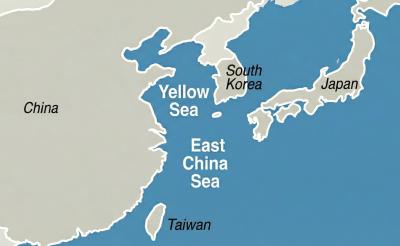
China has reserved offshore airspace in the Yellow Sea and East China Sea from March 27 to May 6, issuing alerts usually used to warn of military exercises, although no such exercises have been announced, the Wall Street Journal (WSJ) reported yesterday. Reserving such a large area for 40 days without explanation is an “unusual step,” as military exercises normally only last a few days, the paper said. These alerts, known as Notice to Air Missions (Notams), “are intended to inform pilots and aviation authorities of temporary airspace hazards or restrictions,” the article said. The airspace reserved in the alert is
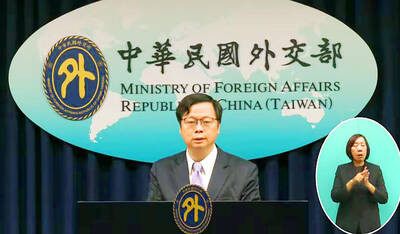
NAMING SPAT: The foreign ministry called on Denmark to propose an acceptable solution to the erroneous nationality used for Taiwanese on residence permits Taiwan has revoked some privileges for Danish diplomatic staff over a Danish permit that lists “Taiwan” as “China,” Eric Huang (黃鈞耀), head of the Ministry of Foreign Affairs’ Department of European Affairs, told a news conference in Taipei yesterday. Reporters asked Huang whether the Danish government had responded to the ministry’s request that it correct the nationality on Danish residence permits of Taiwanese, which has been listed as “China” since 2024. Taiwan’s representative office in Denmark continues to communicate with the Danish government, and the ministry has revoked some privileges previously granted to Danish representatives in Taiwan and would continue to review

More than 6,000 Taiwanese students have participated in exchange programs in China over the past two years, despite the Mainland Affairs Council’s (MAC) “orange light” travel advisory, government records showed. The MAC’s publicly available registry showed that Taiwanese college and university students who went on exchange programs across the Strait numbered 3,592 and 2,966 people respectively. The National Immigration Agency data revealed that 2,296 and 2,551 Chinese students visited Taiwan for study in the same two years. A review of the Web sites of publicly-run universities and colleges showed that Taiwanese higher education institutions continued to recruit students for Chinese educational programs without
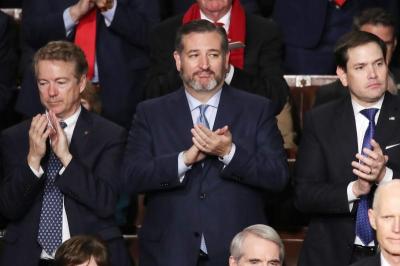
A bipartisan group of US senators has introduced a bill to enhance cooperation with Taiwan on drone development and to reduce reliance on supply chains linked to China. The proposed Blue Skies for Taiwan Act of 2026 was introduced by Republican US senators Ted Cruz and John Curtis, and Democratic US senators Jeff Merkley and Andy Kim. The legislation seeks to ease constraints on Taiwan-US cooperation in uncrewed aerial systems (UAS), including dependence on China-sourced components, limited access to capital and regulatory barriers under US export controls, a news release issued by Cruz on Wednesday said. The bill would establish a "Blue UAS


 RSS
RSS