

The Omicron BA.5 subvariant of SARS-CoV-2 accounted for 59.2 percent of the sequenced domestic COVID-19 cases last week, while the Omicron BA.4.6 subvariant had been discovered in 11 previous cases, the Central Epidemic Command Center (CECC) said yesterday.
Centers for Disease Control (CDC) Director-General Chou Jih-haw (周志浩), head of the CECC’s disease surveillance division, said 28,210 new local infections, 239 imported cases and 31 deaths were confirmed yesterday.
The local case count is about 10 percent higher than that of Monday last week, showing that the number of COVID-19 cases is still rising, so the center again encouraged people to stay up to date with their vaccine shots for better protection, Chou said.
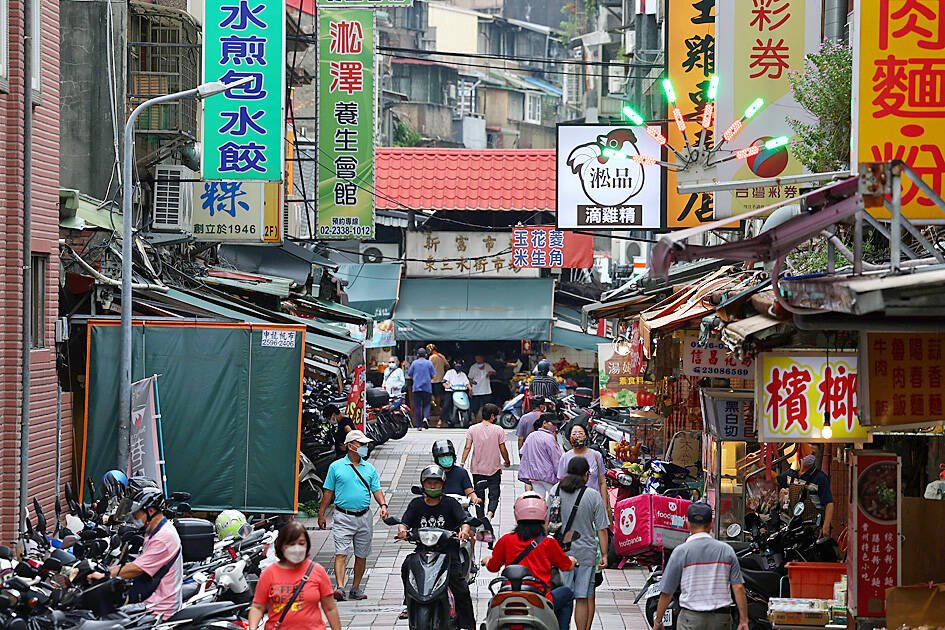
Photo: CNA
Deputy Minister of Health and Welfare Victor Wang (王必勝), who heads the CECC, said the number of accumulated local cases last week was 286,484, which was 20.8 percent higher than the week before, in which 237,484 cases were reported, showing that the increase in the number of cases is not particularly fast, but it is still growing.
CDC Deputy Director-General Philip Lo (羅一鈞), deputy head of the CECC’s medical response division, said the genome sequencing results of samples from 179 local cases last week showed that 106, or 59.2 percent, were infected with the Omicron BA.5 subvariant, while the others were infected with the Omicron BA.2 subvariant.
The Omicron BA.5 subvariant has become the dominant strain in northern, central and southern Taiwan, accounting for about 60 to 63 percent of cases, but in eastern Taiwan it only accounts for about 20 percent of the cases, Lo said, adding that the Omicron BA.5 subvariant is slowly replacing the Omicron BA.2 subvariant.
The Omicron BA.4.6 subvariant that has been reported spreading in the US had been detected in seven imported cases — two from the US, and one each from Austria, France, South Korea, the Netherlands and the UK — and four previous local cases, he said.
The four local cases include a family cluster of three which were all mild infections and community spread has not been observed, he added.
Studies have suggested that the Omicron BA.4.6 subvariant is about 10 percent more transmissible than the BA.5 subvariant, which does not imply that it would spread more rapidly, and studies have also suggested that the BA.4.6 subvariant might be more resistant to Evusheld, a combination of therapeutic monoclonal antibodies effective against the virus, Lo said.
Meanwhile, Premier Su Tseng-chang (蘇貞昌) has instructed government agencies to discuss supplementary measures and make preparations for the nation’s borders to be reopened, but no schedule has yet been decided, Wang said.
Su also said that the public and related industries would need time to understand any new policies and prepare for them, Wang said.
“We will certainly announce the new policies as early as possible, so that everyone would have sufficient time to prepare,” he said.
Separately, CDC Deputy Director-General Chuang Jen-hsiang (莊人祥), who is the CECC spokesman, said as some local governments plan to start administering the new bivalent vaccine on Saturday, eligible recipients who wish to get a shot are advised to check their local health department’s Web site for information.
Government-funded flu vaccinations are expected to start on Oct. 1, and people can receive the flu vaccine and the COVID-19 vaccine in different arms on the same day, Chuang said, adding that if people wish to observe the possible adverse effects of each vaccine, they could receive them on different days or consult a doctor for advice.
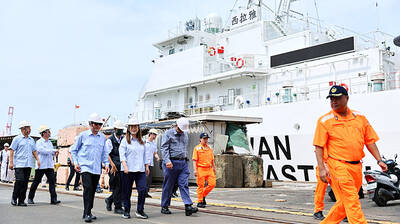
Ocean Affairs Council (OAC) Minister Kuan Bi-ling (管碧玲) on Wednesday said decommissioned coast guard vessels were given to the Philippines to enhance regional rescue capacity and would not affect Taiwanese fishers’ rights and benefits. Kuan made the remarks after confirmation on Tuesday that a 500-tonne Coast Guard Administration (CGA) patrol and rescue vessel would be given to the Philippine Coast Guard. The donation ceremony was reportedly done in Manila, but whether the vessel — previously numbered “CG123” and named Kinmen (金門) — has been handed over has yet to be confirmed. China’s Taiwan Affairs Office (TAO) on Wednesday criticized the donation for “taking
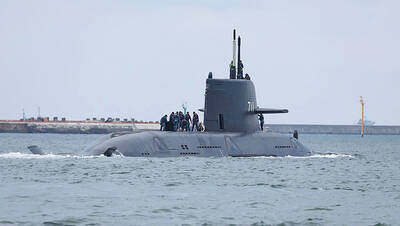
UPDATE: The submarine would need to undergo combined systems testing and crew training for navy personnel before it is ready for mission, an expert said Taiwan’s first domestically built submarine, the Hai Kun (Narwhal, 海鯤), could be delivered to the navy as early as next month, military expert and Taiwan Association for Security and Development chairman Chi Tung-yun (紀東昀) said yesterday. The submarine was yesterday morning observed departing for its 21st sea trial and its 15th submerged test. The vessel missed the initial delivery deadline of November last year due to “testing delays,” its primary contractor, shipbuilder CSBC Corp, Taiwan, said in June. The contractor also cited “political pressure from China” in procuring critical equipment. All testing operations are in the final stages, with the
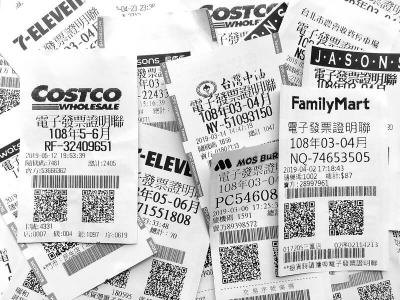
Six NT$10 million (US$315,527) special prizes and seven NT$2 million grand prizes in Taiwan's May-June uniform invoice lottery remained unclaimed as of today, including one NT$10 million winner who spent only NT$10 on an Uber Eats delivery order, the Ministry of Finance said. The ministry said the 13 winners need to claim their prizes by Nov. 5. The eight-digit serial number that won the NT$10 million special prize for May-June was 38548029, with 18 winning receipts in total. The NT$2 million grand prize number was 10138845, of which there were 22 winning receipts, the ministry said. In addition to the receipt issued for an
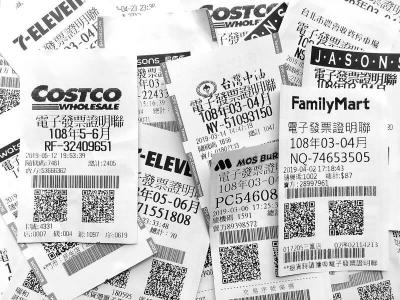
The Ministry of Finance today announced the winning numbers for the July-August uniform invoice lottery. The winning number for the NT$10 million (US$314,663) special prize is 89996565, while the winning number for the NT$2 million grand prize is 91098182. Three numbers were drawn for the NT$200,000 first prize: 54348835, 44991397 and 06595111. Those with receipts matching the last seven digits of any of the first-prize numbers can claim the NT$40,000 second prize, while those matching the last six digits qualify for the NT$10,000 third prize. Those whose receipts match the last five digits of the first-prize numbers are eligible for the NT$4,000 fourth prize,


 RSS
RSS