


The number of furloughed workers in Taiwan dropped by 3,020 last week, due mainly to a tentative recovery in domestic tourism.
The number of workers placed on furlough programs was 16,872 as of Wednesday last week, down from 19,892 the previous week, while the number of companies implementing unpaid leave programs fell to 2,605 from 2,990 during the period, Ministry of Labor data showed.
The lodging, food and beverage sector posted the most improvement, Labor Conditions and Equal Employment Division deputy head Wang Chin-jung (王金蓉) said.
The number of businesses in the sector implementing furlough programs fell from 325 in the first week of the month to 183 last week, she said.
A total of 1,719 workers in the sector are still on furlough, which is 1,907 fewer than the 3,626 in the first week of the month.
The sector has posted improvements in employment numbers for six consecutive weeks since Aug. 1.
The recovery was likely caused by the summer break, domestic tourism and the easing of the COVID-19 pandemic, she added.
The number of furloughed workers in retail and wholesale companies, as well as the transportation and warehousing sector and the support service sector, which largely comprises travel agencies, fell by about 300 each, Wang said.
Although the number of companies implementing furloughs in the manufacturing sector fell from 181 in the first week of the month to 172 last week, the number of furloughed workers increased by 168, raising the number from 2,299 in the first week of the month to 2,467, she said.
The increase was caused by an electronics hardware company placing 40 employees on furlough, and a carpentry business adding 100 workers to an unpaid leave program, she said.
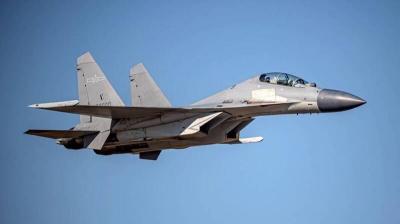
Eight Chinese naval vessels and 24 military aircraft were detected crossing the median line of the Taiwan Strait between 6am yesterday and 6am today, the Ministry of National Defense said this morning. The aircraft entered Taiwan’s northern, central, southwestern and eastern air defense identification zones, the ministry said. The armed forces responded with mission aircraft, naval vessels and shore-based missile systems to closely monitor the situation, it added. Eight naval vessels, one official ship and 36 aircraft sorties were spotted in total, the ministry said.
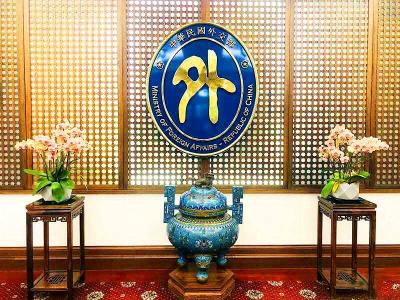
The Ministry of Foreign Affairs (MOFA) today said that if South Korea does not reply appropriately to its request to correct Taiwan’s name on its e-Arrival card system before March 31, it would take corresponding measures to alter how South Korea is labeled on the online Taiwan Arrival Card system. South Korea’s e-Arrival card system lists Taiwan as “China (Taiwan)” in the “point of departure” and “next destination” fields. The ministry said that it changed the nationality for South Koreans on Taiwan’s Alien Resident Certificates from “Korea” to “South Korea” on March 1, in a gesture of goodwill and based on the
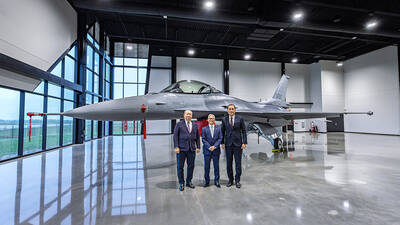
Taiwanese officials were shown the first of 66 F-16V fighter jets purchased by Taiwan from the United States, the Ministry of National Defense said yesterday, adding the aircraft has completed an initial flight test and is expected to be delivered later this year. A delegation led by Deputy Minister of National Defense Hsu Szu-chien (徐斯儉) visited Lockheed Martin’s F-16 C/D Block 70 (also known as F-16V) assembly line in South Carolina on March 16 to view the aircraft. The jet will undergo a final acceptance flight in the US before being delivered to Taiwan, the
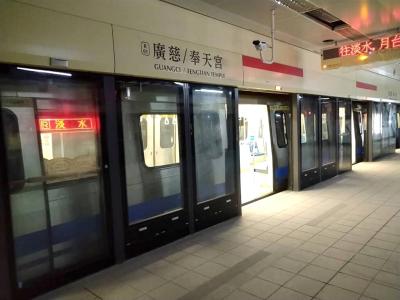
The New Taipei Metro's Sanyin Line and the eastern extension of the Taipei Metro's Tamsui-Xinyi Line (Red Line) are scheduled to begin operations in June, the National Development Council said today. The Red Line, which terminates at Xiangshan Station, would be connected by the 1.4km extension to a new eastern terminal, Guangci/Fengtian Temple Station, while the Sanyin Line would link New Taipei City's Tucheng and Yingge stations via Sanxia District (三峽). The council gave the updates at a council meeting reviewing progress on public construction projects for this year. Taiwan's annual public infrastructure budget would remain at NT$800 billion (US$25.08 billion), with NT$97.3


 RSS
RSS