


The Chinese Nationalist Party (KMT) has released the latest set of its playing card series that feature “ridiculous” quotes from members of the Democratic Progressive Party (DPP).
The KMT has issued the card sets every two years since 2018 to coincide with local and general elections.
This year’s set includes quotes from the DPP’s mayoral candidates Chen Shih-chung (陳時中) in Taipei, Lin Chia-lung (林佳龍) in New Taipei City and Cheng Yun-peng (鄭運鵬) in Taoyuan.

Photo: Fang Pin-chao, Taipei Times
The KMT said that the quotes it gathered for the cards demonstrated that the DPP was “out of touch with the public’s suffering.”
“The DPP doesn’t know what the public is going through, so let’s vote them out of office this year,” KMT Culture and Communications Committee deputy director Lin Chia-hsing (林家興) said.
Lin said that Chen had made the most gaffes over the past year of anyone featured in the cards, and that 10 of the 54 cards featured his quotes.
Therefore, the KMT had dubbed him the “king of nonsense,” he said.
President Tsai Ing-wen (蔡英文) also features prominently as the two of spades, which is the highest-value card in the Chinese card game Big Two, he said.
Aside from Chen as the king of nonsense, the set also includes several “queens of nonsense,” including Minister of Economic Affairs Wang Mei-hua (王美花) and DPP legislators Fan Yun (范雲) and Michelle Lin (林楚茵).
“Chen often said in the past that he has a ‘poker face,’ so we helped him make a set of cards,” said Kang Chin-yu (康晉瑜), spokesman for KMT Taipei mayoral candidate Chiang Wan-an (蔣萬安).
“Earlier this year Chen told people to ‘look after themselves’ when they need a COVID-19 test, and then added: ‘I don’t need to line up for a test since I’ve already taken a rapid test,’” Kang said, citing this as an example of Chen’s “nonsense.”
An announcement on how to preorder the cards will be made online on the KMT’s community platform, he said.
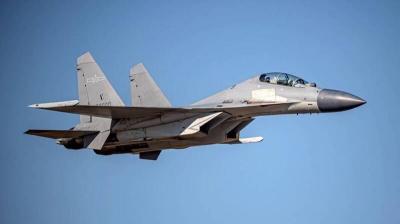
Eight Chinese naval vessels and 24 military aircraft were detected crossing the median line of the Taiwan Strait between 6am yesterday and 6am today, the Ministry of National Defense said this morning. The aircraft entered Taiwan’s northern, central, southwestern and eastern air defense identification zones, the ministry said. The armed forces responded with mission aircraft, naval vessels and shore-based missile systems to closely monitor the situation, it added. Eight naval vessels, one official ship and 36 aircraft sorties were spotted in total, the ministry said.
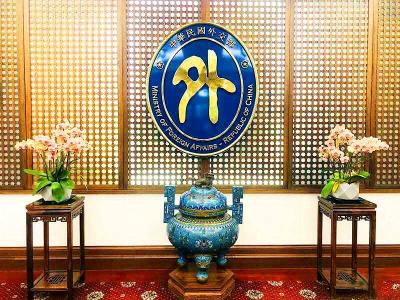
The Ministry of Foreign Affairs (MOFA) today said that if South Korea does not reply appropriately to its request to correct Taiwan’s name on its e-Arrival card system before March 31, it would take corresponding measures to alter how South Korea is labeled on the online Taiwan Arrival Card system. South Korea’s e-Arrival card system lists Taiwan as “China (Taiwan)” in the “point of departure” and “next destination” fields. The ministry said that it changed the nationality for South Koreans on Taiwan’s Alien Resident Certificates from “Korea” to “South Korea” on March 1, in a gesture of goodwill and based on the
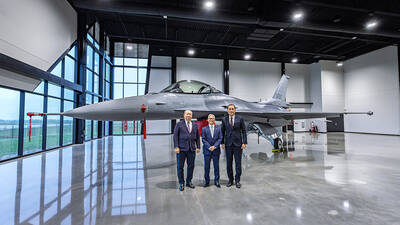
Taiwanese officials were shown the first of 66 F-16V fighter jets purchased by Taiwan from the United States, the Ministry of National Defense said yesterday, adding the aircraft has completed an initial flight test and is expected to be delivered later this year. A delegation led by Deputy Minister of National Defense Hsu Szu-chien (徐斯儉) visited Lockheed Martin’s F-16 C/D Block 70 (also known as F-16V) assembly line in South Carolina on March 16 to view the aircraft. The jet will undergo a final acceptance flight in the US before being delivered to Taiwan, the
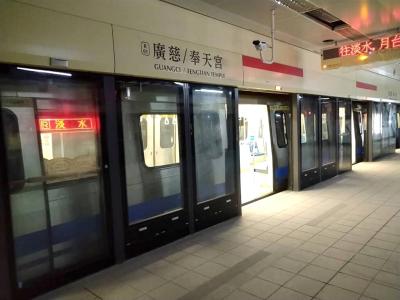
The New Taipei Metro's Sanyin Line and the eastern extension of the Taipei Metro's Tamsui-Xinyi Line (Red Line) are scheduled to begin operations in June, the National Development Council said today. The Red Line, which terminates at Xiangshan Station, would be connected by the 1.4km extension to a new eastern terminal, Guangci/Fengtian Temple Station, while the Sanyin Line would link New Taipei City's Tucheng and Yingge stations via Sanxia District (三峽). The council gave the updates at a council meeting reviewing progress on public construction projects for this year. Taiwan's annual public infrastructure budget would remain at NT$800 billion (US$25.08 billion), with NT$97.3


 RSS
RSS