


Taiwan has published its fourth country report for the Convention on the Elimination of All forms of Discrimination against Women (CEDAW), the Executive Yuan said yesterday, adding that the results show that 70 percent of domestic violence victims in Taiwan between 2017 and 2020 were women.
Taiwan has submitted more country reports to CEDAW than to any other international organization, Executive Yuan spokesman Lo Ping-cheng (羅秉成) told a news conference in Taipei.
The reports show how women’s rights and gender equality have progressed in Taiwan between 2017 and 2020, he said.

Photo courtesy of the Executive Yuan via CNA
While only 110,000 domestic violence incidents were reported in 2017, the incidents reported from 2018 to 2020 totaled more than 120,000 per year, Lo said.
Abuse between partners — couples who are married, divorced or living together — comprised half of all reported cases, with 83 percent of the victims being women, Lo said.
In 2020, there were 860 counts of violence among same-sex couples, 37 percent of which were lesbians and 63 percent gay men, Lo said.
Violence between same-sex partners accounted for 1.6 percent of total reports, he added.
Compared with Taiwan’s previous reports, there was an increase in domestic violence, but the percentage of female victims was unchanged, Lo said.
Convinced that abuse between partners often results from gender inequality, the Executive Yuan in April 2020 proposed adding the phrase “based on gender equality” to Article 2, Item 2 of the Domestic Violence Prevention Act (家庭暴力防治法), and proposed changing Article 59 so that prevention classes for domestic violence would teach about gender equality.
The Executive Yuan has also proposed changing Article 50 so that the government would need a victim’s consent to intervene in a domestic situation, unless the victim is in immediate danger or other legal issues apply.
The Executive Yuan’s gender equality mailbox, which accepts any complaint about gender discrimination, received 365 complaints between 2017 and 2020, of which about half were made by women.
The latest report shows an increase in the number of men complaining of abuse and a rise in complaints about online gender discrimination, the Executive Yuan said.
Taiwan has made great strides in gender equality over the past four years, such as being the first Asian country to allow same-sex marriage, but the rise in online gender discrimination shows that the nation has a lot of work left to do, Lo said.

The military has spotted two Chinese warships operating in waters near Penghu County in the Taiwan Strait and sent its own naval and air forces to monitor the vessels, the Ministry of National Defense (MND) said. Beijing sends warships and warplanes into the waters and skies around Taiwan on an almost daily basis, drawing condemnation from Taipei. While the ministry offers daily updates on the locations of Chinese military aircraft, it only rarely gives details of where Chinese warships are operating, generally only when it detects aircraft carriers, as happened last week. A Chinese destroyer and a frigate entered waters to the southwest

A magnitude 6.1 earthquake struck off the coast of Yilan County at 8:39pm tonight, the Central Weather Administration (CWA) said, with no immediate reports of damage or injuries. The epicenter was 38.7km east-northeast of Yilan County Hall at a focal depth of 98.3km, the CWA’s Seismological Center said. The quake’s maximum intensity, which gauges the actual physical effect of a seismic event, was a level 4 on Taiwan’s 7-tier intensity scale, the center said. That intensity level was recorded in Yilan County’s Nanao Township (南澳), Hsinchu County’s Guansi Township (關西), Nantou County’s Hehuanshan (合歡山) and Hualien County’s Yanliao (鹽寮). An intensity of 3 was

Japanese Prime Minister Sanae Takaichi’s comment last year on Tokyo’s potential reaction to a Taiwan-China conflict has forced Beijing to rewrite its invasion plans, a retired Japanese general said. Takaichi told the Diet on Nov. 7 last year that a Chinese naval blockade or military attack on Taiwan could constitute a “survival-threatening situation” for Japan, potentially allowing Tokyo to exercise its right to collective self-defense. Former Japan Ground Self-Defense Force general Kiyofumi Ogawa said in a recent speech that the remark has been interpreted as meaning Japan could intervene in the early stages of a Taiwan Strait conflict, undermining China’s previous assumptions
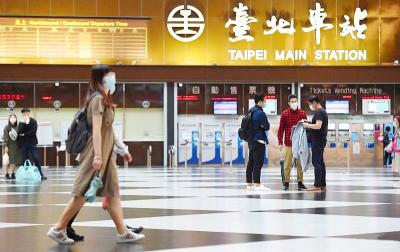
Taiwan Railways Corp (TRC) today announced that Shin Kong Mitsukoshi has been selected as the preferred bidder to operate the Taipei Railway Station shopping mall, replacing the current operator, Breeze Development Co Ltd. Among eight qualified firms that delivered presentations and were evaluated by a review committee, Shin Kong Mitsukoshi was ranked first, while Breeze was named the runner-up, the rail company said in a statement. Contract negotiations are to proceed in accordance with regulations, it said, adding that if negotiations with the top bidder fail, it could invite the second-ranked applicant to enter talks. Breeze in a statement today expressed doubts over


 RSS
RSS