


Legislators on Thursday debated changing legal limits on name changes, after some of the hundreds of people who legally altered their name to “Salmon” in return for free sushi reportedly became stuck with it.
In March last year, restaurant chain Sushiro ran a promotion offering free all-you-can-eat sushi for a whole table to anyone with the Chinese characters for salmon, gui yu (鮭魚), in their name. In what was later dubbed “salmon chaos,” 331 people took part, paying a nominal administration fee to legally call themselves names including “Salmon Dream” and “Dancing Salmon.”
At the time the government was critical of the promotion, asking people to be “rational” and saying the stunt created pointless extra work for the paperwork-heavy bureaucracy.
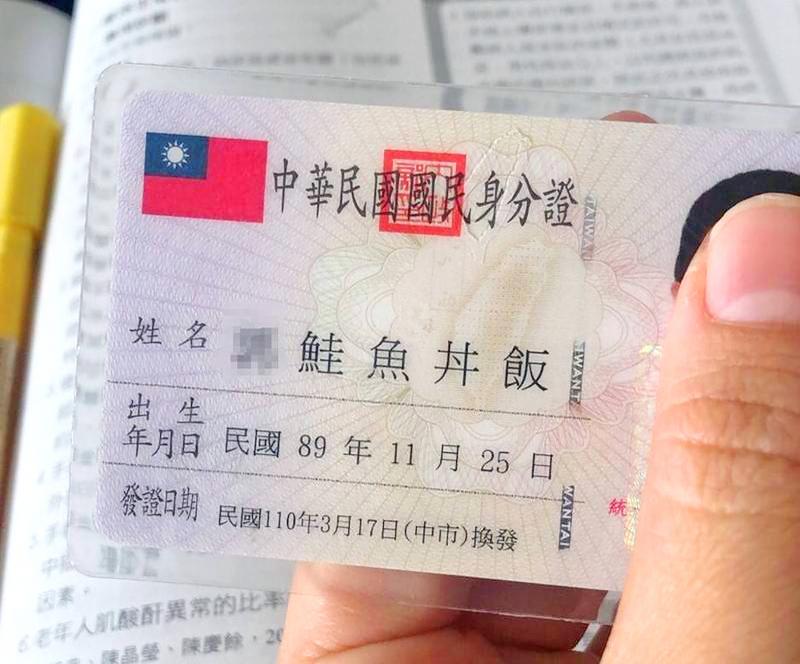
Photo courtesy of a reader
Some participants built social media followings off the international media attention, while others ran small businesses taking friends to the restaurant for a fee.
Once the two-day promotion ended, most returned to their normal names, but more than one year on some have hit a roadblock — the government only allows people to change their names three times.
Legislators debated proposed amendments to the names ordinance to help those stuck as Salmons, or to prevent another “salmon chaos.”
“After the salmon chaos incident some people had already changed their name three times and now have no way to change them back,” New Power Party Legislator Chiu Hsien-chih (邱顯智) said, suggesting other measures including fee changes and cooling-off periods.
Some Democratic Progressive Party (DPP) and Chinese Nationalist Party (KMT) lawmakers called for it to be made more difficult.
“Our trust in civic rationality is too low,” DPP Legislator Kuan Bi-ling (管碧玲), opposing an increase to restrictions as an intrusion into people’s daily lives.
On social media people were scathing of the debate, saying adults should be more responsible, and that this was a waste of the legislature’s time.
“How can we amend the law for those who sell their personality for the sake of benefits?” one commenter said.
“Be responsible for your own life, Salmons!” another said.
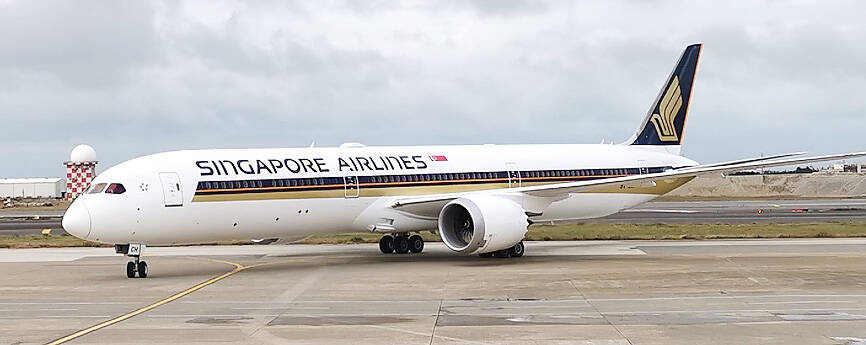
INCREASED CAPACITY: The flights on Mondays, Wednesdays, Fridays and Sundays would leave Singapore in the morning and Taipei in the afternoon Singapore Airlines is adding four supplementary flights to Taipei per week until May to meet increased tourist and business travel demand, the carrier said on Friday. The addition would raise the number of weekly flights it operates to Taipei to 18, Singapore Airlines Taiwan general manager Timothy Ouyang (歐陽漢源) said. The airline has recorded a steady rise in tourist and business travel to and from Taipei, and aims to provide more flexible travel arrangements for passengers, said Ouyang, who assumed the post in July last year. From now until Saturday next week, four additional flights would depart from Singapore on Monday, Wednesday, Friday
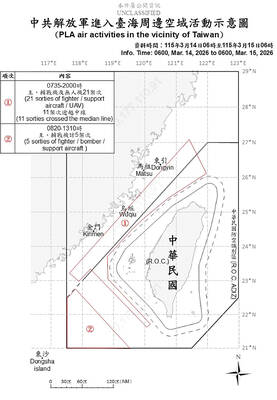
The Ministry of National Defense yesterday reported the return of large-scale Chinese air force activities after their unexplained absence for more than two weeks, which had prompted speculation regarding Beijing’s motives. China usually sends fighter jets, drones and other military aircraft around the nation on a daily basis. Interruptions to such routine are generally caused by bad weather. The Ministry of National Defense said it had detected 26 Chinese military aircraft in the Taiwan Strait over the previous 24 hours. It last reported that many aircraft on Feb. 25, when it spotted 30 aircraft, saying Beijing was carrying out another “joint combat
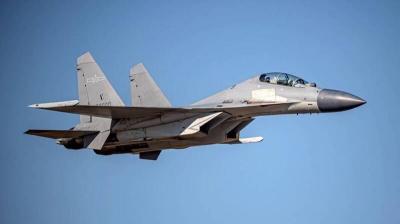
Eight Chinese naval vessels and 24 military aircraft were detected crossing the median line of the Taiwan Strait between 6am yesterday and 6am today, the Ministry of National Defense said this morning. The aircraft entered Taiwan’s northern, central, southwestern and eastern air defense identification zones, the ministry said. The armed forces responded with mission aircraft, naval vessels and shore-based missile systems to closely monitor the situation, it added. Eight naval vessels, one official ship and 36 aircraft sorties were spotted in total, the ministry said.

Taiwan successfully defended its women’s 540 kilogram title and won its first-ever men’s 640 kg title at the 2026 World Indoor Tug of War Championships in Taipei yesterday. In the women’s event, Taiwan’s eight-person squad reached the final following a round-robin preliminary round and semifinals featuring teams from Ukraine, Japan, Thailand, Vietnam, the Basque Country and South Korea. In the finals, they swept the Basque team 2-0, giving the team composed mainly of National Taiwan Normal University students and graduates its second championship in a row, and its fourth in five years. Team captain


 RSS
RSS