


Amusement park operators are modifying their business models to attract more senior visitors as Taiwan becomes an aging society.
While visitors to amusement parks last year increased to 11.74 million, up from 9.72 million in 2016, the percentage of families fell to 25 percent from 30 percent, Tourism Bureau data showed.
Although older people only account for 10 percent of park visitors, some operators have begun to prioritize their needs.
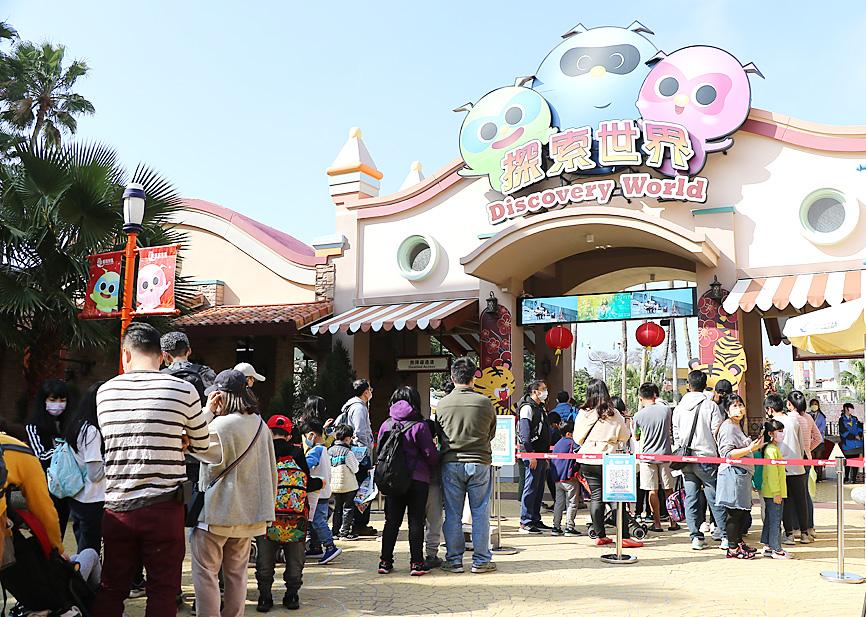
Photo: Chang Hsuan-che, Taipei Times
Bureau analyses have shown that amusement parks equipped with facilities to meet the needs of all ages experience considerable visitor growth, such as E-Da Theme Park in Kaohsiung and Lihpao Discovery Land in Taichung. For example, successful parks not only have amusement attractions, but also have outlet stores.
Ticket vouchers in the fall and winter of 2020 were cited by some operators as contributing phenomenal growth in park visitors under the age of 18.
Janfusun Fancyworld, which is known for its Ferris wheel, said that it has a large area of camellias to attract senior visitors to the park.
It has special wheelchairs and provides a removable ramp so that people with physical challenges can go on the Ferris wheel, Janfusun Fancyworld said, adding that it has added more stunt shows for older visitors.
Lihpao Discovery Land and Leofoo Village Theme Park said that more grandparents are bringing their grandchildren to the parks — visitors that are unlikely to go on the rides.
As the swamp cypress season has attracted seniors, Lihpao Discovery Land said it would offer more seasonal treats for them.
Leofoo Village Theme Park said that grandparents prefer to watch the park animals rather than go on rides, so it plans to sell tickets at a reduced price to those who do not plan to access the rides and games.
Atayal Resort said that it is replacing some older rides with a hot spring zone, hands-on indigenous culture classes and areas to meet the needs of all ages.
Formosan Aboriginal Culture Village said that older visitors can access its cable car, visit a forest culture village and view cherry blossoms.
The park said that it has also added facilities and activities for visitors with physical challenges.


Kenting National Park service technician Yang Jien-fon (楊政峰) won a silver award in World Grand Prix Photography Awards Spring Season for his photograph of two male rat snakes intertwined in combat. Yang’s colleagues at Kenting National Park said he is a master of nature photography who has been held back by his job in civil service. The awards accept entries in all four seasons across six categories: architectural and urban photography, black-and-white and fine art photography, commercial and fashion photography, documentary and people photography, nature and experimental photography, and mobile photography. Awards are ranked according to scores and divided into platinum, gold and
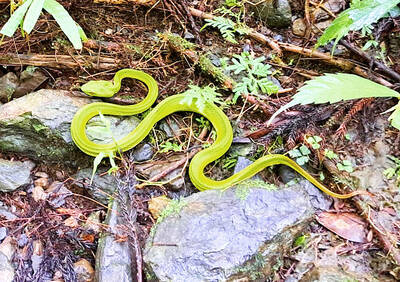
More than half of the bamboo vipers captured in Tainan in the past few years were found in the city’s Sinhua District (新化), while other districts had smaller catches or none at all. Every year, Tainan captures about 6,000 snakes which have made their way into people’s homes. Of the six major venomous snakes in Taiwan, the cobra, the many-banded krait, the brown-spotted pit viper and the bamboo viper are the most frequently captured. The high concentration of bamboo vipers captured in Sinhua District is puzzling. Tainan Agriculture Bureau Forestry and Nature Conservation Division head Chu Chien-ming (朱健明) earlier this week said that the
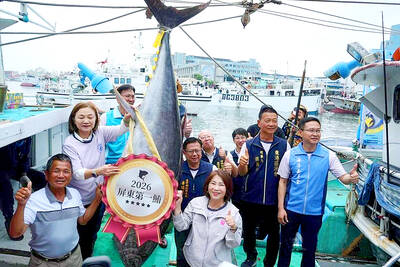
The first bluefin tuna of the season, brought to shore in Pingtung County and weighing 190kg, was yesterday auctioned for NT$10,600 (US$333.5) per kilogram, setting a record high for the local market. The auction was held at the fish market in Donggang Fishing Harbor, where the Siaoliouciou Island-registered fishing vessel Fu Yu Ching No. 2 delivered the “Pingtung First Tuna” it had caught for bidding. Bidding was intense, and the tuna was ultimately jointly purchased by a local restaurant and a local company for NT$10,600 per kilogram — NT$300 ,more than last year — for a total of NT$2.014 million. The 67-year-old skipper
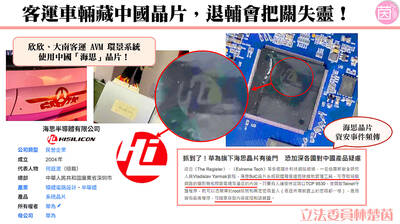
BREACH OF CONTRACT: The bus operators would seek compensation and have demanded that the manufacturer replace the chips with ones that meet regulations Two bus operators found to be using buses with China-made chips are to demand that the original manufacturers replace the systems and provide compensation for breach of contract, the Veterans Affairs Council said yesterday. Democratic Progressive Party Legislator Michelle Lin (林楚茵) yesterday said that Da Nan Bus Co and Shin-Shin Bus Co Ltd have fielded a total of 82 buses that are using Chinese chips. The bus models were made by Tron-E, while the systems provider was CYE Electronics, Lin said. Lin alleged that the buses were using chips manufactured by Huawei subsidiary HiSilicon Co, which presents a national security risk if the


 RSS
RSS