


Ken Young and Kylie Wang (王晴蒂), hosts of a popular daily news podcast, say they feel Taiwanese and not Chinese — a belief shared by many young people in Taiwan.
For younger Taiwanese, growing antagonism as Beijing postures in the Taiwan Strait has cemented a distinct identity rooted in democracy — and not China’s authoritarianism.
“For me, identifying myself as a Taiwanese means all the things that I am proud of,” Young told reporters.
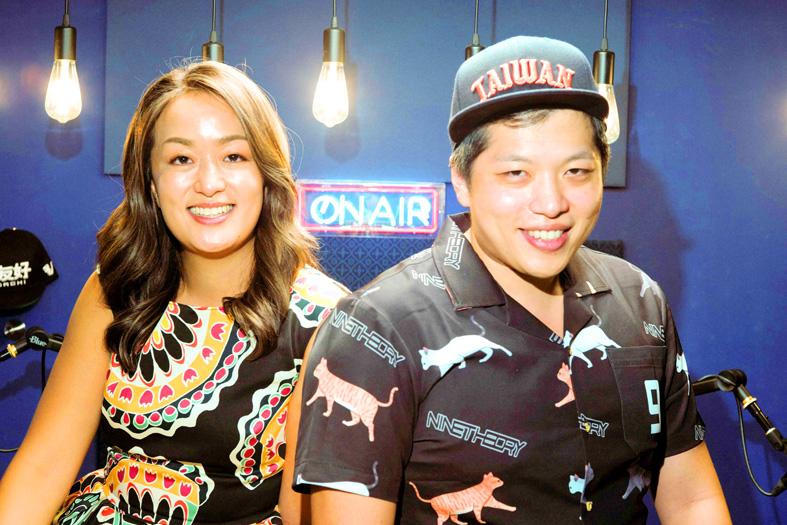
Photo: Sam Yeh, AFP
“We support human rights ... and we support freedom of speech,” said the podcast host, wearing a black baseball cap with “Taiwan” embossed in red across the front.
For decades after 1949, when Chinese Nationalist Party (KMT) forces lost the Chinese Civil War to the Chinese Communist Party, people in Taiwan saw their leaders as the true representatives of all of China.
However, as Taiwan moved from an autocracy to democracy in the 1990s, “a strong civic identity” was forged through “the process of democratization,” said Wu Rwei-ren (吳叡人), an expert on Taiwan’s history at Academia Sinica. “It’s not based on race or blood, but ... on the sentiments that we are a country with democracy, freedom, human rights and the rule of law, and we can participate in the political decisionmaking.”
A recent poll released by National Chengchi University shows that less than 3 percent of people in Taiwan identify as Chinese, a record low, down from nearly 26 percent in 1992.
More than 60 percent identify as solely Taiwanese.
“China’s increasingly aggressive policies” have resulted in Taiwanese seeing it as foreign and even as “an enemy country,” Wu said.
Administrative assistant Lin Yu-han, 22, worries that Taiwan could go the way of Hong Kong, where Beijing’s sweeping National Security Law has criminalized dissent and created an environment of fear.
“What has been happening in Hong Kong has made me realize how terrible China is,” Lin said. “I don’t want Hong Kong’s today to become Taiwan’s tomorrow.”
Most Taiwanese reject the possibility of being ruled by Beijing, with less than 8 percent in support of gradual or swift unification.
Tensions have intensified since President Tsai Ing-wen (蔡英文) took office in 2016.
“We want to protect the right to love our democracy, our freedom,” Wang said. “I keep on saying I am Taiwanese because we think that the more people see themselves as Taiwanese and love our country, love our land, that can protect us from being invaded.”
Liljay Chen, 36, fronts a hip hop band that performs at street protests, and runs a business selling Taiwanese independence T-shirts and baseball caps.
“I am Taiwanese, I am not Chinese. Taiwan is a country and China is a country. We are equal,” Chen told reporters at his store.
On display is a red baseball cap reminiscent of the hats worn by former US president Donald Trump. One reads: “Make China lose again.”
Other products sport slogans such as “Taiwan independence” and “Taiwan is not part of China.”
“For young people, the main difference between Taiwan and China is the freedom to create freely and free access to any social media,” Chen said.
However, for some older residents, there is no conflict in being both Taiwanese and Chinese.
“I identify myself as Chinese by blood and culture as my grandparents and parents came from China. I am also Taiwanese since I was born and raised in Taiwan,” said Hu Min-yueh, 56, a pastor and the grandson of a general who arrived with the KMT in 1949.
For many younger people, the historical connections with China do not define them.
“I am Taiwanese and we are a country,” said student Ayden Lai, 17, while taking a break from dance practice with his high-school friends. “I think most young people don’t feel any attachment to China.”
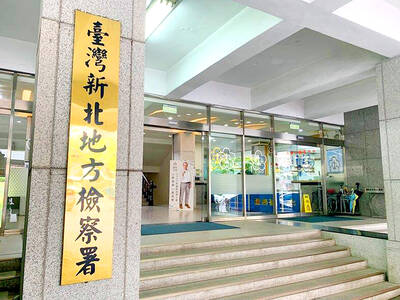
Prosecutors in New Taipei City yesterday indicted 31 individuals affiliated with the Chinese Nationalist Party (KMT) for allegedly forging thousands of signatures in recall campaigns targeting three Democratic Progressive Party (DPP) lawmakers. The indictments stem from investigations launched earlier this year after DPP lawmakers Su Chiao-hui (蘇巧慧) and Lee Kuen-cheng (李坤城) filed criminal complaints accusing campaign organizers of submitting false signatures in recall petitions against them. According to the New Taipei District Prosecutors Office, a total of 2,566 forged recall proposal forms in the initial proposer petition were found during the probe. Among those
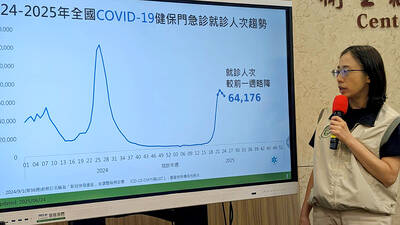
ECHOVIRUS 11: The rate of enterovirus infections in northern Taiwan increased last week, with a four-year-old girl developing acute flaccid paralysis, the CDC said Two imported cases of chikungunya fever were reported last week, raising the total this year to 13 cases — the most for the same period in 18 years, the Centers for Disease Control (CDC) said yesterday. The two cases were a Taiwanese and a foreign national who both arrived from Indonesia, CDC Epidemic Intelligence Center Deputy Director Lee Chia-lin (李佳琳) said. The 13 cases reported this year are the most for the same period since chikungunya was added to the list of notifiable communicable diseases in October 2007, she said, adding that all the cases this year were imported, including 11 from
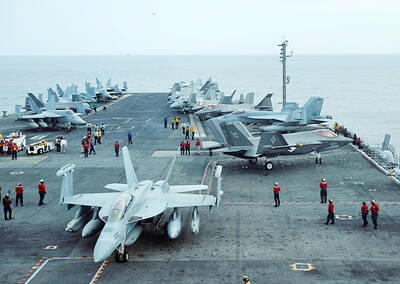
China might accelerate its strategic actions toward Taiwan, the South China Sea and across the first island chain, after the US officially entered a military conflict with Iran, as Beijing would perceive Washington as incapable of fighting a two-front war, a military expert said yesterday. The US’ ongoing conflict with Iran is not merely an act of retaliation or a “delaying tactic,” but a strategic military campaign aimed at dismantling Tehran’s nuclear capabilities and reshaping the regional order in the Middle East, said National Defense University distinguished adjunct lecturer Holmes Liao (廖宏祥), former McDonnell Douglas Aerospace representative in Taiwan. If
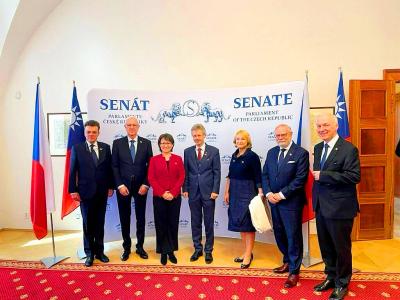
The Mainland Affairs Council (MAC) today condemned the Chinese Communist Party (CCP) after the Czech officials confirmed that Chinese agents had surveilled Vice President Hsiao Bi-khim (蕭美琴) during her visit to Prague in March last year. Czech Military Intelligence director Petr Bartovsky yesterday said that Chinese operatives had attempted to create the conditions to carry out a demonstrative incident involving Hsiao, going as far as to plan a collision with her car. Hsiao was vice president-elect at the time. The MAC said that it has requested an explanation and demanded a public apology from Beijing. The CCP has repeatedly ignored the desires


 RSS
RSS