


Entries to the Kaohsiung Museum of Fine Arts’ Kaohsiung Awards are open through Nov. 12, the museum said yesterday.
Submissions to enter next year’s 26th edition of the annual competition opened on Sunday, the museum said.
Established in 1997, the Kaohsiung Awards are one of the most representative art awards in Taiwan, it said.
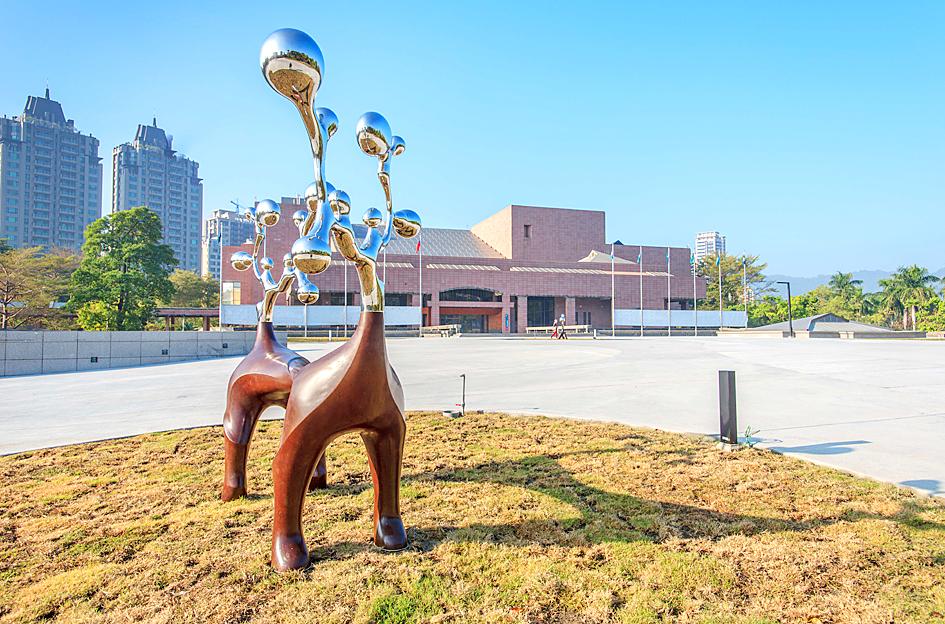
Photo courtesy of the Kaohsiung Museum of Fine Arts
The awards uphold a spirit of diversity and openness, and look forward to artists using original media and innovative thinking in their work, it said.
In the initial stage of the selection process, submitted works would be reviewed separately according to the media category in which they were accepted to allow diverse entries to be seen, the museum said.
The five categories are calligraphy; painting and print; spatial art; video and new media art; and interdisciplinary art projects, it said.
Three winners would receive the Kaohsiung Award, which includes a cash prize of NT$500,000 each, it said.
Excellent Work Awards would be named in each of the five categories, with each winning NT$100,000, it said.
Honorable mentions would also be selected to receive NT$30,000 each, it added.
The HCS Calligraphy Foundation would present the HCS Special Award for Calligraphy/Seal-engraving Works with NT$100,000, the museum said.
Contestants can submit entries to a single category along with a statement of at most 1,000 words explaining their creative concept, the museum said.
Anyone with at least residency in Taiwan can enter, it said.
The museum has remodeled its fourth-floor galleries, which would provide a more contemporary space to display the works shortlisted for next year’s Kaohsiung Awards, it said.
People who want to enter can register online at http://awards.kmfa.gov.tw, it said.
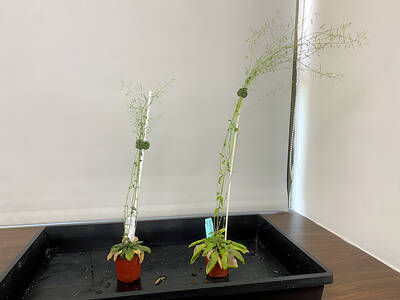
Taiwanese scientists have engineered plants that can capture about 50 percent more carbon dioxide and produce more than twice as many seeds as unmodified plants, a breakthrough they hope could one day help mitigate global warming and grow more food staples such as rice. If applied to major food crops, the new system could cut carbon emissions and raise yields “without additional equipment or labor costs,” Academia Sinica researcher and lead author the study Lu Kuan-jen (呂冠箴) said. Academia Sinica president James Liao (廖俊智) said that as humans emit 9.6 billion tonnes of carbon dioxide compared with the 220 billion tonnes absorbed
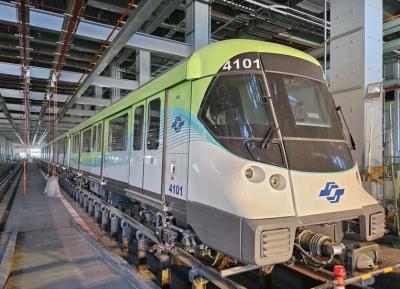
The Taipei Mass Rapid Transit (MRT) Wanda-Zhonghe Line is 81.7 percent complete, with public opening targeted for the end of 2027, New Taipei City Mayor Hou You-yi (侯友宜) said today. Surrounding roads are to be open to the public by the end of next year, Hou said during an inspection of construction progress. The 9.5km line, featuring nine underground stations and one depot, is expected to connect Chiang Kai-shek Memorial Hall Station to Chukuang Station in New Taipei City’s Jhonghe District (中和). All 18 tunnels for the line are complete, while the main structures of the stations and depot are mostly finished, he
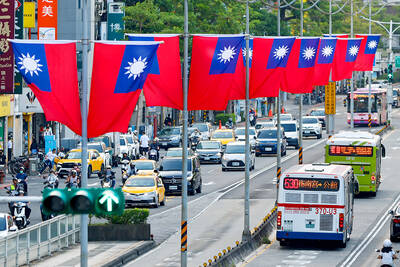
Taipei is to implement widespread road closures around Taipei 101 on Friday to make way for large crowds during the Double Ten National Day celebration, the Taipei Department of Transportation said. A four-minute fireworks display is to be launched from the skyscraper, along with a performance by 500 drones flying in formation above the nearby Nanshan A21 site, starting at 10pm. Vehicle restrictions would occur in phases, they said. From 5pm to 9pm, inner lanes of Songshou Road between Taipei City Hall and Taipei 101 are to be closed, with only the outer lanes remaining open. Between 9pm and 9:40pm, the section is
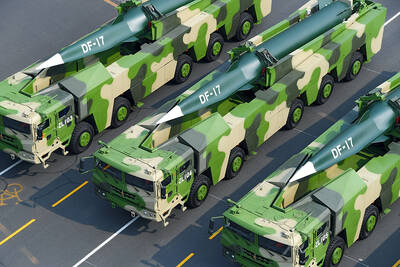
China’s plan to deploy a new hypersonic ballistic missile at a Chinese People’s Liberation Army Rocket Force (PLARF) base near Taiwan likely targets US airbases and ships in the western Pacific, but it would also present new threats to Taiwan, defense experts said. The New York Times — citing a US Department of Defense report from last year on China’s military power — on Monday reported in an article titled “The missiles threatening Taiwan” that China has stockpiled 3,500 missiles, 1.5 times more than four years earlier. Although it is unclear how many of those missiles were targeting Taiwan, the newspaper reported


 RSS
RSS