


“Happy farmers raise happy chickens” is the philosophy that has guided one Miaoli farm throughout its arduous transformation to become the largest humane egg producer in the nation.
Five years ago, Lin Chih-chieh (林智傑), a second-generation farmer decided to transform his family’s business in Miaoli County into a humane egg farm.
He has not looked back since, even after racking up losses into the tens of millions of New Taiwan dollars over the first three years of his endeavor.
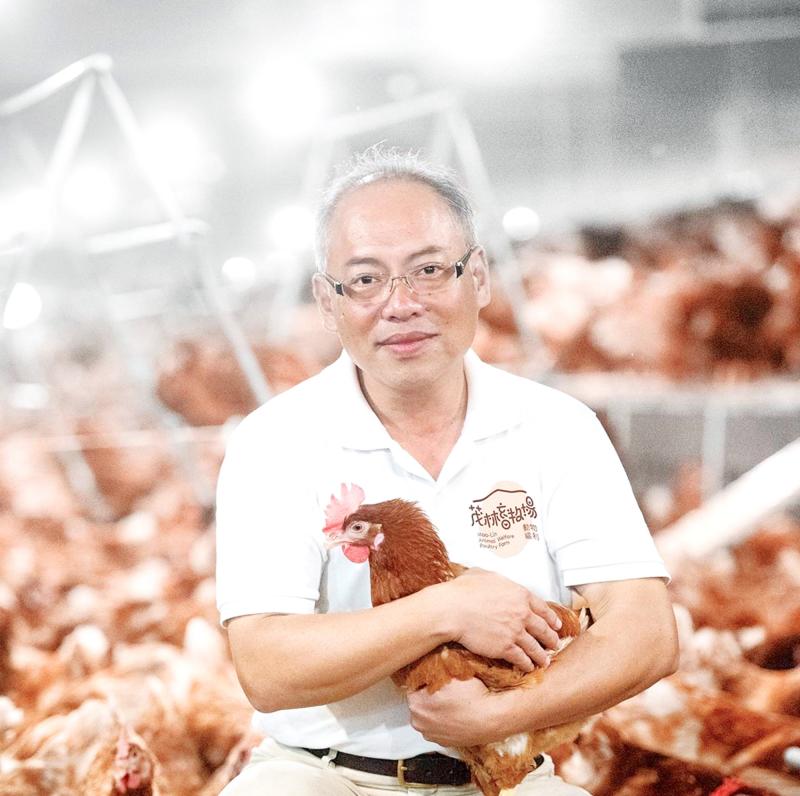
Photo provided by the Mao-Lin Animal Welfare Poultry Farm via CNA
Now Lin produces 14 million eggs per year from free-roaming chickens supported by the latest technologies — a far cry from the caged farming typical of Taiwan’s egg industry.
Before going to live in Australia for more than a decade, Lin helped his father on their family chicken farm, raising poultry for consumption.
However, meat farms and egg farms operate differently, Lin said.
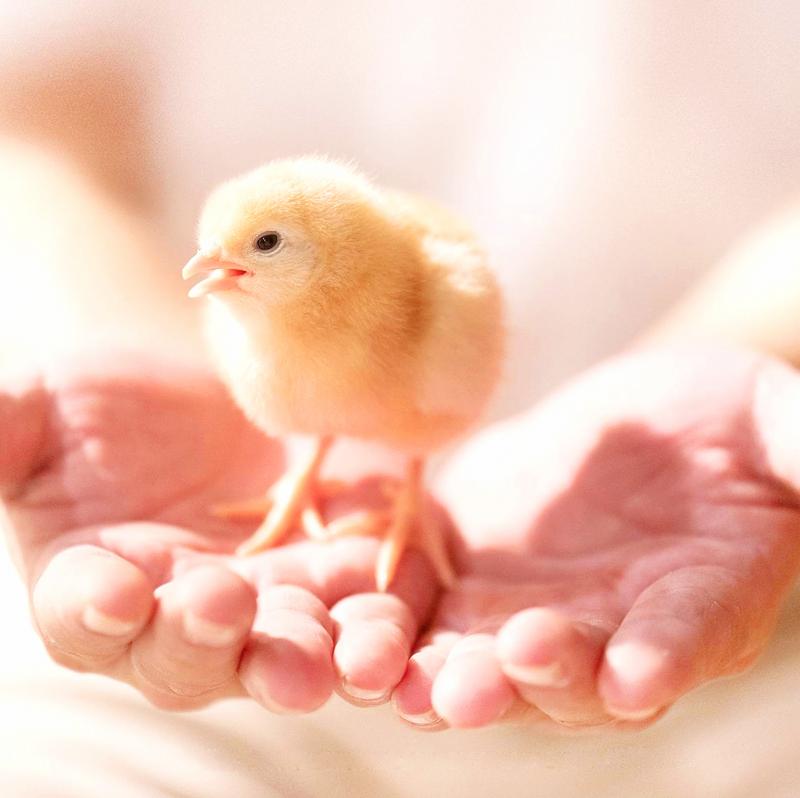
Photo courtesy of the Mao-Lin Animal Welfare Poultry Farm
Chickens raised for meat “are placed on the ground where they can eat, walk around, rest, drink water and sometimes run around a bit,” he said. “They are not as unruly as egg-laying hens.”
Since the chickens’ lifespans were relatively short, Lin said that his sister — who helps run the farm — found it difficult to bear.
“Every time a chicken’s time had come, she would lock herself in her room and refuse to come out,” he said.
Because of this, Lin said that he had the idea of turning away from the butcher industry and transforming the business into a free-range egg farm.
In his initial research, Lin found that about 90 percent of egg producers in Taiwan keep caged hens, most of which are Hy-Line white varieties bred to be efficient egg-layers without needing much space or food.
“These white varieties are actually less docile and more active” than other types of chickens, he said. “But sadly, because they are small in stature, it is easy to keep them in cages.”
Livestock have always been treated this way, maximizing production through technology, “but we cannot forget the contributions animals make to humans,” he said.
Lin reimagined his business, the newly named Mao-Lin Animal Welfare Poultry Farm, under the philosophy “happy farmers raise happy chickens.”
Instead of the spirited white varieties, Lin chose to raise a type of red chicken that is more docile.
The hens are allowed to roam freely inside huge enclosed barns equipped with raised platforms, areas to grind down their nails, egg-laying enclosures and any other facility that a chicken might want.
In consideration of their natural habits, the barn floor also has a layer of bedding for sand baths, allowing the chickens to clean away pests themselves without the need for insecticides.
Lin also imported an expensive European climate control system that uses wave-shaped evaporative cooling sheets rather than blowing cold air onto the chickens with air-conditioning.
“This way it feels like they are out in nature,” he said. “For example, yesterday it was 38°C outside, but only 30°C inside, so they will still be warm, but not too hot.”
It is fully automated and can set the temperature, humidity, ammonia level and other factors according to preset parameters, Lin added.
For example, when it detects too much carbon monoxide, it pumps in more air, adjusting the speed to make it feel as though a breeze is passing by, he said, praising the system as one of the best ways to combat climate change.
Most egg farmers in the EU use this kind of environmental control system, but in Taiwan, farmers tend to rely on natural breezes to cool down caged chickens throughout the year, Lin said.
However, heat still builds up under the metal roofs that cover most egg farms, affecting the hens’ appetite and therefore egg production, he added.
Lin said that cage-free hens produce fewer eggs than caged hens, as they do not roost while moving around, but added that their eggs are of better quality with fewer deformities and a lower risk of breakage.
He also emphasized his strict disease prevention measures, saying that it makes sense for business, as the eggs produced by a hen on medication cannot be sold.
In the long term, keeping the chickens comfortable not only reduces operational risks, but also prevents food safety scandals, “creating a virtuous cycle on the road to sustainability,” Lin said.
This story has been amended since it was first published.

FUKUOKA SITUATION: Japanese media reported that the pathogen is expected to be identified by the summer, while the CDC downplayed the idea that it was hMPV A “mysterious cold-like illness” reported in Japan’s Fukuoka Prefecture does not seem to be a new disease, but Japanese authorities have been asked about the situation, the Centers for Disease Control (CDC) said yesterday. The Fukuoka Prefectural Medical Association on Wednesday told a news conference that a “mystery cold” that has become a hot topic on social media is “highly likely to be caused by some kind of viral infection,” Japan’s KBC News reported. “Many people are experiencing symptoms starting with a sore throat, followed by a runny nose, phlegm and a severe cough,” KBC News reported, citing association officials. Health authorities are

Nvidia Corp CEO Jensen Huang (黃仁勳) arrived in Taiwan yesterday ahead of upcoming AI and technology events, saying he plans to meet with clients and Taiwan Semiconductor Manufacturing Co Chairman C.C. Wei (魏哲家) during his visit. After landing at Taipei Songshan Airport, Huang posed for photos with fans and handed out Yakult drinks to reporters and supporters waiting at the scene, saying he has “a lot to do” during the trip. Asked about reports that Nvidia’s planned headquarters site in Taipei’s Beitou Shilin Technology Park could break ground on May 27, Huang said that if the company holds an event, he would

The Ministry of Finance this afternoon announced the winning numbers for the March-April uniform invoice lottery. The winning number for the NT$10 million (US$318,060) special prize is 19531471, and the winning number for the NT$2 million grand prize is 85941329. Three numbers were drawn for the NT$200,000 first prize: 07225810, 20231230 and 83518781. Those with receipts matching the last seven digits of any of the first-prize numbers will win the NT$40,000 second prize, while those matching the last six digits will win the NT$10,000 third prize. Those whose receipts match the last five digits of the first-prize numbers can claim the NT$4,000 fourth prize,

Taiwan Travelogue (臺灣漫遊錄), which earlier this week became the first Taiwanese novel to win the International Booker Prize, is to be adapted into a television series through a Taiwan-Japan coproduction, producer Chang Chen-yu (張辰漁) said yesterday. Chang, a producer at World Softest Production Film Co, wrote on Facebook that the company had been searching for projects with international appeal that retain a strong Taiwanese identity after colleagues and Japanese partners strongly recommended the novel. After reading the book, Chang said he immediately decided to pursue the screen rights. “A great story has the power to transcend time and borders, and connect countless people,”


 RSS
RSS