


The Food and Drug Administration last year imposed fines totaling more than NT$210 million (US$7.36 million) on 5,742 cases of false advertising involving food and cosmetic products, it said yesterday.
The advertisements included exaggerated or therapeutic claims, FDA Food Safety Division official Hsu Hsu Chao-kai (許朝凱) said.
The most common claims were that the products aided “skin care,” and “weight loss and slimming,” that they “enhanced immunity,” “cured eye disease” and “improved bone and muscle functions,” he said.
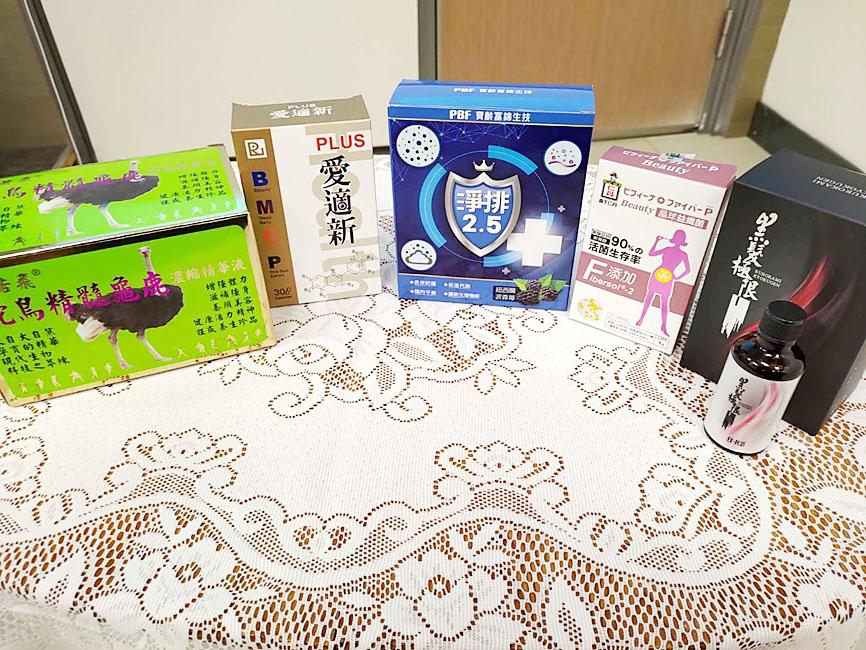
Photo: CNA
Hsu gave an example for each of the five common types of food and cosmetic products that used false advertising.
An advertisement for Japan’s Kurokami Kyokugen Hair Revitalizing Essence Ex-Plus (日本全新黑髮極限毛髮賦活精華Ex-Plus), which claimed to revitalize hair follicle cells by 760 percent, capillaries by 810 percent and grow back hair by 390 percent, has been fined 58 times, he said.
An advertisement for Japan’s Morishita Jintan 5X Bifina and Fiber Plus Beauty (日本仁丹 5X 特效晶球益纖菌) capsules have been fined 60 times for claiming to help people slim down and lose 1kg per day, he added.
An advertisement for PBF New Zealand Boysenberry (PBF紐西蘭波森莓) concentrated berry juice sachets, which claimed it can repair lung cells, prevent and cure lung inflammation and pulmonary fibrosis, as well as repair damaged tissues, was fined 39 times, Hsu said.
An ad for Ai-Shi-Shin (愛適新) billberry and calendula extract capsules, which claimed to increase eye stem cell proliferation by 800 percent and repair the eyes by 100 percent, was fined 39 times, he said.
An advertisement for Walk Like Flying Ostrich Extract (走若飛駝鳥精) herbal extract was fined 32 times for claiming to rapidly repair the bones, muscles and improve the lubrication of articular cartilage, he added.
Hsu said the false ads often claimed that the ingredients can change the users’ physiological mechanisms, used intimidating terms or displayed misleading before-and-after photographs to exaggerate the product’s effects.
Ads for food products can only provide nutritional value and calories, while those for cosmetic products can only claim to “polish the appearance,” but cannot claim to have therapeutic effect, he said.
Companies that use exaggerated advertising for food products can be fined NT$40,000 to NT$4 million, and NT$40,000 to NT$200,000 for cosmetic products, Hsu said.
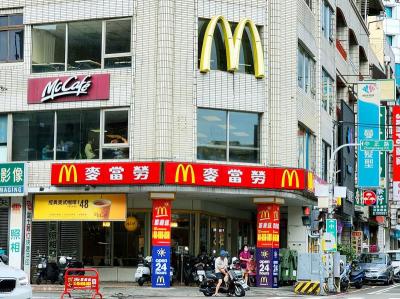
Fast food chain McDonald's is to raise prices by up to NT$5 on some products at its restaurants across Taiwan, starting on Wednesday next week, the company announced today. The prices of all extra value meals and sharing boxes are to increase by NT$5, while breakfast combos and creamy corn soup would go up by NT$3, the company said in a statement. The price of the main items of those meals, if ordered individually, would remain the same. Meanwhile, the price of a medium-sized lemon iced tea and hot cappuccino would rise by NT$3, extra dipping sauces for chicken nuggets would go up
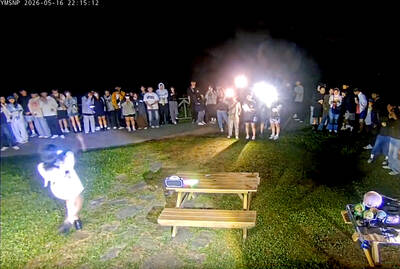
Yangmingshan National Park’s Qingtiangang (擎天崗) nature area has gone viral after a park livestream camera observed a couple in the throes of intimate congress, which was broadcast live on YouTube, drawing large late-night crowds and sparking a backlash over noise, bright lights and disruption to wildlife habitat. The area’s livestream footage appeared to show a couple engaging in sexual activity on a picnic table in the park on Friday last week, with the uncensored footage streamed publicly online. The footage quickly spread across social media, prompting a tide of visitors to travel to the site to “check in” and recreate the

Minister of Digital Affairs Lin Yi-ching (林宜敬) yesterday cited regulatory issues and national security concerns as an expert said that Taiwan is among the few Asian regions without Starlink. Lin made the remarks on Facebook after funP Innovation Group chief executive officer Nathan Chiu (邱繼弘) on Friday said Taiwan and four other countries in Asia — China, North Korea, Afghanistan and Syria — have no access to Starlink. Starlink has become available in 166 countries worldwide, including Ukraine, Malaysia, the Philippines and Vietnam, in the six years since it became commercial, he said. While China and North Korea block Starlink, Syria is not
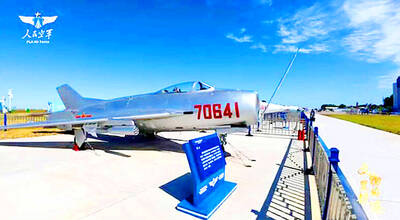
GROUNDED: A KMT lawmaker proposed eliminating drone development programs and freezing funding for counterdrone systems, despite China’s adoption of the technology China has deployed attack drones at air bases near the Taiwan Strait in a strategy aimed at overwhelming Taiwan’s air defense systems through saturation attacks, the Mainland Affairs Council (MAC) said. The council’s latest quarterly report on China said that satellite imagery and open-source intelligence indicate that the Chinese People’s Liberation Army (PLA) had converted retired J-6 fighter jets into J-6W drones, which the PLA has stationed at six air bases near Taiwan, five in China’s Fujian Province and one in Guangdong Province. The report cited J. Michael Dahm, a senior fellow at the US-based Mitchell Institute, as saying that China has


 RSS
RSS