


A Ministry of Economic Affairs estimate of the economic benefits created by a stimulus coupon program is unrealistic, Chinese Nationalist Party (KMT) lawmakers said yesterday, calling it an attempt to scam the public and self-delusion by the government.
Minister of Economic Affairs Shen Jong-chin (沈榮津) on Tuesday estimated that the program would create NT$100 billion (US$3.3 billion) in economic benefits, which KMT Legislator William Tseng (曾銘宗) yesterday said was out of touch with reality and baseless.
KMT Legislator Chiang Wan-an (蔣萬安) said at a news conference in Taipei that the public is more concerned about the assistance the program would provide than its name, adding that people remain baffled about how the esoteric system would function.
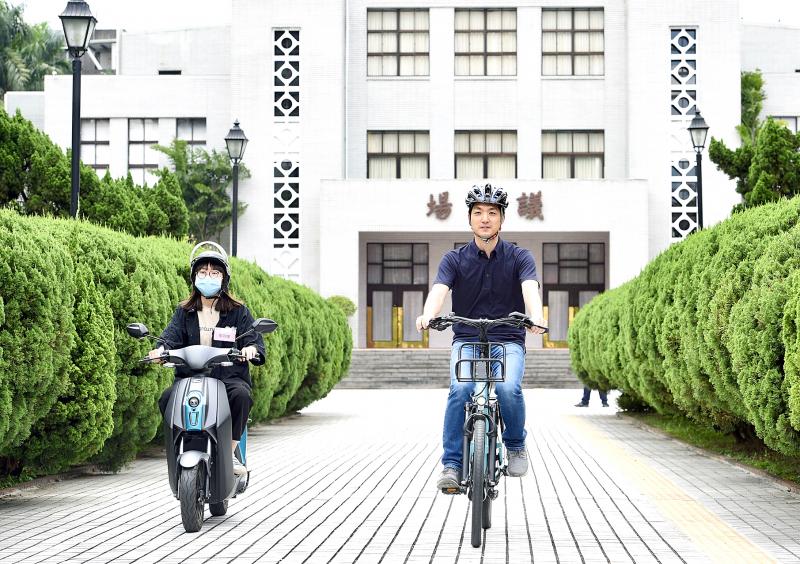
Photo: Peter Lo, Taipei Times
A month-long delay in promulgating the policy to July 15 could cause even more businesses to close, as people might defer spending until after obtaining the coupons, he said.
The coupons announced so far would only be available in NT$200 and NT$500 denominations, ensuring that they would only be used at larger establishments, such as department stores, while completely overlooking the needs of smaller businesses, Chiang said.
While the program would result in NT$1,000 deposits into the accounts of people from low-to-middle-income families, they would still need to withdraw the money to exchange it for the coupons, making it bothersome, he said.
The program is unfriendly, excludes poor people and could prove to be a political disaster in exchange for only a temporary respite for officials, Chiang said, adding that officials who drafted the policy were too far removed from the public and everyday life.
KMT caucus whip Lin Wei-chou (林為洲) said that the government should place more effort into tightening border controls instead of pushing a stimulus package that would only create more strife and increase government spending.
The program is unbecoming, as the government seems to be offering the world when it is only providing NT$2,000 in stimulus coupons, for which NT$1,000 must first be spent, he said.
KMT Legislator Lin Yi-hua (林奕華) called the policy a triple deception: a deception of the public and officials deceiving themselves after deceiving deities.
Her comment about deceiving deities refers to Premier Su Tseng-chang (蘇貞昌) in 2010 going back on his word that he would not run for New Taipei City mayor. Su was commissioner of then-Taipei County from 1997 to 2004.
Tseng said that as the program has not resolved the potential problem of the substitution effect, the policy’s efficacy is dubious.
He predicted that the program would perform worse than consumer vouchers issued by the administration of then-president Ma Ying-jeou (馬英九) in 2009.
Prior to the news conference, Democratic Progressive Party (DPP) caucus director-general Cheng Yun-peng (鄭運鵬) wrote on Facebook that the KMT has always been a proponent of the government handing out cash, while the DPP aims to stimulate the economy and prevent the substitution effect from occurring.
The program offers people an incentive to spend, because they would have already “spent” NT$1,000 to obtain the coupons, and encourages larger purchases, as using the coupons for everyday goods would cause the substitution effect, he wrote.
The KMT finding faults with the coupon program is an admission that there is a possibility people would fail to use cash handouts or that cash handouts would trigger the substitution effect, he added.

The manufacture of the remaining 28 M1A2T Abrams tanks Taiwan purchased from the US has recently been completed, and they are expected to be delivered within the next one to two months, a source said yesterday. The Ministry of National Defense is arranging cargo ships to transport the tanks to Taiwan as soon as possible, said the source, who is familiar with the matter. The estimated arrival time ranges from late this month to early next month, the source said. The 28 Abrams tanks make up the third and final batch of a total of 108 tanks, valued at about NT$40.5 billion
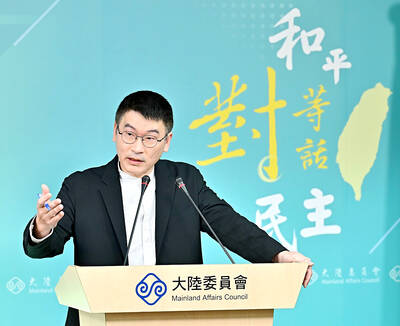
Two Taiwanese prosecutors were questioned by Chinese security personnel at their hotel during a trip to China’s Henan Province this month, the Mainland Affairs Council (MAC) said yesterday. The officers had personal information on the prosecutors, including “when they were assigned to their posts, their work locations and job titles,” MAC Deputy Minister and spokesman Liang Wen-chieh (梁文傑) said. On top of asking about their agencies and positions, the officers also questioned the prosecutors about the Cross-Strait Joint Crime-Fighting and Judicial Mutual Assistance Agreement, a pact that serves as the framework for Taiwan-China cooperation on combating crime and providing judicial assistance, Liang
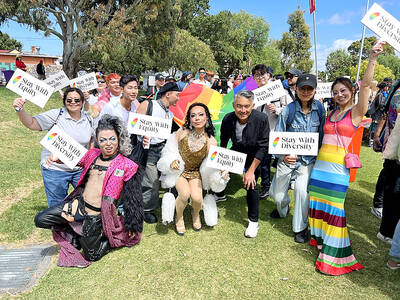
A group from the Taiwanese Designers in Australia association yesterday represented Taiwan at the Midsumma Pride March in Melbourne. The march, held in the St. Kilda suburb, is the city’s largest LGBTQIA+ parade and the flagship event of the annual Midsumma Festival. It attracted more than 45,000 spectators who supported the 400 groups and 10,000 marchers that participated this year, the association said. Taiwanese Designers said they organized a team to march for Taiwan this year, joining politicians, government agencies, professionals and community organizations in showing support for LGBTQIA+ people and diverse communities. As the first country in Asia to legalize same-sex
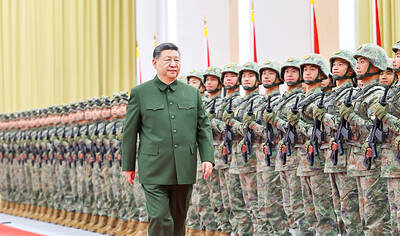
MOTIVES QUESTIONED The PLA considers Xi’s policies toward Taiwan to be driven by personal considerations rather than military assessment, the Epoch Times reports Chinese President Xi Jinping’s (習近平) latest purge of the Chinese People’s Liberation Army (PLA) leadership might have been prompted by the military’s opposition to plans of invading Taiwan, the Epoch Times said. The Chinese military opposes waging war against Taiwan by a large consensus, putting it at odds with Xi’s vision, the Falun Gong-affiliated daily said in a report on Thursday, citing anonymous sources with insight into the PLA’s inner workings. The opposition is not the opinion of a few generals, but a widely shared view among the PLA cadre, the Epoch Times cited them as saying. “Chinese forces know full well that


 RSS
RSS