


A triple antiviral therapy that has shown promise in treating COVID-19 patients with mild symptoms in Hong Kong is not being recommended in Taiwan because it can cause side effects, Central Epidemic Command Center (CECC) specialist advisory panel convener Chang Shan-chwen (張上淳) said on Sunday.
Researchers in Hong Kong have found that patients experiencing milder symptoms recover more quickly if they are treated with the antiviral cocktail soon after symptoms appear.
Early treatment with the therapy — which combines interferon beta-1b, lopinavir-ritonavir and ribavirin — rapidly suppresses the amount of virus in a patient’s body and alleviates symptoms, according to a study published in The Lancet on Friday.
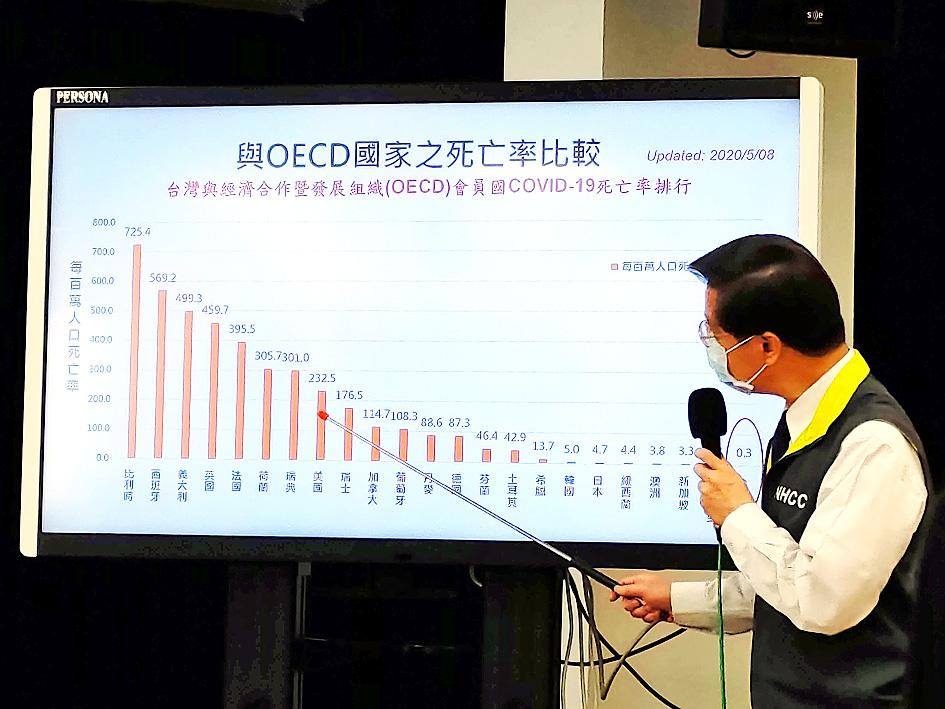
Photo: Wu Liang-yi, Taipei Times
Asked about the therapy, Chang said the panel had considered including the use of the multiple sclerosis treatment interferon beta-1b with the hepatitis drug ribavirin in its treatment guidelines for COVID-19, but dropped the idea, because clinical figures show that the treatment causes side effects in a high percentage of patients.
Although Chang did not detail the side effects of the drugs, the article in The Lancet said that the main side effects are nausea, diarrhea, fever and increased alanine transaminase levels.
As for the HIV therapy lopinavir-ritonavir, Chang said that although it causes fewer side effects and was included in the first treatment guidelines, its use alone is not effective in treating COVID-19.
Separately on Saturday at the third weekly briefing on the epidemiological characteristics of COVID-19 cases in Taiwan, Chang explained how the nation successfully fought against an H1N1 (swine flu) pandemic in 2009.
The first swine flu outbreak was reported in Mexico and the US in late April. The Taiwan Centers for Disease Control (CDC) designated it as a category 1 notifiable communicable disease on April 27 and set up the CECC on April 22, Chang said.
On April 29, it began tracing travelers who might have been exposed to the disease, while the first imported case was confirmed on May 20, he added.
The disease prevention strategy against the H1N1 virus at the time is similar to that being used to prevent a COVID-19 outbreak, including the first stage of “containment” and the second stage of “mitigation,” as well as detailed policies, including border controls, class suspension standards and hospital infection control measures, he said.
The first local swine flu infection was reported on July 2, 2009, and the first death was recorded on July 30, and although rapid test kits and antiviral agents were provided in August, the number of hospitalized patients and suspended classes increased until November, when a vaccine started being administered, Chang said.
While some specialists in August 2009 forecast that more than 7 million people would be infected with the swine flu in Taiwan, resulting in more than 7,000 deaths, only about 930 people had been hospitalized for serious complications as of June 21, 2010, and 42 had died as of May 10, 2010 — one of the lowest mortality rates compared with Organisation for Economic Co-operation and Development countries — Chang added.
Predictions based on simulation models might sometimes be inaccurate when facing a new virus, Chang said, adding that collective public efforts, such as wearing masks to avoid droplet infection and preventing the wearer from touching their face, can change the outcome.
Knowledge gleaned from the nation’s disease prevention experiences have contributed to its successful performance in fighting COVID-19, he added.
However, Chang said that developing an effective and safe vaccine for the novel coronavirus might be more difficult and would likely take longer, but added that it is difficult to predict how long it would take, even though medical technology has been advancing.
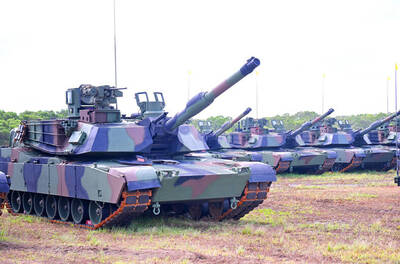
The manufacture of the remaining 28 M1A2T Abrams tanks Taiwan purchased from the US has recently been completed, and they are expected to be delivered within the next one to two months, a source said yesterday. The Ministry of National Defense is arranging cargo ships to transport the tanks to Taiwan as soon as possible, said the source, who is familiar with the matter. The estimated arrival time ranges from late this month to early next month, the source said. The 28 Abrams tanks make up the third and final batch of a total of 108 tanks, valued at about NT$40.5 billion

Two Taiwanese prosecutors were questioned by Chinese security personnel at their hotel during a trip to China’s Henan Province this month, the Mainland Affairs Council (MAC) said yesterday. The officers had personal information on the prosecutors, including “when they were assigned to their posts, their work locations and job titles,” MAC Deputy Minister and spokesman Liang Wen-chieh (梁文傑) said. On top of asking about their agencies and positions, the officers also questioned the prosecutors about the Cross-Strait Joint Crime-Fighting and Judicial Mutual Assistance Agreement, a pact that serves as the framework for Taiwan-China cooperation on combating crime and providing judicial assistance, Liang
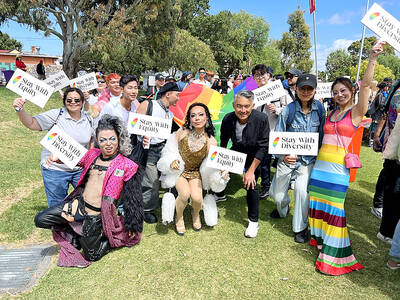
A group from the Taiwanese Designers in Australia association yesterday represented Taiwan at the Midsumma Pride March in Melbourne. The march, held in the St. Kilda suburb, is the city’s largest LGBTQIA+ parade and the flagship event of the annual Midsumma Festival. It attracted more than 45,000 spectators who supported the 400 groups and 10,000 marchers that participated this year, the association said. Taiwanese Designers said they organized a team to march for Taiwan this year, joining politicians, government agencies, professionals and community organizations in showing support for LGBTQIA+ people and diverse communities. As the first country in Asia to legalize same-sex
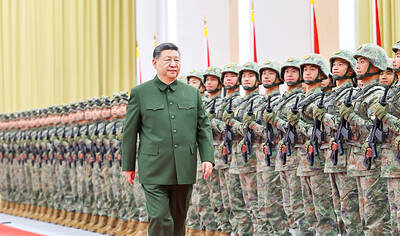
MOTIVES QUESTIONED The PLA considers Xi’s policies toward Taiwan to be driven by personal considerations rather than military assessment, the Epoch Times reports Chinese President Xi Jinping’s (習近平) latest purge of the Chinese People’s Liberation Army (PLA) leadership might have been prompted by the military’s opposition to plans of invading Taiwan, the Epoch Times said. The Chinese military opposes waging war against Taiwan by a large consensus, putting it at odds with Xi’s vision, the Falun Gong-affiliated daily said in a report on Thursday, citing anonymous sources with insight into the PLA’s inner workings. The opposition is not the opinion of a few generals, but a widely shared view among the PLA cadre, the Epoch Times cited them as saying. “Chinese forces know full well that


 RSS
RSS