


Tougher laws are needed to combat China’s growing influence on Taiwanese media via funding and sponsored news articles with the aim of subverting public discourse and undermining Taiwan’s democracy, New Power Party (NPP) officials said yesterday.
Taiwanese society and protest movements have over the years fought hard to end the system of state-controlled media introduced during the Martial Law era, NPP caucus whip Chiu Hsien-chi (邱顯智) told a news conference in Taipei, adding that these efforts have resulted in political parties, government agencies and the military shedding ownership of media firms.
“Now we are seeing that an enemy state, whose regime is hostile toward our nation, has been using the power and money of its party, government agencies and military to infiltrate Taiwan’s media outlets,” Chiu said. “Of course, we must take a hardline approach to stop it.”
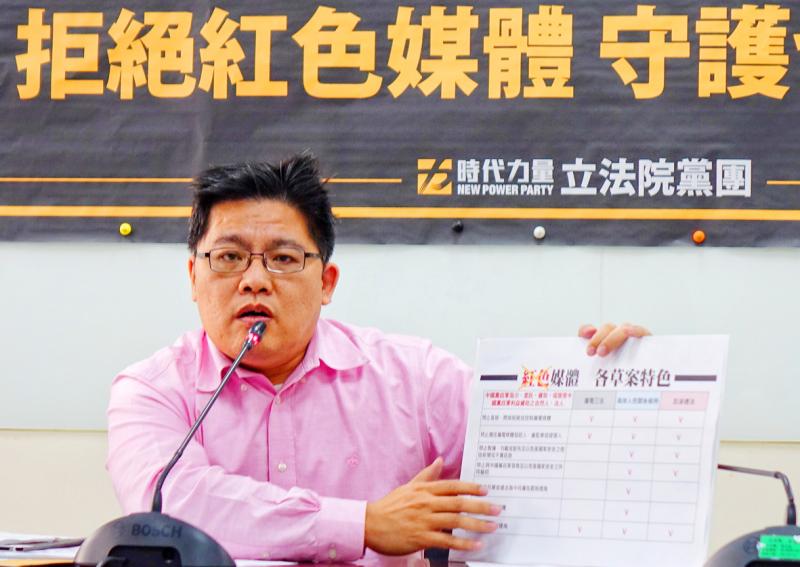
Photo: Liu Hsin-de, Taipei Times
To that end, the NPP would in the current legislative session push for stricter governance and increased punishment through amendments to the three key laws regulating broadcast media: the Radio and Television Act (廣播電視法), the Satellite Broadcasting Act (衛星廣播電視法) and the Cable Radio and Television Act (有線廣播電視法), he said.
The NPP would also seek to amend relevant articles of the Anti-infiltration Act (反滲透法) and the Act Governing Relations Between the People of the Taiwan Area and the Mainland Area (臺灣地區與大陸地區人民關係條例), he added.
“Taiwan has come under attack by China through military threats, political warfare and propaganda campaigns,” the NPP said in a statement.
“In the past few years, China has been using money and connections to infiltrate Taiwan’s media outlets, civil groups, temples and religious organizations, as well as other sectors of society,” it said.
The statement highlighted a rally in front of the Presidential Office Building in Taipei on June 23 last year — of which leading NPP figures were among the main organizers — that attracted a massive crowd under the slogan: “Refuse red communist media, safeguard Taiwan’s democracy.”
“More than 200,000 people showed up to support the rally and its call for action. It is clear that Taiwanese are fed up with several media outlets backed by China and its funding, as they pervert and distort the news, fail to differentiate fact from fiction and deliberately misrepresent facts,” Chiu said.
The NPP’s amendments would seek to increase fines from between NT$200,000 and NT$2 million (US$6,651 to US$66,509) to a maximum of NT$20 million for media outlets that found to have received funding from or to be under the control of countries, regimes or organizations that are at war with Taiwan or threaten it militarily, Chiu said.
“We urge the Democratic Progressive Party and all opposition parties to support our proposed amendments, which would make it clear that Taiwan’s media outlets are forbidden from receiving funding from or coming under the control of China’s government, ruling party or military,” he said.
The ban must be extended to curtail China’s influence and control over the local media industry, he added.

The manufacture of the remaining 28 M1A2T Abrams tanks Taiwan purchased from the US has recently been completed, and they are expected to be delivered within the next one to two months, a source said yesterday. The Ministry of National Defense is arranging cargo ships to transport the tanks to Taiwan as soon as possible, said the source, who is familiar with the matter. The estimated arrival time ranges from late this month to early next month, the source said. The 28 Abrams tanks make up the third and final batch of a total of 108 tanks, valued at about NT$40.5 billion

Two Taiwanese prosecutors were questioned by Chinese security personnel at their hotel during a trip to China’s Henan Province this month, the Mainland Affairs Council (MAC) said yesterday. The officers had personal information on the prosecutors, including “when they were assigned to their posts, their work locations and job titles,” MAC Deputy Minister and spokesman Liang Wen-chieh (梁文傑) said. On top of asking about their agencies and positions, the officers also questioned the prosecutors about the Cross-Strait Joint Crime-Fighting and Judicial Mutual Assistance Agreement, a pact that serves as the framework for Taiwan-China cooperation on combating crime and providing judicial assistance, Liang
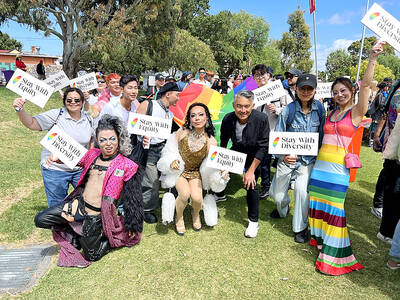
A group from the Taiwanese Designers in Australia association yesterday represented Taiwan at the Midsumma Pride March in Melbourne. The march, held in the St. Kilda suburb, is the city’s largest LGBTQIA+ parade and the flagship event of the annual Midsumma Festival. It attracted more than 45,000 spectators who supported the 400 groups and 10,000 marchers that participated this year, the association said. Taiwanese Designers said they organized a team to march for Taiwan this year, joining politicians, government agencies, professionals and community organizations in showing support for LGBTQIA+ people and diverse communities. As the first country in Asia to legalize same-sex
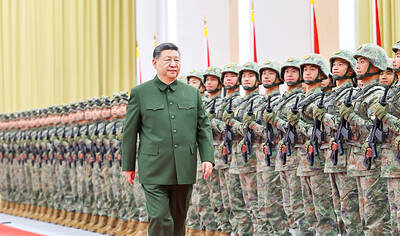
MOTIVES QUESTIONED The PLA considers Xi’s policies toward Taiwan to be driven by personal considerations rather than military assessment, the Epoch Times reports Chinese President Xi Jinping’s (習近平) latest purge of the Chinese People’s Liberation Army (PLA) leadership might have been prompted by the military’s opposition to plans of invading Taiwan, the Epoch Times said. The Chinese military opposes waging war against Taiwan by a large consensus, putting it at odds with Xi’s vision, the Falun Gong-affiliated daily said in a report on Thursday, citing anonymous sources with insight into the PLA’s inner workings. The opposition is not the opinion of a few generals, but a widely shared view among the PLA cadre, the Epoch Times cited them as saying. “Chinese forces know full well that


 RSS
RSS