


Vice President Chen Chien-jen (陳建仁) yesterday lauded the success of the nation’s space program, affirming the government’s commitment to the development of a sustainable aerospace industry.
Chen made the remarks at the opening of a special exhibition hosted by the Presidential Office on the Formosat series of satellites.
Formosat-5, the first satellite designed and manufactured in Taiwan, became operational on Sept. 25 and marked a new milestone in the history of the Taiwanese space program, which began in 1991, he said.
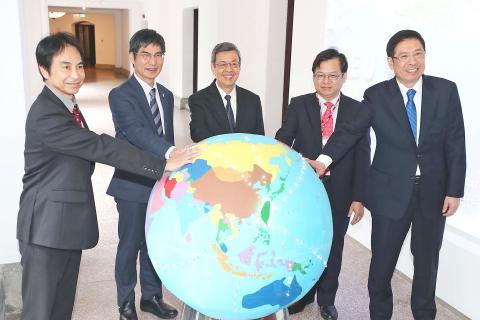
Photo: CNA
The satellite is a sentinel of Taiwan and the world, he said.
Imaging resolution problems that occurred briefly after the satellite’s launch in August last year were resolved by the National Space Organization and the craft — as intended — is engaged in resource-exploration work, geological surveys, and disaster prevention and response missions, he said.
Formosat-1, launched in 1999 and decommissioned in 2004, was Taiwan’s first satellite and demonstrated the nation’s vision for aerospace technology and technical ability as one of the few states capable of independently developing a complete satellite system, he said.
Formosat-2 was launched in 2004 and was decommissioned after 12 years, he said.
Formosat-3 was a collection of six micro meteorological satellites that were developed by a Taiwan-US program and which are internationally renowned as the most accurate thermometer in space, he said.
Formosat-7 is to focus on surveying low-latitude regions for meteorological data and to supplement Formosat-3 by deploying more advanced equipment, which will provide more accurate and timely weather predictions, he said.
The exhibition at the Presidential Office Building features scale models of the satellites, audio and video displays, and interactive games to introduce each of the nation’s satellites and their mission.
The event is designed with young people in mind and Chen hopes it would help foster the nation’s next generation of scientists and engineers to work in space exploration.
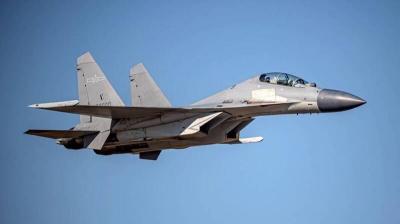
Eight Chinese naval vessels and 24 military aircraft were detected crossing the median line of the Taiwan Strait between 6am yesterday and 6am today, the Ministry of National Defense said this morning. The aircraft entered Taiwan’s northern, central, southwestern and eastern air defense identification zones, the ministry said. The armed forces responded with mission aircraft, naval vessels and shore-based missile systems to closely monitor the situation, it added. Eight naval vessels, one official ship and 36 aircraft sorties were spotted in total, the ministry said.
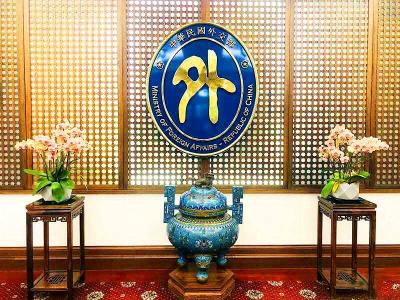
The Ministry of Foreign Affairs (MOFA) today said that if South Korea does not reply appropriately to its request to correct Taiwan’s name on its e-Arrival card system before March 31, it would take corresponding measures to alter how South Korea is labeled on the online Taiwan Arrival Card system. South Korea’s e-Arrival card system lists Taiwan as “China (Taiwan)” in the “point of departure” and “next destination” fields. The ministry said that it changed the nationality for South Koreans on Taiwan’s Alien Resident Certificates from “Korea” to “South Korea” on March 1, in a gesture of goodwill and based on the
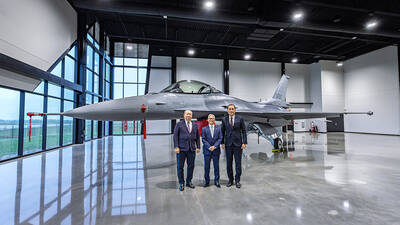
Taiwanese officials were shown the first of 66 F-16V fighter jets purchased by Taiwan from the United States, the Ministry of National Defense said yesterday, adding the aircraft has completed an initial flight test and is expected to be delivered later this year. A delegation led by Deputy Minister of National Defense Hsu Szu-chien (徐斯儉) visited Lockheed Martin’s F-16 C/D Block 70 (also known as F-16V) assembly line in South Carolina on March 16 to view the aircraft. The jet will undergo a final acceptance flight in the US before being delivered to Taiwan, the
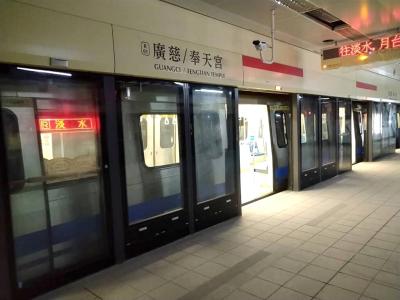
The New Taipei Metro's Sanyin Line and the eastern extension of the Taipei Metro's Tamsui-Xinyi Line (Red Line) are scheduled to begin operations in June, the National Development Council said today. The Red Line, which terminates at Xiangshan Station, would be connected by the 1.4km extension to a new eastern terminal, Guangci/Fengtian Temple Station, while the Sanyin Line would link New Taipei City's Tucheng and Yingge stations via Sanxia District (三峽). The council gave the updates at a council meeting reviewing progress on public construction projects for this year. Taiwan's annual public infrastructure budget would remain at NT$800 billion (US$25.08 billion), with NT$97.3


 RSS
RSS