


Due to a shortage of rabies vaccines for humans, the vaccine is to be temporarily unavailable to people bitten by stray dogs or cats, the Centers for Disease Control (CDC) said yesterday.
There is a serious global shortage of rabies vaccines, the centers said, adding that the shortage is expected to continue until 2020.
The CDC on Wednesday called a meeting attended by experts and government officials to discuss rabies prevention measures under the circumstances.
The meeting concluded that animals with potential rabies exposure are limited to Formosan ferret-badgers, Formosan masked civets, house shrews (local to Taitung), bats and other animals exhibiting abnormal behavior associated with rabies, the agency said.
Only those exposed to animals potentially carrying rabies in Pingtung, Chiayi, Yunlin Nantou, Taitung or Hualien counties, or in Kaohsiung, Tainan or Taichung are eligible for a post-exposure vaccine, CDC Deputy Director-General Chuang Jen-hsiang (莊人祥) said.
People who were exposed to bats in New Taipei City would also be eligible, Chuang added.
People who have been bitten by stray cats or dogs would no longer be given a vaccination, but it may be administered if the victim shows suspected rabies symptoms within 10 days, Chuang said.
Following the WHO’s rabies vaccination guidelines, the meeting concluded that post-exposure prophylaxis would be reduced from five doses to a four-dose schedule — on the day of exposure, and on the third, seventh and 14th days after exposure, Chuang said.
In addition, pre-exposure vaccines would be temporarily unavailable to people who are planning to visit nations with a higher risk of rabies infection, he added.
Council of Agriculture data as of last month showed that animals that tested positive for rabies were found in 82 townships in the nine counties and cities, and all tests on suspected stray animals were confirmed negative, the CDC said.
Moreover, three bats were in 2016 reported to be carrying a new genotype of lyssavirus, which is in the same group of viruses as rabies and causes a similar mortality, it said.
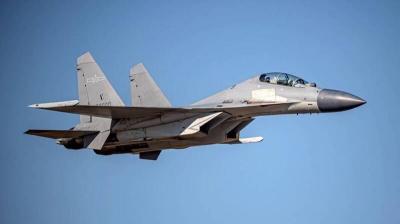
Eight Chinese naval vessels and 24 military aircraft were detected crossing the median line of the Taiwan Strait between 6am yesterday and 6am today, the Ministry of National Defense said this morning. The aircraft entered Taiwan’s northern, central, southwestern and eastern air defense identification zones, the ministry said. The armed forces responded with mission aircraft, naval vessels and shore-based missile systems to closely monitor the situation, it added. Eight naval vessels, one official ship and 36 aircraft sorties were spotted in total, the ministry said.
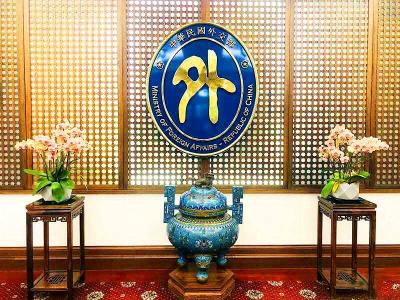
The Ministry of Foreign Affairs (MOFA) today said that if South Korea does not reply appropriately to its request to correct Taiwan’s name on its e-Arrival card system before March 31, it would take corresponding measures to alter how South Korea is labeled on the online Taiwan Arrival Card system. South Korea’s e-Arrival card system lists Taiwan as “China (Taiwan)” in the “point of departure” and “next destination” fields. The ministry said that it changed the nationality for South Koreans on Taiwan’s Alien Resident Certificates from “Korea” to “South Korea” on March 1, in a gesture of goodwill and based on the

Taiwanese officials were shown the first of 66 F-16V fighter jets purchased by Taiwan from the United States, the Ministry of National Defense said yesterday, adding the aircraft has completed an initial flight test and is expected to be delivered later this year. A delegation led by Deputy Minister of National Defense Hsu Szu-chien (徐斯儉) visited Lockheed Martin’s F-16 C/D Block 70 (also known as F-16V) assembly line in South Carolina on March 16 to view the aircraft. The jet will undergo a final acceptance flight in the US before being delivered to Taiwan, the
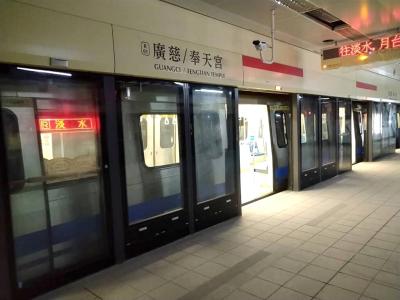
The New Taipei Metro's Sanyin Line and the eastern extension of the Taipei Metro's Tamsui-Xinyi Line (Red Line) are scheduled to begin operations in June, the National Development Council said today. The Red Line, which terminates at Xiangshan Station, would be connected by the 1.4km extension to a new eastern terminal, Guangci/Fengtian Temple Station, while the Sanyin Line would link New Taipei City's Tucheng and Yingge stations via Sanxia District (三峽). The council gave the updates at a council meeting reviewing progress on public construction projects for this year. Taiwan's annual public infrastructure budget would remain at NT$800 billion (US$25.08 billion), with NT$97.3


 RSS
RSS