


The Marine Port Bureau yesterday said that it is in the process of stipulating guidelines for the use of flotation devices at sea in a bid to reduce casualties caused by improper use.
The announcement came after two separate incidents off coasts in the nation’s northeast.
The first was last month, when a man surnamed Chen (陳) sailed out on a boat made of polystyrene foam to go fishing at night.
Chen’s boat was capsized after being hit by large waves.
He was found by coast guard personnel, but was reportedly reluctant to be taken ashore, wanting the coast guard to find his boat first.
Separately, on Wednesday last week, three men and a woman went fishing off the coast of Keelung in a polystyrene boat.
All four were tossed into the sea after the boat was struck by large waves.
Three of them were rescued, but one was found dead the next day.
Reports showed that the four leased the boat from a rental service that did not provide life jackets.
The bureau said that leisure activities in public waters are regulated by local government authorities.
Polystyrene foam boats, canoes, pedal boats or other flotation devices are not defined as ships that can be regulated by the Ships Act (船舶法), it said, although some local governments have stipulated rules for them.
The bureau has raised the issue with the Council of Agriculture’s Fisheries Agency, as many people use such craft to go fishing at sea.
The Fisheries Agency said that people fishing at sea are engaging in a leisure activity, so they should not be regulated as strictly as commercial fishing operations.
Rules regulating fishing as a leisure activity would have to be written by the administrative agency in charge of ocean affairs, which has yet to be established, the bureau said.
To ensure safety in public waters, the bureau said it has invited specialists from the Fisheries Agency, the Coast Guard Administration and local governments to draft guiding principles on the use of flotation devices, which would be incorporated into the rules stipulated by the local governments.
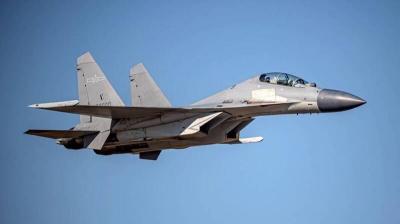
Eight Chinese naval vessels and 24 military aircraft were detected crossing the median line of the Taiwan Strait between 6am yesterday and 6am today, the Ministry of National Defense said this morning. The aircraft entered Taiwan’s northern, central, southwestern and eastern air defense identification zones, the ministry said. The armed forces responded with mission aircraft, naval vessels and shore-based missile systems to closely monitor the situation, it added. Eight naval vessels, one official ship and 36 aircraft sorties were spotted in total, the ministry said.
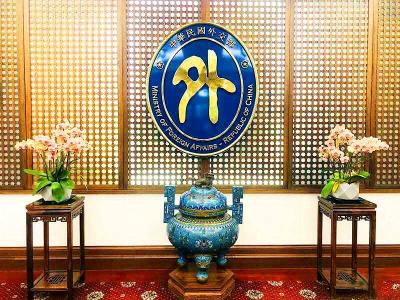
The Ministry of Foreign Affairs (MOFA) today said that if South Korea does not reply appropriately to its request to correct Taiwan’s name on its e-Arrival card system before March 31, it would take corresponding measures to alter how South Korea is labeled on the online Taiwan Arrival Card system. South Korea’s e-Arrival card system lists Taiwan as “China (Taiwan)” in the “point of departure” and “next destination” fields. The ministry said that it changed the nationality for South Koreans on Taiwan’s Alien Resident Certificates from “Korea” to “South Korea” on March 1, in a gesture of goodwill and based on the

Taiwanese officials were shown the first of 66 F-16V fighter jets purchased by Taiwan from the United States, the Ministry of National Defense said yesterday, adding the aircraft has completed an initial flight test and is expected to be delivered later this year. A delegation led by Deputy Minister of National Defense Hsu Szu-chien (徐斯儉) visited Lockheed Martin’s F-16 C/D Block 70 (also known as F-16V) assembly line in South Carolina on March 16 to view the aircraft. The jet will undergo a final acceptance flight in the US before being delivered to Taiwan, the
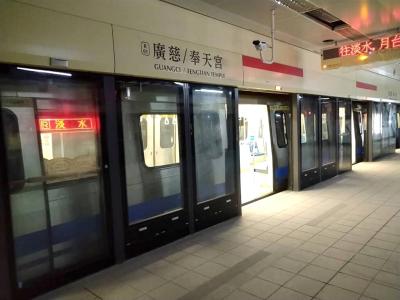
The New Taipei Metro's Sanyin Line and the eastern extension of the Taipei Metro's Tamsui-Xinyi Line (Red Line) are scheduled to begin operations in June, the National Development Council said today. The Red Line, which terminates at Xiangshan Station, would be connected by the 1.4km extension to a new eastern terminal, Guangci/Fengtian Temple Station, while the Sanyin Line would link New Taipei City's Tucheng and Yingge stations via Sanxia District (三峽). The council gave the updates at a council meeting reviewing progress on public construction projects for this year. Taiwan's annual public infrastructure budget would remain at NT$800 billion (US$25.08 billion), with NT$97.3


 RSS
RSS