


Public toilets should be flushed before use to minimize risks of infection, Taichung-based urologist Liu Wei-yang (劉緯陽) said.
Liu, a doctor at the Ren Ai Hospital, was quoted by the Chinese-language Apple Daily on Tuesday last week as saying that using public restrooms can lead to rashes or urinary infections, because stray droplets from the flush of an unclean toilet are a vector.
In some cases, droplets carrying contaminants from a dirty toilet can cause diseases that are normally transmitted by sexual intercourse, Liu said.
Liu urged people to flush public toilets before use to remove any excrement left from the previous user and to determine if there is an obstruction with the plumbing, adding that prior flushing greatly reduces the health risks of using a public facility.
Sanitary wipes and sprays can be used to clean toilet seats, Liu said, adding that people should wait for the sanitizing agent to evaporate so that it can effectively reduce the amount of bacteria on the surface.
Covering the seat with toilet paper or disposable toilet covers might exacerbate health risks if users flush the toilet while remaining seated because wet paper increases the contact area, Liu said, adding that people should stand up before flushing if such methods are used.
People should not crouch on toilet seats in a bid to prevent infection, Liu said.
In addition to the danger of ceramic cisterns shattering, crouching on toilet seats puts unnecessary stress on the body that might result in incomplete urinary discharge, leading to an increased risk of urinary tract infection, he said.
Flushing the toilet before and after using it, as well as washing hands afterward can eliminate infection vectors, Liu said.

Considering that most countries issue more than five denominations of banknotes, the central bank has decided to redesign all five denominations, the bank said as it prepares for the first major overhaul of the banknotes in more than 24 years. Central bank Governor Yang Chin-lung (楊金龍) is expected to report to the Legislative Yuan today on the bank’s operations and the redesign’s progress. The bank in a report sent to the legislature ahead of today’s meeting said it had commissioned a survey on the public’s preferences. Survey results showed that NT$100 and NT$1,000 banknotes are the most commonly used, while NT$200 and NT$2,000
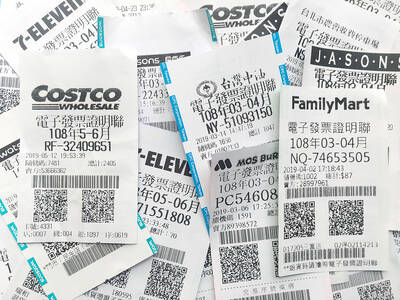
A NT$39 receipt for two bottles of tea at a FamilyMart was among the NT$10 million (US $312,969) special prize winners in the January-February uniform invoice lottery. FamilyMart said that two NT$10 million-winning receipts were issued at its stores, as well as two NT$2 million grand prizes and three NT$200,000 first prizes. The two NT$10 million receipts were issued at stores in Pingtung County and Yilan County’s Dongshan Township (冬山). One winner spent just NT$39 on two bottles of tea, while another spent NT$80 on water, tea and coffee, the company said. Meanwhile, 7-Eleven reported three NT$10 million winners — in New Taipei

The Centers for Disease Control (CDC) yesterday reported the first case of a new COVID-19 subvariant — BA.3.2 — in a 10-year-old Singaporean girl who had a fever upon arrival in Taiwan and tested positive for the disease. The girl left Taiwan on March 20 and the case did not have a direct impact on the local community, it said. The WHO added the BA.3.2 strain to its list of Variants Under Monitoring in December last year, but this was the first imported case of the COVID-19 variant in Taiwan, CDC Deputy Director-General Lin Ming-cheng (林明誠) said. The girl arrived in Taiwan on
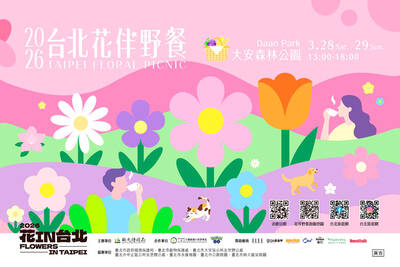
ANNUAL EVENT: Two massive Pokemon balloons are to be set up in Daan Park, with an event zone operating from 10am to 6pm This year’s Taipei Floral Picnic is to be held at Daan Park today and tomorrow, featuring an exclusive Pokemon Go event, a themed food market, a coffee rave picnic area and stage performances, the Taipei Department of Information and Tourism said yesterday. Two massive Pokemon balloons are to be set up in the park as attractions, with an exclusive event zone operating from 10am to 6pm, it said. Participants who complete designated tasks on-site would have a chance to receive limited-edition souvenirs, it added. People could also try the newly launched game Pokemon Pokopia in the trial area, the department said. Three PokeStops are


 RSS
RSS