


The long-anticipated Taichung Metropolitan Opera House is to begin trial operations today and is scheduled to officially open on Sept. 30, with the Taichung City Government yesterday donating the theater to the Ministry of Culture.
“The National Taichung Theater [Metropolitan Opera House] is not only a new Taichung landmark and beautiful soul of the city, [its inauguration] is also a milestone for Taiwan’s performing arts, which has entered a new stage of development,” Minister of Culture Cheng Li-chiun (鄭麗君) said.
The opera house will support the development of performing arts groups in central Taiwan, train local theater professionals, promote art education and become a networking platform for domestic and international performing arts groups, Cheng said.
Taichung Mayor Lin Chia-lung (林佳龍) said construction took more than 10 years and cost NT$4.3 billion (US$135.76 million), but the result is an award-winning venue that he believes will play an important part in national arts and cultural development.
The eye-catching complex was designed by Pritzker Architecture Prize-winning Japanese architect Toyo Ito and boasts a 2,014-seat grand theater, an 800-seat theater and a 200-seat black-box theater.
Architecturally complex and highly challenging from an engineering perspective, the theater was built without beams or columns, relying instead on 58 curved wall units.
It is believed to be the first theater in the world to employ such techniques and is one of the most difficult to build.
The opera house has been touted as a leg of the “golden triangle” for the performing arts in Taiwan, alongside Taipei’s National Theater and Concert Hall and Kaohsiung’s Wei Wu Ying Center for the Arts, with the latter to be inaugurated in 2018.
National Taichung Theater artistic and executive director Victoria Wang (王文儀) said there is a vibrant traditional performing arts scene in central Taiwan and the opera house will work to bring these local groups to the international stage.
She said the opera house would feature a mix of 70 percent local programs and 30 percent international programs, and would cooperate with Taichung music groups and students to introduce at least one original or adapted opera piece each year.
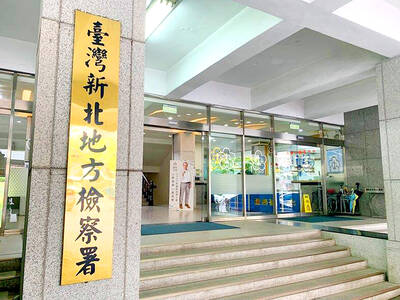
Prosecutors in New Taipei City yesterday indicted 31 individuals affiliated with the Chinese Nationalist Party (KMT) for allegedly forging thousands of signatures in recall campaigns targeting three Democratic Progressive Party (DPP) lawmakers. The indictments stem from investigations launched earlier this year after DPP lawmakers Su Chiao-hui (蘇巧慧) and Lee Kuen-cheng (李坤城) filed criminal complaints accusing campaign organizers of submitting false signatures in recall petitions against them. According to the New Taipei District Prosecutors Office, a total of 2,566 forged recall proposal forms in the initial proposer petition were found during the probe. Among those
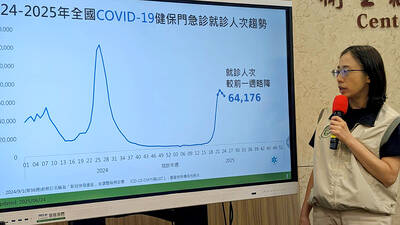
ECHOVIRUS 11: The rate of enterovirus infections in northern Taiwan increased last week, with a four-year-old girl developing acute flaccid paralysis, the CDC said Two imported cases of chikungunya fever were reported last week, raising the total this year to 13 cases — the most for the same period in 18 years, the Centers for Disease Control (CDC) said yesterday. The two cases were a Taiwanese and a foreign national who both arrived from Indonesia, CDC Epidemic Intelligence Center Deputy Director Lee Chia-lin (李佳琳) said. The 13 cases reported this year are the most for the same period since chikungunya was added to the list of notifiable communicable diseases in October 2007, she said, adding that all the cases this year were imported, including 11 from

China might accelerate its strategic actions toward Taiwan, the South China Sea and across the first island chain, after the US officially entered a military conflict with Iran, as Beijing would perceive Washington as incapable of fighting a two-front war, a military expert said yesterday. The US’ ongoing conflict with Iran is not merely an act of retaliation or a “delaying tactic,” but a strategic military campaign aimed at dismantling Tehran’s nuclear capabilities and reshaping the regional order in the Middle East, said National Defense University distinguished adjunct lecturer Holmes Liao (廖宏祥), former McDonnell Douglas Aerospace representative in Taiwan. If
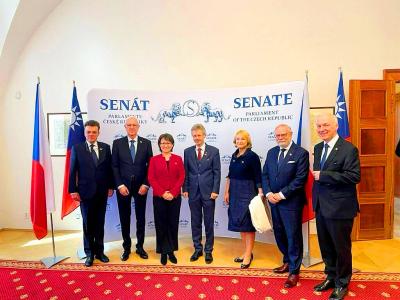
The Mainland Affairs Council (MAC) today condemned the Chinese Communist Party (CCP) after the Czech officials confirmed that Chinese agents had surveilled Vice President Hsiao Bi-khim (蕭美琴) during her visit to Prague in March last year. Czech Military Intelligence director Petr Bartovsky yesterday said that Chinese operatives had attempted to create the conditions to carry out a demonstrative incident involving Hsiao, going as far as to plan a collision with her car. Hsiao was vice president-elect at the time. The MAC said that it has requested an explanation and demanded a public apology from Beijing. The CCP has repeatedly ignored the desires


 RSS
RSS