


The Republic of China Army’s elite “Frogmen” unit on Kinmen Island (金門) demonstrated they are capable of undertaking dangerous missions and repelling enemy attacks, as the nation’s armed forces prepared defensive deployments for the upcoming Lunar New Year holiday.
In yesterday’s drills for inspection by Ministry of National Defense (MND) officials, the Army 101st Amphibious Reconnaissance Battalion (ARB 101) “Frogmen” unit strutted their stuff to display their martial arts and other close-combat skills, weapons training, explosives demolition and stealth amphibious landing skills.
The elite soldiers braved high waves in the cold coastal waters of Kinmen Island during their simulation of storming a beach via rubber boats and attacking shoreline fortifications.
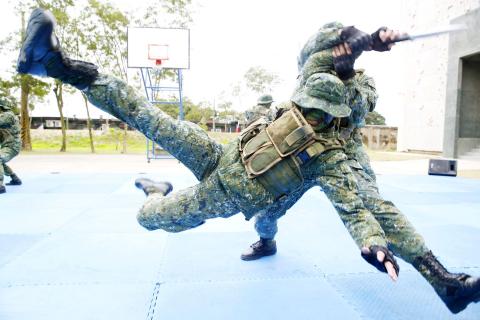
Photo: WALLY SANTANA, AP
MND spokesman Major General David Lo (羅紹和) said the inspection was for officials to ensure the armed forces are vigilant over the security of the nation during the Lunar New Year holidays.
ARB 101 units are deployed along the front-line islands, with their main base at Liaoluo Bay (料羅灣) in Kinmen’s southeast, and other companies stationed at Matsu’s (馬祖) Nangan (南竿) and Dongying (東引) islets, as well as on Penghu’s Siyu Islet (西嶼).
At the ARB 101 base, the specially trained soldiers displayed their frogman suits for diving, breathing apparatus and other equipment, along with field camouflage and weapons such as T91 rifles and M107 scoped sniper rifles.
Lee Han-sheng (李瀚生), a seargent who heads a sniper company at the ARB 101 base, said he would patrol Kinmen and the nearby islets for the defense of the nation’s front line, which is close to China’s Xiamen City and Fujian Province coastline, to protect Taiwanese during the Lunar New Year holiday period.
A university graduate who enlisted as a professional soldier, Lee said training for amphibious combat was difficult, especially enduring the cold ocean temperatures during winter.
“Although we had frogman suits on, our extremities became numb after a while in the cold water,” Lee said.
“At times it was quite painful, as if our hands were being pricked by many needles. However, with more training, we got used to the conditions and our bodies toughened up,” he said.
“I chose the military” because it is an honor to serve my country, and I feel proud to protect my homeland and the citizens of our nation,” Lee said.
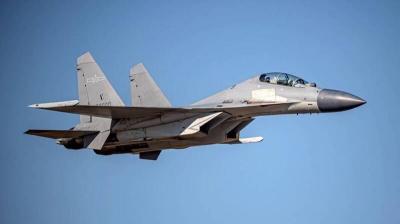
Eight Chinese naval vessels and 24 military aircraft were detected crossing the median line of the Taiwan Strait between 6am yesterday and 6am today, the Ministry of National Defense said this morning. The aircraft entered Taiwan’s northern, central, southwestern and eastern air defense identification zones, the ministry said. The armed forces responded with mission aircraft, naval vessels and shore-based missile systems to closely monitor the situation, it added. Eight naval vessels, one official ship and 36 aircraft sorties were spotted in total, the ministry said.
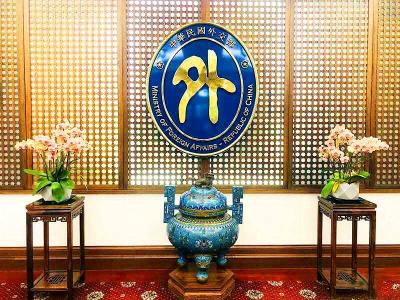
The Ministry of Foreign Affairs (MOFA) today said that if South Korea does not reply appropriately to its request to correct Taiwan’s name on its e-Arrival card system before March 31, it would take corresponding measures to alter how South Korea is labeled on the online Taiwan Arrival Card system. South Korea’s e-Arrival card system lists Taiwan as “China (Taiwan)” in the “point of departure” and “next destination” fields. The ministry said that it changed the nationality for South Koreans on Taiwan’s Alien Resident Certificates from “Korea” to “South Korea” on March 1, in a gesture of goodwill and based on the

Taiwanese officials were shown the first of 66 F-16V fighter jets purchased by Taiwan from the United States, the Ministry of National Defense said yesterday, adding the aircraft has completed an initial flight test and is expected to be delivered later this year. A delegation led by Deputy Minister of National Defense Hsu Szu-chien (徐斯儉) visited Lockheed Martin’s F-16 C/D Block 70 (also known as F-16V) assembly line in South Carolina on March 16 to view the aircraft. The jet will undergo a final acceptance flight in the US before being delivered to Taiwan, the
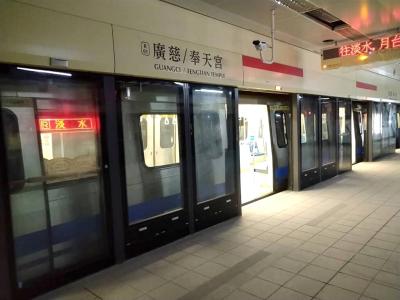
The New Taipei Metro's Sanyin Line and the eastern extension of the Taipei Metro's Tamsui-Xinyi Line (Red Line) are scheduled to begin operations in June, the National Development Council said today. The Red Line, which terminates at Xiangshan Station, would be connected by the 1.4km extension to a new eastern terminal, Guangci/Fengtian Temple Station, while the Sanyin Line would link New Taipei City's Tucheng and Yingge stations via Sanxia District (三峽). The council gave the updates at a council meeting reviewing progress on public construction projects for this year. Taiwan's annual public infrastructure budget would remain at NT$800 billion (US$25.08 billion), with NT$97.3


 RSS
RSS