

The Ministry of National Defense is holding an exhibition in Taipei to highlight the Republic of China’s (ROC) War of Resistance Against Japan as part of a series of events to celebrate the 70th anniversary of the end of World War II in 1945.
The exhibition opened on Tuesday, the date the war began in 1937. It is to run through June 24 next year at the Chiang Kai-shek Memorial Hall in Taipei.
The exhibition includes 24 large oil paintings depicting major incidents and battles in the war, such as the Marco Polo Bridge Incident that triggered the eight-year fight against Japan, the Nanjing Massacre by Japanese troops and battles at Changsha, where the ROC military resisted Japan’s aggression.
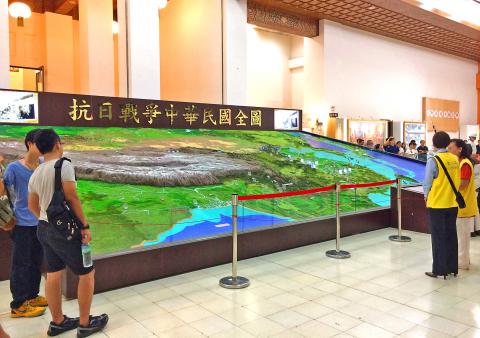
Photo: CNA
The Cairo Conference in 1943 with the ROC, the UK and the US, is also depicted, as is the Japanese surrender in Nanjing, China.
A massive map at the center of the venue depicts China during the war.
Historical photos and documents related to significant battles during the war — which was fought almost entirely on Chinese soil — are also on display.

Photo: CNA
The ministry said nearly 3.22 million ROC service members and officers died or were injured during the conflict. At least 20 million civilians died in the war, it added.
“The exhibition is aimed at commemorating the victory against Japan, and also the beginning of peace and the end of rivalry,” it added.

Starbucks Taiwan’s decision to charge for drink customization, which had been free, has sparked consumer backlash, highlighting the challenge of raising prices without making customers feel they are losing value, experts said. Since Oct. 12, customers who order drinks with less or no ice and ask to have the volume topped up with milk or other liquid have been charged an additional NT$15. Topping off drinks without ice was previously free, and disgruntled customers posted photos on social media showing that iced drinks ordered without ice were only half full if the extra NT$15 was not paid. The posts drew tens of thousands
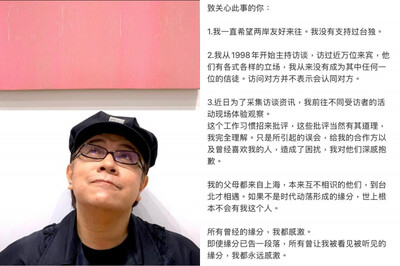
EXPLANATION: Tsai said he attended events featuring various interviewees to observe them firsthand as part of his interview research Television host Kevin Tsai (蔡康永) last night broke his silence over a controversy surrounding his appearance at a campaign event for Democratic Progressive Party Taipei mayoral candidate Puma Shen (沈伯洋), saying he had never supported Taiwan independence. “I have always hoped for friendly cross-strait relations. I have never supported Taiwan independence,” Tsai wrote in a post on the Chinese social media platform Sina Weibo. Tsai, who has hosted television shows in China, attended the opening of Shen’s campaign headquarters on Oct. 4, drawing criticism from Chinese social media users and prompting some Chinese companies to distance themselves from him. China’s Taiwan Affairs Office

Major department stores across Taiwan, including Taipei 101, Shin Kong Mitsukoshi, Far Eastern SOGO, Breeze and Honhui Plaza, are closed today due to Typhoon Champi, while major supermarkets remain open. Taipei 101 said its shopping mall, observatory and restaurants on higher floors are closed for the day, with future hours to be adjusted based on the storm's status. Shin Kong Mitsukoshi has closed all 16 of its branches nationwide, as well as its Taipei Railway Station mall and SKM Park Outlets in Kaohsiung. Far Eastern SOGO said it has closed all of its branches nationwide, including Garden City in Taipei, citing the safety
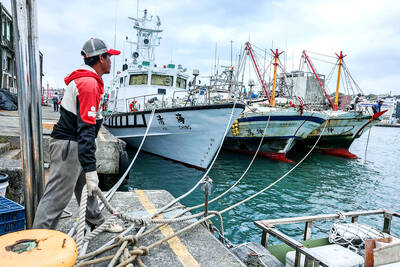
DOUBLE-CHECK: Mandarin Airlines said that it would adjust its schedule according to weather conditions, while high-speed rail services are to remain undisrupted Airlines, ferry services, railways and national parks announced cancelations and closures yesterday, as Typhoon Champi bore down on Taiwan. The Central Weather Administration yesterday issued land warnings for most of Taiwan proper, as Champi is forecast to come closest to the nation today. Taiwan Railway Corp (TRC) has canceled all express trains on its western and eastern trunk lines today, while the high-speed rail system would continue to operate normally. For non-reserved TRC services, trains on the Coast Line, Chengzhui Line, Yilan Line and North Link Line are fully suspended. Services between Hualien and Taitung counties, as well as other unsuspended routes, would operate


 RSS
RSS