


Jobs offering as little as A$9 (US$7.04) an hour, well below the minimum wage, are being posted on Chinese-language Web sites in Australia.
Calls to restaurants, massage parlors and tea shops that advertised on the Web sites backpackers.com.tw and tigtag.com uncovered numerous cases of below-award wages for jobs targeting Chinese-speaking students and visitors on working holidays.
The investigation was carried out with the advocacy group Taiwanese Working Holiday Youth (TWHY).
Most of the jobs offered were with relatively small, family-owned businesses, but in one case, the man who answered said he was hiring for a Sydney branch of the Taiwanese tea shop chain Chatime. The global franchise has more than 1,000 branches, including 60 in Australia.
He said the service role based in the Sydney suburb of Parramatta paid working holidaymakers A$9 per hour for the first month and $11 per hour thereafter. Payment was to be cash in hand, but a tax file number was required.
The full-time adult award rate for a food and beverage attendant is A$17.35. Overseas visitors must be older than 18 to be on a working holiday visa in Australia.
Chatime Australia confirmed with Guardian Australia the advertisement was for a job at the company’s Paramatta store, but said as it was a franchise, the company was not involved in the hiring of employees.
“Chatime franchisees fully understand their rights and obligations to their employees. This is something that is continually communicated to them. We certainly take these accusations seriously and we will pursue the matter further with the franchisee in question,” a spokesman said via e-mail.
The Parramatta branch of Chatime did not respond to calls.
A Japanese restaurant in Melbourne offered working holidaymakers A$10 per hour. A Brisbane massage parlor offered 45 percent commission of all bookings, with no basic wage. Inexperienced staff were expected to do one week of training without pay. A contracting company advertised for a fruit-picking job in central Queensland with a piece rate of A$0.11 to A$0.14 per branch picked and no basic wage.
TWHY spokesman Li Yao-tai said working holidaymakers often did not complain to authorities about pay and conditions because they lacked confidence in their English. Along with low wages, workers also often faced long hours, poor work conditions and, in some cases, sexual harassment by their employers, Li said.
The Fair Work Ombudsman (FWO) was unable to comment on individual cases, but said there were nearly 1 million recently arrived visa-holders with working rights in Australia.
One in 10 requests for assistance to the FWO are now from visa-holders working in Australia, more than ever before.
“That’s significant and is a trend that is concerning us greatly,” an FWO spokeswoman said.
Industries known to employ significant numbers of overseas workers include horticulture, cleaning, convenience stores and trolley collecting. However, the largest number of requests for assistance from overseas workers, nearly one in four, come from employees in the accommodation and food services sectors.
The FWO established an overseas workers’ team in 2012. In the first nine months of the current financial year, it recouped A$1.2 million in underpayments for 345 visa-holders, surpassing last year’s figure of A$1.1 million.
The spokeswoman said it was impossible to visit every workplace in Australia to carry out checks, “and nor should we.”
The ombudsman has an interpreter service and educational material translated into 27 languages, including Chinese. A recent campaign targeted overseas workers with advertisements in Korean on Korean Web sites.
Workers from non-English speaking backgrounds have limited access to the Fair Work system and a large number of Australian employers “have turned this knowledge into a profitable business model,” said Jo Schofield, national president of United Voice Workers, the union for hospitality workers.
A report by United Voice showed extensive exploitation of international students in Melbourne’s office-cleaning industry, where some were underpaid up to A$15,000 per year. Union members have proposed “whistleblower” protections for foreign workers and the introduction of an immigration inspectorate at the FWO.

Yangmingshan National Park authorities yesterday urged visitors to respect public spaces and obey the law after a couple was caught on a camera livestream having sex at the park’s Qingtiangang (擎天崗) earlier in the day. The Shilin Police Precinct in Taipei said it has identified a suspect and his vehicle registration number, and would summon him for questioning. The case would be handled in accordance with public indecency charges, it added. The couple entered the park at about 11pm on Thursday and began fooling around by 1am yesterday, the police said, adding that the two were unaware of the park’s all-day live
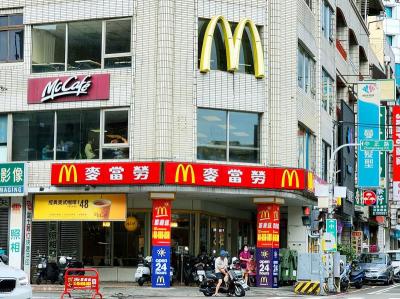
Fast food chain McDonald's is to raise prices by up to NT$5 on some products at its restaurants across Taiwan, starting on Wednesday next week, the company announced today. The prices of all extra value meals and sharing boxes are to increase by NT$5, while breakfast combos and creamy corn soup would go up by NT$3, the company said in a statement. The price of the main items of those meals, if ordered individually, would remain the same. Meanwhile, the price of a medium-sized lemon iced tea and hot cappuccino would rise by NT$3, extra dipping sauces for chicken nuggets would go up

Yangmingshan National Park’s Qingtiangang (擎天崗) nature area has gone viral after a park livestream camera observed a couple in the throes of intimate congress, which was broadcast live on YouTube, drawing large late-night crowds and sparking a backlash over noise, bright lights and disruption to wildlife habitat. The area’s livestream footage appeared to show a couple engaging in sexual activity on a picnic table in the park on Friday last week, with the uncensored footage streamed publicly online. The footage quickly spread across social media, prompting a tide of visitors to travel to the site to “check in” and recreate the

Minister of Digital Affairs Lin Yi-ching (林宜敬) yesterday cited regulatory issues and national security concerns as an expert said that Taiwan is among the few Asian regions without Starlink. Lin made the remarks on Facebook after funP Innovation Group chief executive officer Nathan Chiu (邱繼弘) on Friday said Taiwan and four other countries in Asia — China, North Korea, Afghanistan and Syria — have no access to Starlink. Starlink has become available in 166 countries worldwide, including Ukraine, Malaysia, the Philippines and Vietnam, in the six years since it became commercial, he said. While China and North Korea block Starlink, Syria is not


 RSS
RSS