


The board of the publicly funded Public Television Service (PTS) Foundation decided on Thursday to set up new guidelines and investigate a controversial last-minute decision to switch programming during the recently ended student-led protest against the government’s handling of the cross-strait service trade pact.
The PTS board focused on incidents during the Sunflower movement, which lasted from March 18 to April 10.
The board included a decision to cancel a rebroadcast of a special on one of its channels, the foundation said in a statement released after the meeting.
On March 31, the station canceled a replay of a program on Sunflower leader Lin Fei-fan (林飛帆) in favor of a concert by late singer Frankie Gao (高凌風), who passed away in February.
That followed a controversy on March 27, when the regular presenter of NGO View, Chi Hui-jung (紀惠容), was conspicuously replaced for an episode on the trade pact, reportedly because of her opposition to the agreement.
PTS chairman Shaw Yu-ming (邵玉銘) said in the statement that the incidents reflected poor management and sloppy decisionmaking at the channel.
Referring to the NGO View incident, he said the board supports existing guidelines for news programs and respects decisions made by each program’s producer, but will instruct management to draft a clearer guideline that meets international standards.
The board also decided to review the March 31 programming change and determine who was responsible for it, the statement said.

The military has spotted two Chinese warships operating in waters near Penghu County in the Taiwan Strait and sent its own naval and air forces to monitor the vessels, the Ministry of National Defense (MND) said. Beijing sends warships and warplanes into the waters and skies around Taiwan on an almost daily basis, drawing condemnation from Taipei. While the ministry offers daily updates on the locations of Chinese military aircraft, it only rarely gives details of where Chinese warships are operating, generally only when it detects aircraft carriers, as happened last week. A Chinese destroyer and a frigate entered waters to the southwest
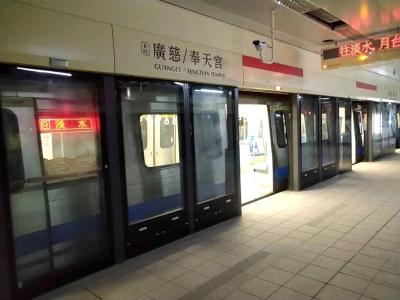
The eastern extension of the Taipei MRT Red Line could begin operations as early as late June, the Taipei Department of Rapid Transit Systems said yesterday. Taipei Rapid Transit Corp said it is considering offering one month of free rides on the new section to mark its opening. Construction progress on the 1.4km extension, which is to run from the current terminal Xiangshan Station to a new eastern terminal, Guangci/Fengtian Temple Station, was 90.6 percent complete by the end of last month, the department said in a report to the Taipei City Council's Transportation Committee. While construction began in October 2016 with an
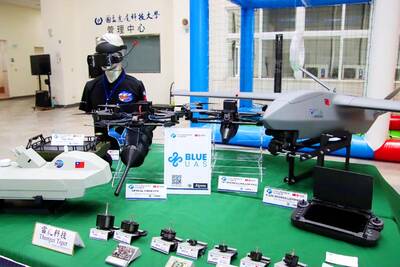
NON-RED SUPPLY: Boosting the nation’s drone industry is becoming increasingly urgent as China’s UAV dominance could become an issue in a crisis, an analyst said Taiwan’s drone exports to Europe grew 41.7-fold from 2024 to last year, with demand from Ukraine’s fight against Russian aggression the most likely driver of growth, a study showed. The Institute for Democracy, Society and Emerging Technology (DSET) in a statement on Wednesday said it found that many of Taiwan’s uncrewed aerial vehicle (UAV) sales were from Poland and the Czech Republic. These countries likely transferred the drones to Ukraine to aid it in its fight against the Russian invasion that started in 2022, it said. Despite the gains, Taiwan is not the dominant drone exporter to these markets, ranking second and fourth

Japanese Prime Minister Sanae Takaichi’s comment last year on Tokyo’s potential reaction to a Taiwan-China conflict has forced Beijing to rewrite its invasion plans, a retired Japanese general said. Takaichi told the Diet on Nov. 7 last year that a Chinese naval blockade or military attack on Taiwan could constitute a “survival-threatening situation” for Japan, potentially allowing Tokyo to exercise its right to collective self-defense. Former Japan Ground Self-Defense Force general Kiyofumi Ogawa said in a recent speech that the remark has been interpreted as meaning Japan could intervene in the early stages of a Taiwan Strait conflict, undermining China’s previous assumptions


 RSS
RSS