


Lee Tai-hsiang (李泰祥), dubbed the nation’s godfather of music, passed away on Thursday aged 72 after a long battle with Parkinson’s disease.
He died in his sleep in a hospice ward at Buddhist Tzu Chi General Hospital in New Taipei City’s (新北市) Sindian District (新店) with his family beside him, a spokesperson said.
Lee was one of the guiding lights of Taiwan’s campus folk music movement during the 1970s. Olive Tree (橄欖樹) and Farewell (告別) are two of his most popular songs.
Lee Jo-ling (李若菱), the musician’s youngest daughter, said her father’s Tainan Municipal Cultural Center concert tomorrow will still go on, but the event will now become a memorial concert to him.
Friends knew him as a romantic who had a number of dalliances with female paramours. They said his burning passion for romance provided Lee with “rich experiences of love, bliss, abandonment, depression and pain,” which inspired his musical works.
Lee had a solid foundation in Western classical music. He majored in violin and graduated from National College of Arts in Taipei in 1964, after which he was with the Taipei Symphony Orchestra as a violinist, eventually was promoted to the position of orchestra conductor in 1974.
Lee always looked for inspiration from within Taiwan, the land and the people that he is most familiar with, his colleagues said.
Lee wanted to popularize classical music, and get the public to embrace music at school. He collaborated with pop singers, as well also composing music scores for movies.
He was born into an Amis Aborigine family in Taitung.
Fellow musician Hsu Bo-yu (許博允), president of the New Aspect Promotion Corporation, said he remembered at Lee’s father once had to pay for his son’s music lessons by giving late musician Hsu Chang-hui (許常惠) an ox, which showed how poor Lee’s family was at the time.
At the end of a successful career, Lee has left a lasting legacy of more than 1,000 musical works.
At the height of his career, Lee was diagnosed with Parkinson’s Disease and other ailments, but he did not give up and continued his devotion to music in the last two decades of his life.
To arrest the worsening body conditions and retrain his muscles, Lee learned calligraphy when in hospital.
Though devoted to music, Lee was not as good at managing financial affairs. Throughout his life, he did not own much property, and did not know about copyright and royalty issues.
“I should feel thankful that other people are willing to play my music. How can I think of making people pay for royalties?” he said.
President Ma Ying-jeou (馬英九) yesterday praised Lee’s legacy.
“Maestro Lee has composed many beautiful melodies, helped nurture young talent and sponsored orphaned children throughout his life. We appreciate what he brought to all of us,” Ma wrote on his Facebook page.
Despite his passing, Lee’s spirit and music will live on, Ma added.
Additional reporting by CNA

Yangmingshan National Park authorities yesterday urged visitors to respect public spaces and obey the law after a couple was caught on a camera livestream having sex at the park’s Qingtiangang (擎天崗) earlier in the day. The Shilin Police Precinct in Taipei said it has identified a suspect and his vehicle registration number, and would summon him for questioning. The case would be handled in accordance with public indecency charges, it added. The couple entered the park at about 11pm on Thursday and began fooling around by 1am yesterday, the police said, adding that the two were unaware of the park’s all-day live

A former soldier and an active-duty army officer were yesterday indicted for allegedly selling classified military training materials to a Chinese intelligence operative for a total of NT$79,440. The Taipei District Prosecutors’ Office indicted Chen Tai-yin (陳泰尹) and Lee Chun-ta (李俊達) for contravening the National Security Act (國家安全法) and the Anti-Corruption Act (貪污治罪條例). Chen left the military in September 2013 after serving alongside then-staff sergeant Lee, now an army lieutenant, at the 21st Artillery Command of the army’s Sixth Corps from 2011 to 2013, according to the indictment. Chen met a Chinese intelligence operative identified as “Wang” (王) through a friend in November

Minister of Digital Affairs Lin Yi-ching (林宜敬) yesterday cited regulatory issues and national security concerns as an expert said that Taiwan is among the few Asian regions without Starlink. Lin made the remarks on Facebook after funP Innovation Group chief executive officer Nathan Chiu (邱繼弘) on Friday said Taiwan and four other countries in Asia — China, North Korea, Afghanistan and Syria — have no access to Starlink. Starlink has become available in 166 countries worldwide, including Ukraine, Malaysia, the Philippines and Vietnam, in the six years since it became commercial, he said. While China and North Korea block Starlink, Syria is not
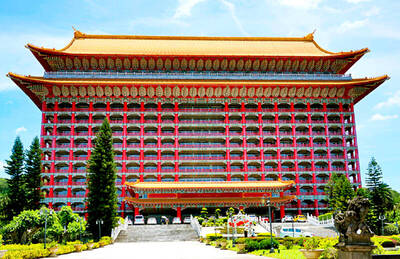
The Grand Hotel Taipei has rejected media reports claiming that the hotel had prevented CBS from broadcasting coverage of the Beijing summit between U.S. President Donald Trump and Chinese President Xi Jinping (習近平) on its premises. Media reports alleging that the hotel owner, dissatisfied with CBS’s coverage, prohibited the network from broadcasting political content on the hotel premises, are not true, the hotel said in a statement issued last night. The reports were “inconsistent with how the hotel actually handled the matter,” it said. The hotel said it received a refund request from a


 RSS
RSS