


A technology the Taipei Veterans General Hospital describes as a “GPS navigation system for brain surgery,” called intraoperative neurophysiological monitoring (IONM), offers a new and safer option for patients suffering from brain tumors, the hospital said yesterday.
The technique helps surgeons locate and avoid the functional areas of the cerebral cortex and the spinal cord during operations, or issues warnings to the surgeons about any adverse changes to the neural functions during surgery, which would then allow a change of operative strategy or a termination of the surgery, the hospital said.
“A lot of patients with brain malignancies decide not to undergo brain surgery for fear of paralysis or becoming a vegetable,” neurosurgeon Sanford Hsu (許秉權) said.
These patients and those with brain tumors in areas that had been deemed to be inoperable now have the option to undergo the surgery with IONM for tumor removal due to better precision and the minimization of potential damage to the nervous system that in the past sometimes led to inadvertent postoperative complications and deaths, Hsu said.
The IONM team at the hospital was established in 2010, consisting of neurosurgeons, neurophysiologists, neuroanesthesiologists and professionals in neurological rehabilitation.
IONM has been used utilized in some developed countries for years for surgeries on spinal and cerebral blood vessels, the removal of brain tumors in the cerebral functional areas and cranial base tumors, and operations for hemifacial spasm or epilepsy, the hospital said.
The hospital said it is one of the few hospitals in the world that have achieved a median survival time for fourth-grade glioma patients of 22 months and an average relapse-free time of 15 months.
The hospital has also performed 20 surgeries over a period of two years dealing with insular cortex tumors, which has been considered one of the most dangerous operations, with none of the 20 patients suffering from permanent disability-causing complications or deaths.
Brain tumors located in cerebral functional areas, such as motor cortex areas and the language areas, used to be only partly removed for fear of postoperative complications, but with the assistance of IONM, along with awake craniotomy, the removal of entire tumors is possible and the recovery of the patients is improved, Hsu said.
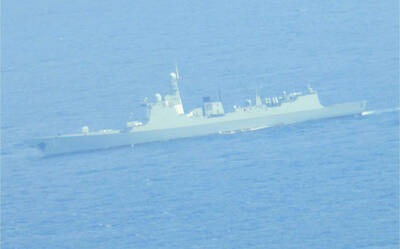
The military has spotted two Chinese warships operating in waters near Penghu County in the Taiwan Strait and sent its own naval and air forces to monitor the vessels, the Ministry of National Defense (MND) said. Beijing sends warships and warplanes into the waters and skies around Taiwan on an almost daily basis, drawing condemnation from Taipei. While the ministry offers daily updates on the locations of Chinese military aircraft, it only rarely gives details of where Chinese warships are operating, generally only when it detects aircraft carriers, as happened last week. A Chinese destroyer and a frigate entered waters to the southwest
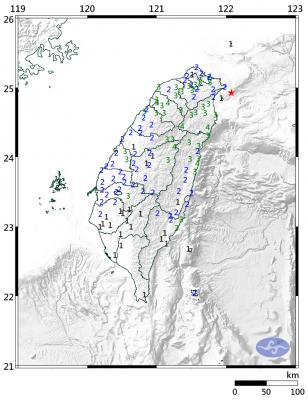
A magnitude 6.1 earthquake struck off the coast of Yilan County at 8:39pm tonight, the Central Weather Administration (CWA) said, with no immediate reports of damage or injuries. The epicenter was 38.7km east-northeast of Yilan County Hall at a focal depth of 98.3km, the CWA’s Seismological Center said. The quake’s maximum intensity, which gauges the actual physical effect of a seismic event, was a level 4 on Taiwan’s 7-tier intensity scale, the center said. That intensity level was recorded in Yilan County’s Nanao Township (南澳), Hsinchu County’s Guansi Township (關西), Nantou County’s Hehuanshan (合歡山) and Hualien County’s Yanliao (鹽寮). An intensity of 3 was

Japanese Prime Minister Sanae Takaichi’s comment last year on Tokyo’s potential reaction to a Taiwan-China conflict has forced Beijing to rewrite its invasion plans, a retired Japanese general said. Takaichi told the Diet on Nov. 7 last year that a Chinese naval blockade or military attack on Taiwan could constitute a “survival-threatening situation” for Japan, potentially allowing Tokyo to exercise its right to collective self-defense. Former Japan Ground Self-Defense Force general Kiyofumi Ogawa said in a recent speech that the remark has been interpreted as meaning Japan could intervene in the early stages of a Taiwan Strait conflict, undermining China’s previous assumptions
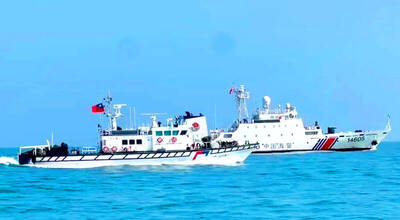
Instead of focusing solely on the threat of a full-scale military invasion, the US and its allies must prepare for a potential Chinese “quarantine” of Taiwan enforced through customs inspections, Stanford University Hoover fellow Eyck Freymann said in a Foreign Affairs article published on Wednesday. China could use various “gray zone” tactics in “reconfiguring the regional and ultimately the global economic order without a war,” said Freymann, who is also a nonresident research fellow at the US Naval War College. China might seize control of Taiwan’s links to the outside world by requiring all flights and ships entering or leaving Taiwan


 RSS
RSS