


The public should pay attention to the certification labels on pest control products before using them, to ensure that people stay safe while combating pests and insects this summer, the Environmental Protection Administration (EPA) said.
The administration said it had requested all pesticide manufacturing companies to submit documents that prove their products’ ingredients and effects. This was done to ensure the safety and quality of the many different kinds of household pest control products found in the market.
So far, 672 types of products have been registered and certified by the administration as environmentally friendly and safe pest control agents.
The public should avoid purchasing pest control products from unknown sources, such as some products sold on the Internet of which the effects have been exaggerated, said Yuan Shaw-ying (袁紹英), director-general of the EPA’s Department of Environmental Sanitation and Toxic Substances.
Yuan added that the administration’s latest inspection of the ingredients of 124 pest control agents resulted in three products not receiving EPA qualification, resulting in a 97.58 percent qualification rate.
The three products failed because their effective ingredients all surpassed the allowed levels of error tolerance, he added.
Yuan said that in last year’s inspection of pesticide products, 426 items out of almost 30,000 tested items did not qualify, accounting for a qualification rate of about 98.5 percent.
“The safest and most effective way to get rid of household pests and insects is to clean up the household environment. Only use pesticides occasionally, when absolutely necessary. People should pay attention to the product labels and choose qualified products registered at the EPA,” Yuan said.
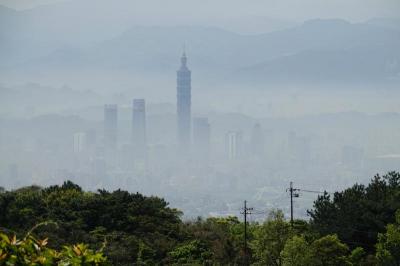
A strong continental cold air mass is to bring pollutants to Taiwan from tomorrow, the Ministry of Environment said today, as it issued an “orange” air quality alert for most of the country. All of Taiwan except for Hualien and Taitung counties is to be under an “orange” air quality alert tomorrow, indicating air quality that is unhealthy for sensitive groups. In China, areas from Shandong to Shanghai have been enveloped in haze since Saturday, the ministry said in a news release. Yesterday, hourly concentrations of PM2.5 in these areas ranged from 65 to 160 micrograms per cubic meter (mg/m³), and pollutants were
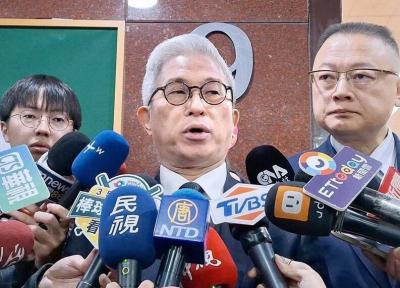
Taiwan’s armed forces have established response protocols for a wide range of sudden contingencies, including the “Wan Chun Plan” to protect the head of state, the Ministry of Defense (MND) said today. After US President Donald Trump on Saturday launched a series of airstrikes in Venezuela and kidnapped Venezuelan President Nicolas Maduro, concerns have been raised as to whether China would launch a similar “decapitation strike” on Taiwan. The armed forces regularly coordinate with relevant agencies and practice drills to ensure preparedness for a wide range of scenarios, Vice Minister of National Defense Hsu Szu-chien (徐斯儉) told reporters before a
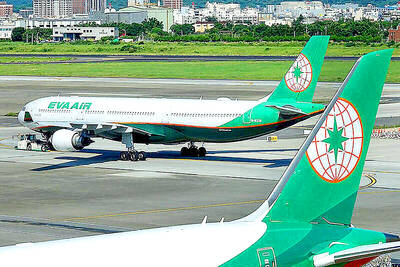
EVA Airways on Saturday said that it had suspended a pilot and opened an investigation after he allegedly lost his temper and punched the first officer several times as their plane was taxiing before takeoff at Los Angeles International Airport. According to a report published on Thursday by The Reporter, the incident occurred after the flight’s Malaysian first officer tried to warn the Taiwanese pilot, surnamed Wen (文), that he was taxiing faster than the speed limit of 30 knots (55.6kph). After alerting the pilot several times without response, the first officer manually applied the brakes in accordance with standard operating
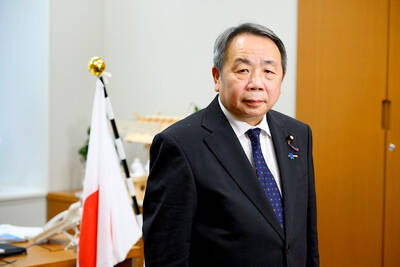
Japanese Councilor Hei Seki (石平) on Wednesday said that he plans to visit Taiwan, saying that would “prove that Taiwan is an independent country and does not belong to China.” Seki, a member of the Japan Innovation Party, was born in Chengdu in China’s Sichuan Province and became a naturalized Japanese in 2007. He was elected to the House of Concilors last year. His views on the Chinese Communist Party (CCP) — espoused in a series of books on politics and history — prompted Beijing to sanction him, including barring Seki from traveling to China. Seki wrote on X that he intends


 RSS
RSS