


The nation’s Industrial Technology Research Institute (ITRI) on Friday unveiled a portable fuel cell that is believed to be the first in the world to use solid-state hydrogen.
The device combines solid-state hydrogen fuel, water and a catalyst in a bottle the size of a beverage can, and it can generate sufficient electricity to power laptops and LED lights, the researchers said, demonstrating the product at a news conference held at an ITRI research park in Tainan.
A fuel cartridge containing sodium borohydride is inserted into a small generator that weighs about 1kg and a chemical reaction takes place that produces hydrogen, they explained. The gas is then released back into the cartridge and generates power through the fuel cell in the cartridge, they added.
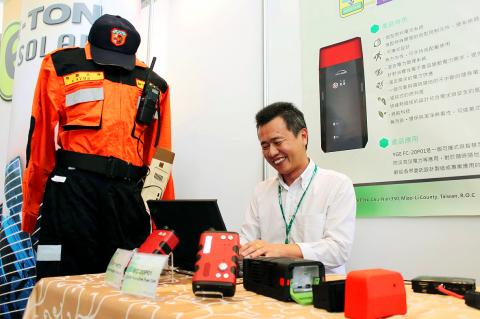
Photo: Lin Meng-ting, Taipei Times
“We store hydrogen in tablet form to make it more convenient to carry the fuel around, more user-friendly. We are the only facility in the world to successfully convert solid-state hydrogen into fuel,” said Ku Jie-ren, director of the institute’s New Energy Technology Division.
A cartridge can produce 20 watts, which is enough to charge five to seven cellphones or three or four laptops, the research team said. Any electronic product with a USB socket can use the device, it added.
The device, which took nearly five years to develop, is suitable for use in remote mountainous areas or after disasters, when power-charging opportunities are limited, the researchers said.
It would be especially useful during war time since the process is completely silent, the developers said, adding that one country’s armed forces have already shown interest in the invention.
The institute has commissioned a local manufacturer to begin mass producing the product later this month. The company also plans to raise the power generated by one cartridge to 40 watts.
The ultimate goal is to apply the technology in the automobile industry, Ku said.

Yangmingshan National Park authorities yesterday urged visitors to respect public spaces and obey the law after a couple was caught on a camera livestream having sex at the park’s Qingtiangang (擎天崗) earlier in the day. The Shilin Police Precinct in Taipei said it has identified a suspect and his vehicle registration number, and would summon him for questioning. The case would be handled in accordance with public indecency charges, it added. The couple entered the park at about 11pm on Thursday and began fooling around by 1am yesterday, the police said, adding that the two were unaware of the park’s all-day live

Fast food chain McDonald's is to raise prices by up to NT$5 on some products at its restaurants across Taiwan, starting on Wednesday next week, the company announced today. The prices of all extra value meals and sharing boxes are to increase by NT$5, while breakfast combos and creamy corn soup would go up by NT$3, the company said in a statement. The price of the main items of those meals, if ordered individually, would remain the same. Meanwhile, the price of a medium-sized lemon iced tea and hot cappuccino would rise by NT$3, extra dipping sauces for chicken nuggets would go up
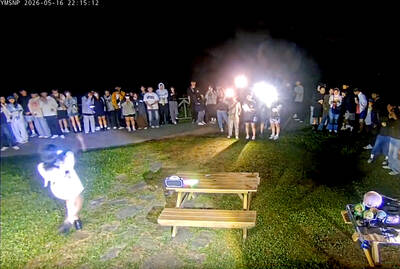
Yangmingshan National Park’s Qingtiangang (擎天崗) nature area has gone viral after a park livestream camera observed a couple in the throes of intimate congress, which was broadcast live on YouTube, drawing large late-night crowds and sparking a backlash over noise, bright lights and disruption to wildlife habitat. The area’s livestream footage appeared to show a couple engaging in sexual activity on a picnic table in the park on Friday last week, with the uncensored footage streamed publicly online. The footage quickly spread across social media, prompting a tide of visitors to travel to the site to “check in” and recreate the

Minister of Digital Affairs Lin Yi-ching (林宜敬) yesterday cited regulatory issues and national security concerns as an expert said that Taiwan is among the few Asian regions without Starlink. Lin made the remarks on Facebook after funP Innovation Group chief executive officer Nathan Chiu (邱繼弘) on Friday said Taiwan and four other countries in Asia — China, North Korea, Afghanistan and Syria — have no access to Starlink. Starlink has become available in 166 countries worldwide, including Ukraine, Malaysia, the Philippines and Vietnam, in the six years since it became commercial, he said. While China and North Korea block Starlink, Syria is not


 RSS
RSS