


Taiwan took delivery of three EC-225 Super Puma search-and-rescue helicopters that it ordered last year from Eurocopter, air force officials said yesterday.
The new aircraft were delivered to the air force’s Chiayi airbase yesterday, the officials said.
After being assembled and tested, the Super Pumas will join the Air Force Seagull Rescue Squadron on July 1 next year.
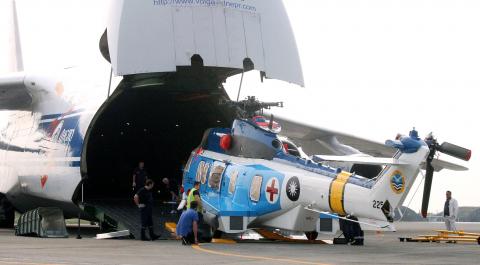
Photo: CNA
The squadron currently operates 17 S-70 helicopters, most of which are more than 20 years old, officials said.
The Super Puma has a five-blade main rotor, incorporating a new airfoil shape to reduce vibration levels, allowing it to carry up to 24 passengers. It is also equipped with de-icing systems, movable stretchers, life rafts, pop-out floats, life monitoring devices and automatic flight control systems.
The officials said the all-weather, all-topography aircraft would be a big boost to the rescue squadron when it is carrying out search-and-rescue missions at night and in bad weather, or in high mountains or over rough seas.
The helicopters can also be used to airlift supplies to isolated areas and to transport sick and injured people to hospital.
The EC-225 was developed by Eurocopter in 1998 and Taiwan placed its order for three at a cost of US$110 million in February last year, with an option for 17 more.
The air force sent pilots, crew and ground service personnel to Eurocopter’s European base for training earlier this year.
The EC-225 is 19.5m long, has a maximum takeoff weight of 11.2 tonnes and a range of 857km, in comparison with the S70C’s takeoff weight of 9 tonnes and range of 550km.
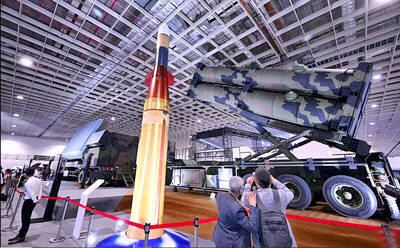
Taiwan is to commence mass production of the Tien Kung (天弓, “Sky Bow”) III, IV and V missiles by the second quarter of this year if the legislature approves the government’s NT$1.25 trillion (US$39.78 billion) special defense budget, an official said yesterday. Commenting on condition of anonymity, a defense official with knowledge of the matter said that the advanced systems are expected to provide crucial capabilities against ballistic and cruise missiles for the proposed “T-Dome,” an advanced, multi-layered air defense network. The Tien Kung III is an air defense missile with a maximum interception altitude of 35km. The Tien Kung IV and V
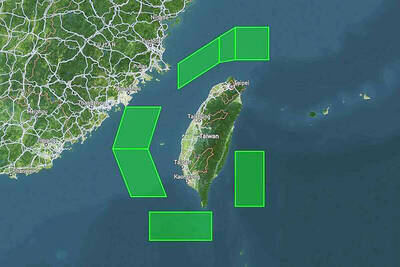
The disruption of 941 flights in and out of Taiwan due to China’s large-scale military exercises was no accident, but rather the result of a “quasi-blockade” used to simulate creating the air and sea routes needed for an amphibious landing, a military expert said. The disruptions occurred on Tuesday and lasted about 10 hours as China conducted live-fire drills in the Taiwan Strait. The Civil Aviation Administration (CAA) said the exercises affected 857 international flights and 84 domestic flights, affecting more than 100,000 travelers. Su Tzu-yun (蘇紫雲), a research fellow at the government-sponsored Institute for National Defense and Security Research, said the air
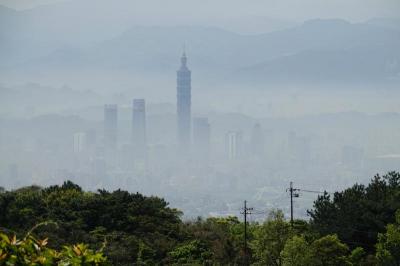
A strong continental cold air mass is to bring pollutants to Taiwan from tomorrow, the Ministry of Environment said today, as it issued an “orange” air quality alert for most of the country. All of Taiwan except for Hualien and Taitung counties is to be under an “orange” air quality alert tomorrow, indicating air quality that is unhealthy for sensitive groups. In China, areas from Shandong to Shanghai have been enveloped in haze since Saturday, the ministry said in a news release. Yesterday, hourly concentrations of PM2.5 in these areas ranged from 65 to 160 micrograms per cubic meter (mg/m³), and pollutants were
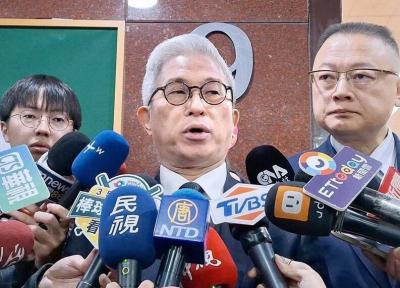
Taiwan’s armed forces have established response protocols for a wide range of sudden contingencies, including the “Wan Chun Plan” to protect the head of state, the Ministry of Defense (MND) said today. After US President Donald Trump on Saturday launched a series of airstrikes in Venezuela and kidnapped Venezuelan President Nicolas Maduro, concerns have been raised as to whether China would launch a similar “decapitation strike” on Taiwan. The armed forces regularly coordinate with relevant agencies and practice drills to ensure preparedness for a wide range of scenarios, Vice Minister of National Defense Hsu Szu-chien (徐斯儉) told reporters before a


 RSS
RSS