


As many as 65 percent of respondents are not confident about the nation’s nuclear security should an earthquake of the same magnitude that struck Japan on March 11 hit Taiwan, a poll conducted by the Taiwan Thinktank showed yesterday.
Amid fears that radiation from damaged nuclear power plants in Fukushima, Japan, could spread across the region, the Taiwan Thinktank conducted a survey on the public’s confidence in nuclear security in the country.
Asked if they feel confident about the safety of nuclear plants should Taiwan be hit by a magnitude 9 earthquake, 65 percent answered “no,” while only 21 percent said “yes.”
Answering the question on whether they have confident in the government’s ability to handle disasters, only 26 percent of the respondents were confident, while 62 percent said they were either “not very confident” or “not confident at all.” Meanwhile, nearly 80 percent of respondents believed that the government “is not ready” to handle such a powerful earthquake, along with a tsunami, were such a disaster to occur in Taiwan tomorrow.
Questioned on whether the construction of the Fourth Nuclear Power Plant in Gongliao District (貢寮), New Taipei City (新北市), should continue, 58 percent said that construction should be suspended, while only 27 percent said it should continue.
In addition, 75 percent of respondents said they do not believe that nuclear power plants in the country “sit safely on the rock like a Bodhisattva,” as Atomic Energy Council Deputy Minister Huang Tsing-tung (黃慶東) described them during a legislative meeting on Monday.
Citing the results, Taiwan Thinktank executive director Cheng Li-chun (鄭麗君) said at a news conference held to release the results that if the public harbors so many doubts about nuclear power plants, then the government should allow the public to decide future nuclear policy through a referendum.
Former Environmental Protection Agency minister Chang Kuo-long (張國龍), now a professor at National Taiwan University’s Department of Physics, said that while most people think the Chinese government does not respect human rights, Chinese authorities have ordered that the construction of nuclear power plants be suspended.
However, that the government, under the leadership of President Ma Ying-jeou (馬英九), insists on developing nuclear energy and is continuing with the construction of the Fourth Nuclear Power Plant shows that it is an irresponsible government, he said.
Former minister of transportation and communications Kuo Yao-chi (郭瑤琪) said the government had failed to inform the public about what to do if radioactive substances reached Taiwan.
Hsu Yung-ming (徐永明), an assistant professor at Soochow University’s Department of Political Science, compared the situation in Japan following the earthquake to that of New Zealand, which was also hit by a severe earthquake last month.
He said that even though New Zealand was also hit by a serious earthquake, it did not have a nuclear crisis like Japan because the country did not have any nuclear power plants.
“What happened to the myth that we’ve been told about nuclear energy being high-tech and safe?” Hsu said.
In related news, several environmental and civic groups are to organize a rally against nuclear power in Taipei tomorrow afternoon, to demand that the government stop plans to expand the nation’s three existing nuclear power plants and the construction of the Fourth Nuclear Power Plant.
The rally will begin at 1:30pm at the intersection of Shanxing S Road and Xinyi Road, followed by a parade.
ADDITIONAL REPORTING BY LOA IOK-SIN
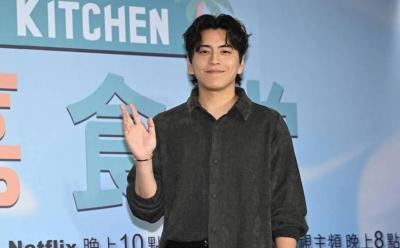
Actor Darren Wang (王大陸) was sentenced to six months in prison, commutable to a fine, by the New Taipei District Court today for contravening the Personal Data Protection Act (個人資料保護法) in a case linked to an alleged draft-dodging scheme. Wang allegedly paid NT$3.6 million (US$114,380) to an illegal group to help him evade mandatory military service through falsified medical documents, prosecutors said. He transferred the funds to Chen Chih-ming (陳志明), the alleged mastermind of a draft-evasion ring, although he lost contact with him as he was already in detention on fraud charges, they said. Chen is accused of helping a

SECURITY: Starlink owner Elon Musk has taken pro-Beijing positions, and allowing pro-China companies to control Taiwan’s critical infrastructure is risky, a legislator said Starlink was reluctant to offer services in Taiwan because of the nation’s extremely high penetration rates in 4G and 5G services, the Ministry of Digital Affairs said yesterday. The ministry made the comments at a meeting of the legislature’s Transportation Committee, which reviewed amendments to Article 36 of the Telecommunications Management Act (電信管理法). Article 36 bans foreigners from holding more than 49 percent of shares in public telecommunications networks, while shares foreigners directly and indirectly hold are also capped at 60 percent of the total, unless specified otherwise by law. The amendments, sponsored by Chinese Nationalist Party (KMT) Legislator Ko

UNREASONABLE SURVEILLANCE: A camera targeted on an road by a neighbor captured a man’s habitual unsignaled turn into home, netting him dozens of tickets The Taichung High Administrative Court has canceled all 45 tickets given to a man for failing to use a turn signal while driving, as it considered long-term surveillance of his privacy more problematic than the traffic violations. The man, surnamed Tseng (曾), lives in Changhua County and was reported 45 times within a month for failing to signal while driving when he turned into the alley where his residence is. The reports were filed by his neighbor, who set up security cameras that constantly monitored not only the alley but also the door and yard of Tseng’s house. The surveillance occurred from July
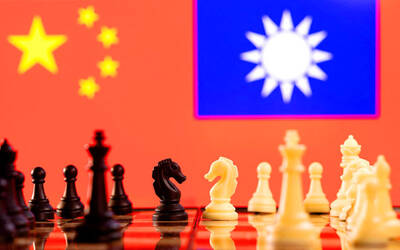
‘SAME OLD TRICK’: Even if Beijing resumes individual travel to Taiwan, it would only benefit Chinese tourism companies, the Economic Democracy Union convener said China’s 10 new “incentives” are “sugar-coated poison,” an official said yesterday, adding that Taiwanese businesses see them clearly for what they are, but that Beijing would inevitably find some local collaborators to try to drums up support. The official, speaking on condition of anonymity, made the remark ahead of a news conference the General Chamber of Commerce is to hold today. The event, titled “Industry Perspectives on China’s Recent Pro-Taiwan Policies,” is expected to include representatives from industry associations — such as those in travel, hotels, food and agriculture — to request the government cooperate with China’s new measures, people familiar with


 RSS
RSS