


President Ma Ying-jeou (馬英九) yesterday said Taiwan should exercise wisdom when dealing with China, while China should treat Taiwan with benevolence.
Ma, who attended an event organized by a religious group, Yi Guan Dao, in Tainan County yesterday morning, cited a chapter in the writings of Mencius (孟子), a Chinese philosopher, to describe cross-strait ties.
Ma said the best way for two countries to get along was for the smaller country to be smart and flexible in dealing with the bigger country, and for the bigger country to be generous and kind and not to browbeat its smaller counterpart.
“China should practice the principles of benevolence when dealing with Taiwan, and Taiwan should exercise wisdom when working with China,” he said. “Taiwan and China are governed by two separate governments. If the mainland is a big country, then Taiwan is a small country. What Mencius said 2,500 years ago is still applicable today.”
Ma said the core concept of Yi Guan Dao lay in the Chinese culture whose essence was Confucian teaching.
Yi Guan Dao members study the Four Books and the Five Classics, which Ma said helped the readers better understand ancestral wisdom and the knowledge needed to manage a country, society and family.
Ma said “Chinese culture” was not about governing by doing nothing that goes against nature, but about forging ahead without being predatory, or making progress without doing evil.
“Our ancestors did not have modern technology to help them, but they had a set of principles that kept them away from disasters and allowed them to coexist with the environment,” he said.
To read the Four Books and Five Classics was not to learn how to rule a country or the world with Confucian doctrine, Ma said, but to discover what was outdated in them and what was still relevant today in a bid to foster a perspective of the world as a whole.
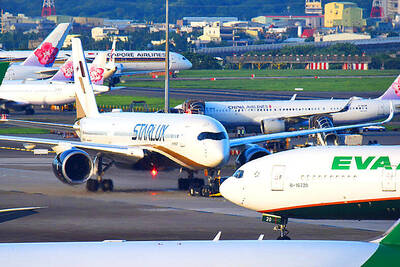
Trips for more than 100,000 international and domestic air travelers could be disrupted as China launches a military exercise around Taiwan today, Taiwan’s Civil Aviation Administration (CAA) said yesterday. The exercise could affect nearly 900 flights scheduled to enter the Taipei Flight Information Region (FIR) during the exercise window, it added. A notice issued by the Chinese Civil Aviation Administration showed there would be seven temporary zones around the Taiwan Strait which would be used for live-fire exercises, lasting from 8am to 6pm today. All aircraft are prohibited from entering during exercise, it says. Taipei FIR has 14 international air routes and
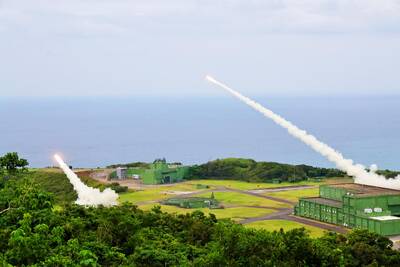
Taiwan lacks effective and cost-efficient armaments to intercept rockets, making the planned “T-Dome” interception system necessary, two experts said on Tuesday. The concerns were raised after China’s military fired two waves of rockets during live-fire drills around Taiwan on Tuesday, part of two-day exercises code-named “Justice Mission 2025.” The first wave involved 17 rockets launched at 9am from Pingtan in China’s Fujian Province, according to Lieutenant General Hsieh Jih-sheng (謝日升) of the Office of the Deputy Chief of the General Staff for Intelligence at the Ministry of National Defense. Those rockets landed 70 nautical miles (129.6km) northeast of Keelung without flying over Taiwan,
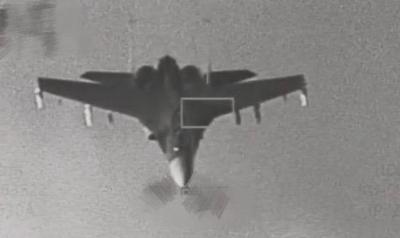
The Ministry of National Defense (MND) today released images of the military tracking China’s People's Liberation Army (PLA) movements during the latest round of Chinese drills around Taiwan. The PLA began "Justice Mission 2025" drills today, carrying out live-fire drills, simulated strikes on land and maritime targets, and exercises to blockade the nation's main ports. The exercises are to continue tomorrow, with the PLA announcing sea and air space restrictions for five zones around Taiwan for 10 hours starting from 8:30am. The ministry today released images showing a Chinese J-16 fighter jet tracked by a F-16V Block 20 jet and the
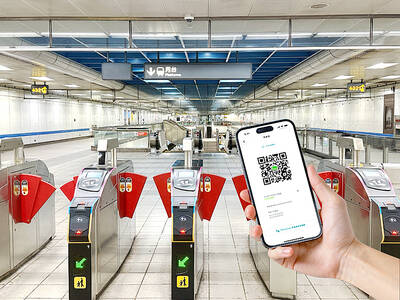
City buses in Taipei and New Taipei City, as well as the Taipei MRT, would on Saturday begin accepting QR code payments from five electronic payment providers, the Taipei Department of Transportation said yesterday. The new option would allow passengers to use the “transportation QR code” feature from EasyWallet, iPass Money, iCash Pay, Jkopay or PXPay Plus. Passengers should open their preferred electronic payment app, select the “transportation code” — not the regular payment code — unlock it, and scan the code at ticket readers or gates, General Planning Division Director-General Liu Kuo-chu (劉國著) said. People should move through the


 RSS
RSS