


With the runaway success of the 3D version of Avatar, Taiwan’s puppet show industry is preparing to launch its own 3D film featuring the nation’s traditional cloth puppets within a year.
The National Center for High-Performance Computing (NCHC) and local puppet theater company Pili International Multimedia Co are cooperating to develop Taiwan’s first 3D puppet film, a collaboration that aims to invigorate the traditional art with the use of new technology, the NCHC said.
A 3D puppet film, which would normally take five years to complete, may now take less than a year with the help of the NCHC, Pili managing director Vincent Huang said.
NCHC’s technologies have mostly been used in biomedical and disaster relief fields in the past, National Applied Research Laboratories (NARL) president Chen Wen-hwa (陳文華) said at a press conference on Wednesday.
“It was beyond our expectations, but people in the technology business can now make contributions in the creative industry,” Chen said.
A five-minute experimental 3D puppet film featuring the legendary puppet character Su Huang-chen was shown at the press conference that the NARL held.
The crew also gave live demonstrations of how to shoot a 3D film at the press conference, which was titled “Technology Meets Creative Industry — Su Huan-chen Revitalized.”
Audiences listened in awe as Huang, the “Eight Tone Genius” known for his one-man-with-multiple-voices talent, alternated between characters in the puppet roles “Sheng,” “Dan” and “Chou.”
Pili’s attempts to make 3D films in the past have been hampered by expensive post-production costs and a lack of technical support, Huang said.
“Now that we have a chance to cooperate, I hope that the NCHC will continue to be our visual consultant,” Huang said.
Huang, who said he dreamed that puppet Su Huang-chen told him to jiayou, or “go,” added that he hopes to bring the 3D puppet show onto an international stage.
The budget for Legend of the Sacred Stone, the first-ever puppet movie, was originally estimated at NT$80 million (US$2.493 million), but increased to NT$200 million as the filming proceeded, Huang said.
“With the help of the NCHC, we will be able to lower the film’s production costs and re-evaluate technology costs,” Huang said.
As Taiwan’s only national-level supercomputing center, the NCHC possesses advanced supercomputing, storage and scientific visualization technologies, the NCHC said.
“The experimental film is the first step in our cooperation, and we expect to work together in the fields of supercomputing, video storage, and visual technologies in the future to help our local puppetry art gain a competitive edge in the international market,” it said in a statement on its Web site.

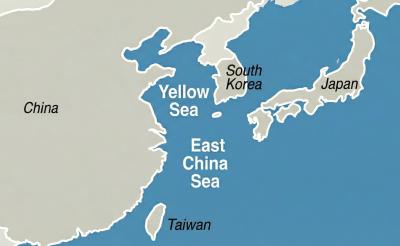
China has reserved offshore airspace in the Yellow Sea and East China Sea from March 27 to May 6, issuing alerts usually used to warn of military exercises, although no such exercises have been announced, the Wall Street Journal (WSJ) reported yesterday. Reserving such a large area for 40 days without explanation is an “unusual step,” as military exercises normally only last a few days, the paper said. These alerts, known as Notice to Air Missions (Notams), “are intended to inform pilots and aviation authorities of temporary airspace hazards or restrictions,” the article said. The airspace reserved in the alert is
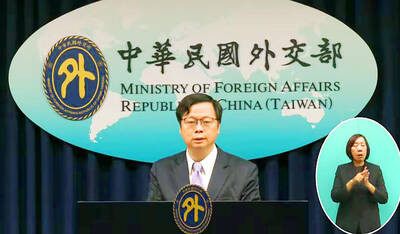
NAMING SPAT: The foreign ministry called on Denmark to propose an acceptable solution to the erroneous nationality used for Taiwanese on residence permits Taiwan has revoked some privileges for Danish diplomatic staff over a Danish permit that lists “Taiwan” as “China,” Eric Huang (黃鈞耀), head of the Ministry of Foreign Affairs’ Department of European Affairs, told a news conference in Taipei yesterday. Reporters asked Huang whether the Danish government had responded to the ministry’s request that it correct the nationality on Danish residence permits of Taiwanese, which has been listed as “China” since 2024. Taiwan’s representative office in Denmark continues to communicate with the Danish government, and the ministry has revoked some privileges previously granted to Danish representatives in Taiwan and would continue to review

More than 6,000 Taiwanese students have participated in exchange programs in China over the past two years, despite the Mainland Affairs Council’s (MAC) “orange light” travel advisory, government records showed. The MAC’s publicly available registry showed that Taiwanese college and university students who went on exchange programs across the Strait numbered 3,592 and 2,966 people respectively. The National Immigration Agency data revealed that 2,296 and 2,551 Chinese students visited Taiwan for study in the same two years. A review of the Web sites of publicly-run universities and colleges showed that Taiwanese higher education institutions continued to recruit students for Chinese educational programs without
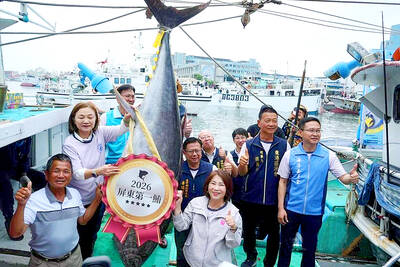
The first bluefin tuna of the season, brought to shore in Pingtung County and weighing 190kg, was yesterday auctioned for NT$10,600 (US$333.5) per kilogram, setting a record high for the local market. The auction was held at the fish market in Donggang Fishing Harbor, where the Siaoliouciou Island-registered fishing vessel Fu Yu Ching No. 2 delivered the “Pingtung First Tuna” it had caught for bidding. Bidding was intense, and the tuna was ultimately jointly purchased by a local restaurant and a local company for NT$10,600 per kilogram — NT$300 ,more than last year — for a total of NT$2.014 million. The 67-year-old skipper


 RSS
RSS