


Led by Chinese Nationalist Party (KMT) Aboriginal Legislator Kung Wen-chi (孔文吉), a Taiwan Indigenous Survival and Development Association (TISDA) delegation is leaving for New York today to take part in the eighth annual UN Permanent Forum on Indigenous Issues.
“The main objective of the TISDA delegation will be to discuss and exchange ideas with indigenous groups from other countries on Aboriginal policies — especially on Aboriginal autonomy — after the UN adopted the Declaration on the Rights of Indigenous Peoples in 2007,” Kung told a news conference at the legislature yesterday.
The Council of Indigenous People (CIP) sent a delegation to the forum earlier this week, but the TISDA delegation will be the only non-governmental group representing Taiwanese Aborigines at the meeting.
RECOGNITION
The delegation includes several Aboriginal university students who will focus on issues relating to Aboriginal women and young people, said Jason Pan (潘紀揚), a Pazeh tribal name restoration activist.
The Pazehs are one of the nation’s Pingpu — or plains — Aborigines who are campaigning for official recognition as an Aboriginal tribe.
“I hope to talk with indigenous peoples from other countries who recently gained official recognition — such as the Ainus in Japan and the Metis in Canada — and learn from their experiences,” Pan said.
Kung said he would deliver a keynote speech on the current status of Aboriginal policies in Taiwan to an international audience.
AUTONOMY
“Although I’m affiliated with the governing party, I will tell the truth and not hide anything [during the speech],” Kung said.
“I will point out that Aboriginal policies, especially progress on autonomy, is seriously delayed because of a lack of execution and determination in the CIP leadership,” he said.
“At the moment, the two sides of the Taiwan Strait are fighting over ideological differences,” he said. “We Aborigines must not be dragged into it; only authentic autonomy could bring Aborigines a bright future.”
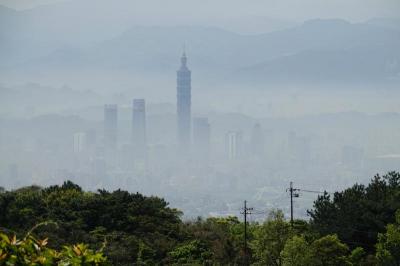
A strong continental cold air mass is to bring pollutants to Taiwan from tomorrow, the Ministry of Environment said today, as it issued an “orange” air quality alert for most of the country. All of Taiwan except for Hualien and Taitung counties is to be under an “orange” air quality alert tomorrow, indicating air quality that is unhealthy for sensitive groups. In China, areas from Shandong to Shanghai have been enveloped in haze since Saturday, the ministry said in a news release. Yesterday, hourly concentrations of PM2.5 in these areas ranged from 65 to 160 micrograms per cubic meter (mg/m³), and pollutants were
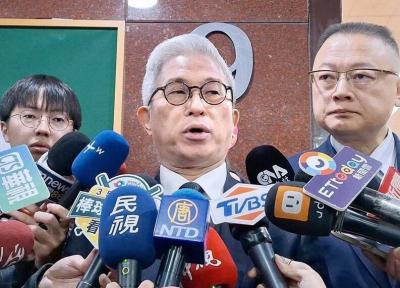
Taiwan’s armed forces have established response protocols for a wide range of sudden contingencies, including the “Wan Chun Plan” to protect the head of state, the Ministry of Defense (MND) said today. After US President Donald Trump on Saturday launched a series of airstrikes in Venezuela and kidnapped Venezuelan President Nicolas Maduro, concerns have been raised as to whether China would launch a similar “decapitation strike” on Taiwan. The armed forces regularly coordinate with relevant agencies and practice drills to ensure preparedness for a wide range of scenarios, Vice Minister of National Defense Hsu Szu-chien (徐斯儉) told reporters before a

EVA Airways on Saturday said that it had suspended a pilot and opened an investigation after he allegedly lost his temper and punched the first officer several times as their plane was taxiing before takeoff at Los Angeles International Airport. According to a report published on Thursday by The Reporter, the incident occurred after the flight’s Malaysian first officer tried to warn the Taiwanese pilot, surnamed Wen (文), that he was taxiing faster than the speed limit of 30 knots (55.6kph). After alerting the pilot several times without response, the first officer manually applied the brakes in accordance with standard operating
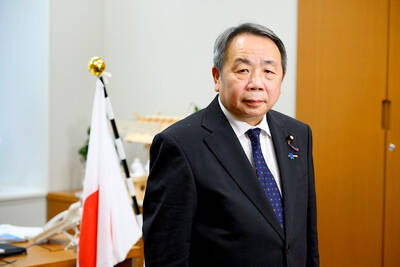
Japanese Councilor Hei Seki (石平) on Wednesday said that he plans to visit Taiwan, saying that would “prove that Taiwan is an independent country and does not belong to China.” Seki, a member of the Japan Innovation Party, was born in Chengdu in China’s Sichuan Province and became a naturalized Japanese in 2007. He was elected to the House of Concilors last year. His views on the Chinese Communist Party (CCP) — espoused in a series of books on politics and history — prompted Beijing to sanction him, including barring Seki from traveling to China. Seki wrote on X that he intends


 RSS
RSS